
Make perfect sautéed chicken breasts with mustard pan sauce every time. Chicken breasts with a wine-infused cream sauce, Dijon mustard, shallots, and tarragon. This tested recipe walks you through the pan sauce technique with precise temps, timing, and visual cues you can trust.
If you've ever made chicken breast and thought, 'this needs sauce, but I don't know how to make one,' this recipe is for you.

Often, I think about how to cook better. I find sauce as a solution. A well-cooked chicken breast is dependable and just fine on its own. Consider what happens when it's drizzled with a deeply flavored pan sauce.
This is a creamy, French application inspired by Carla Hall. The sauce is a reduction of the cooking bits enriched with cream. If you can sauté and deglaze, you can do this. No worries, I'll show you how below.
Serve this with a simple vegetable, like oven-roasted Brussels sprouts or sautéed asparagus tips. You can add your favorite starch that soaks up a sauce, like polenta, steamed rice, buttered noodles, mashed potatoes, or try my other side dishes to serve alongside.
Jump to:
What Makes This Recipe The Best
- Lower internal temperature. Prevent overcooking by removing the chicken at 158℉-160℉ rather than 165℉. Just like my turkey breast and bone-in chicken breast recipe, the internal temperature will go up 5-8℉ while resting.
- This is not a bland or pale sauce. If you don't prepare deep, brown chicken, you will miss out on developing the flavor and color of the fond after searing.
- Those stubborn sticky parts of the pan are deglazed with liquid to make the sauce, making clean up so easy.
- This highlights homemade brown chicken stock that you can make and freeze ahead of time for all of your pan sauces.
How To Get A Good Pan-Sear On Chicken Breast
A cook's biggest fear is to properly cook chicken breasts without them being dry and stringy. Check out these tips to successfully pan-sear boneless, skinless chicken breasts.
- Even thickness is key: Chicken breasts vary in size. Pound the thicker ends to a uniform thickness and match all of the breasts to a similar thickness for even cooking.
- Avoid excess moisture: Pat the chicken dry with paper towels right before searing to remove moisture. Do not overcrowd the skillet, or you will steam the chicken rather than brown it. A 12-inch skillet can only handle 2-3 chicken breasts at a time. Sear in batches or use 2 skillets if you want to cook more chicken.
- Use the right pan: Do not use a non-stick skillet if you want to make the best pan sauce. You won't get many brown bits from searing on non-stick surfaces. Cast-iron, carbon steel, or stainless steel is recommended.
- Use high heat to get good browning: You know the skillet is hot when you flick a little water on the pan, and it jumps around quickly and evaporates.
- Use an instant-read thermometer: I prefer taking boneless chicken breasts off the heat when they reach an internal temperature of 158-160℉ in the thickest area. The temperature will increase from carryover cooking. If you want to cook them longer, remove them at 165℉.
- Sear the presentation (smooth) side of the breast first, as the second side (bone side) will not be as visually appealing due to splotchy browning caused by a cooler skillet and irregular surface.

Ingredients
Here are the ingredients needed to make sautéed chicken breasts with mustard pan sauce.

- Chicken Breast: Boneless, skinless chicken breasts are a good choice because they cook quickly, making them ideal for pan-searing. It's a challenge to find smaller chicken breasts at the grocery store. Look for pasture-raised chicken from Whole Foods or local butchers. The Smart Chicken thin-sliced organic breast is reliable, too. Choose quality over quantity.
- Brown Chicken Stock: Homemade stock contains gelatin, which gives body to the pan sauce when reduced. Freeze your chicken and turkey bones to make high-quality homemade brown chicken stock. It has a darker color and deeper flavor compared to white chicken stock from roasting the bones and vegetables. Unsalted store-bought chicken broth can be substituted.
- Dry Vermouth or White Wine: Wine adds acidity to balance the sauce. Use a dry white wine or dry vermouth. Vermouth is handy because it keeps forever in the cabinet. For white wine, I prefer a California Chardonnay at a reasonable price. Here are some suggestions: Kendall Jackson, Hess Select, or Clos Du Bois. Avoid Sauvignon Blancs that taste too 'grapefruity', or all Rieslings, because they are too sweet.
- Dijon Mustard: It can be pretty strong by itself, but it is so useful for pan sauces, salad dressings, and marinades. Dijon is more intense, sharp, and complex than yellow mustard. It is made with brown mustard seeds and white wine, adding tangy complexity to subtle ingredients like chicken and pork.
- Shallots: Chef’s favorite for pan sauces. A small, pink-skinned onion that grows in the form of a bulb-like garlic with 1-4 cloves to the cluster. They are more delicate and mild than red onions and will store for many weeks in the pantry.
- Fresh Tarragon: A soft leafy herb that is easy to grow during the spring and summer months. It's available at most grocery stores in the produce section. Tarragon has a moderate anise (black licorice) flavor. So, I prefer it in small amounts. It's commonly used to infuse sauces such as Hollandaise. This recipe is a great use of garden-grown tarragon.
- Heavy Whipping Cream: Pasteurized or ultra-pasteruized heavy whipping cream both work. Do not substitute half and half, or the sauce will break.
- Canola Oil: To brown and cook the chicken. Any neutral, high-temperature oil will work, like vegetable, grapeseed, or avocado oil.
- Diamond Crystal kosher salt and black pepper: If you are using Morton kosher salt, reduce the salt by half.
See the recipe card below for ingredient measurements.
Variations & Substitutions
This recipe is written for my preference, which is a heavily reduced pan sauce with just a touch of mustard and tarragon. All of which can be modified to your liking. Here are some ideas:
- Wine: Chardonnay is my favorite option, but sometimes I don't have it. That's when I replace it with dry sherry or dry white vermouth from the cabinet, or substitute 1 teaspoon of white wine vinegar to get a little acid in the sauce. Avoid cooking wine in the grocery aisle next to the vinegar. It's not good.
- No Wine: Deglaze the pan with chicken stock. The pan sauce will still be delicious without wine.
- Herbs: While mustard and tarragon pair well together, you can substitute chopped fresh herbs like parsley, thyme, chives, or dill for tarragon. If you love anise flavors, double the tarragon. Leftover herbs can be used for green goddess dressing.
- Brown Chicken Stock: You can substitute homemade white chicken stock or find frozen homemade stock at your local butcher or grocery store. I use store-bought, unsalted chicken broth when I am out of homemade stock; however, the pan sauce is lighter in color and thinner.
- Heavy Cream: Substitute 2 tablespoons unsalted butter for the heavy whipping cream. I prefer this pan sauce finished with heavy cream, but I use butter in a pinch.
- Shallots: You can substitute 1⁄3 cup of diced yellow onion for a shallot.
- Flour: You can dredge the chicken breasts in a light coating of all-purpose flour before searing them. It has a slight thickening effect on the pan sauce.
Mustard Intensity Guide:
I have learned that you really need to measure the mustard rather than eyeballing it. I have regretfully added too much mustard in the past. Here are my suggestions:
- Conservative: 1 tablespoon for mild, family-friendly.
- Medium: 1½ tablespoons gives a balanced tang.
- Bold: Use 2 tablespoons for mustard lovers.
Equipment
- 12-inch cast iron skillet. It simplifies searing and making a pan sauce with its heavy bottom, distributing the heat evenly when you reduce the liquid over a burner. A carbon steel or stainless steel skillet also works.
- An instant-read meat thermometer is handy for quick temperature checks at the end.
- A wooden spoon is used to scrape the brown bits while deglazing the skillet.
- A wire whisk is needed to blend the mustard into the sauce. I prefer this flat-style or this Good Grips brand.
Step-by-Step Instructions
Sauté The Chicken Breasts
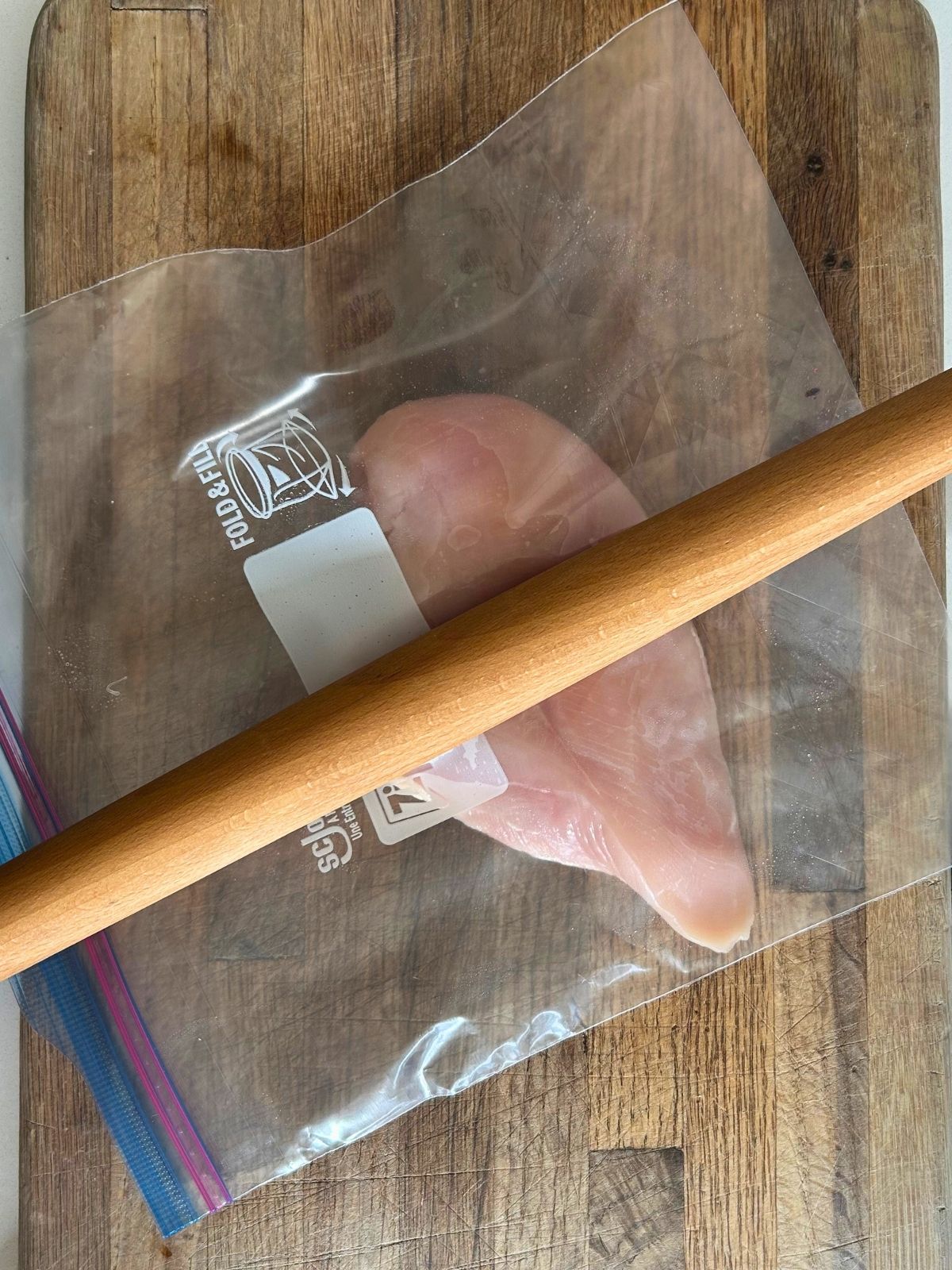
Step 1: In a zip-lock bag, add a chicken breast and pound the thick side with a rolling pin or heavy skillet to match an even thickness.

Step 2: Pat the chicken dry with paper towels. Season both sides with Diamond Crystal kosher salt and pepper.

Step 3: Heat a large cast-iron or stainless steel skillet over high heat. When hot, add the oil and coat the skillet.
Add half the chicken, smooth side faced down. You should hear a strong sizzle. If not, remove the chicken and wait a few minutes longer for the pan to heat up sufficiently. Cook until brown and easily releases from the pan, about 4-6 minutes.

Step 4: Turn the chicken. Cook until the internal temperature is 158-160℉, about 4-6 minutes longer. The temperature will increase 5-8℉ from carryover cooking. Transfer the chicken to a plate to rest. Repeat with the other half of the chicken.
For The Pan Sauce

Step 5: Turn the burner off to because diced shallots cook quickly, and it will help prevent burning them. Add the shallots to the hot skillet. Stir frequently for about 1 minute until translucent.
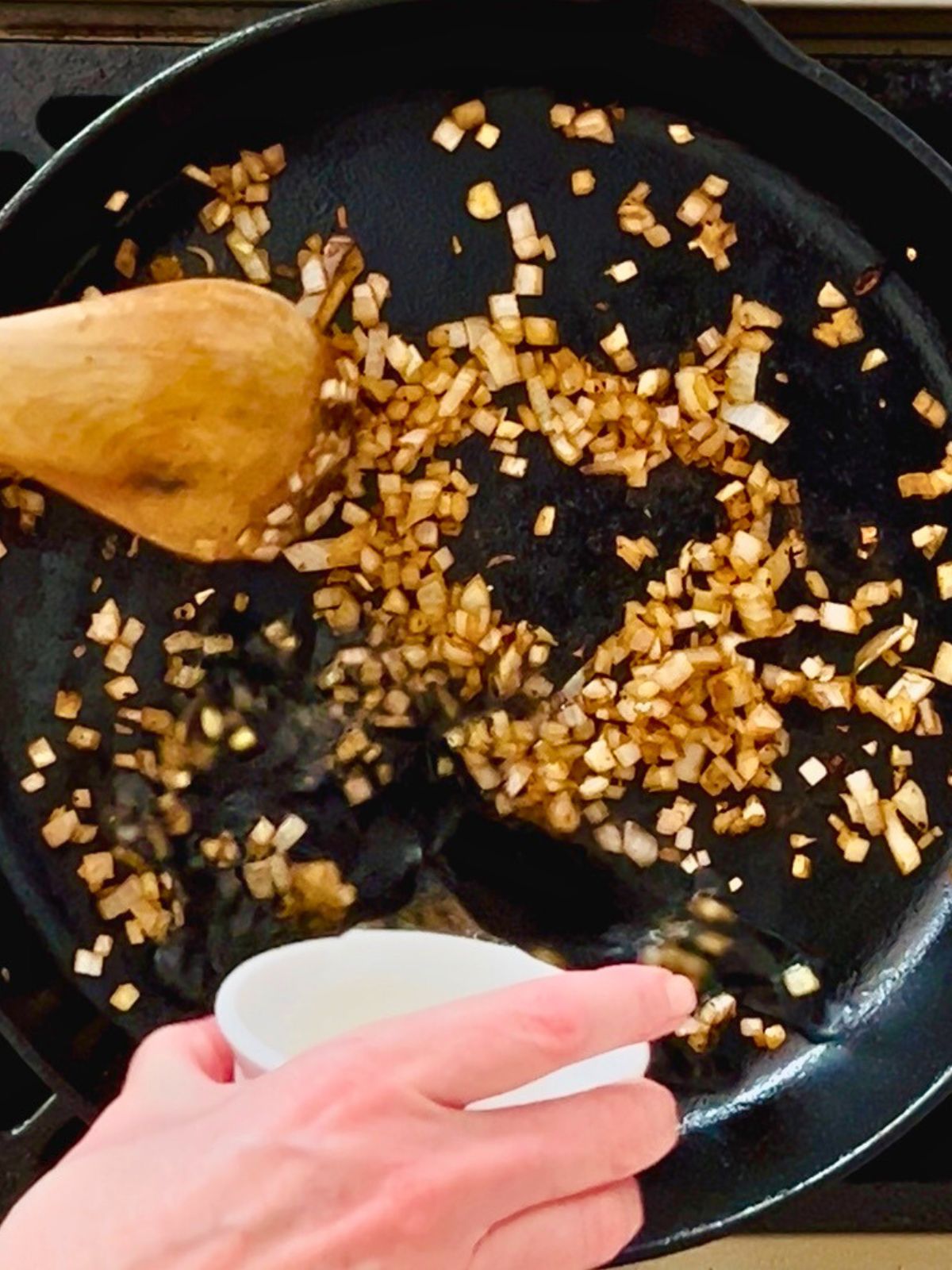
Step 6: To deglaze, add the white wine while scraping the bits from the pan. The brown bits, also called fond, will break down and dissolve into the liquid. Turn the heat to medium-high.
Let the wine reduce so the alcohol evaporates. If you don't let it reduce, the sauce will taste boozy.

Step 7: Add the chicken stock. Let it boil and reduce to half again to concentrate the flavors and provide body to the sauce. This takes about 5 minutes.

Step 8: Whisk in the Dijon mustard, heavy whipping cream, and any accumulated juice from the plate. Bring to a boil to reduce the liquid for 1-5 minutes until thickened to your liking.

Step 9: Reduce the heat to low. Taste the sauce to see if salt is needed. Stir in the fresh tarragon.
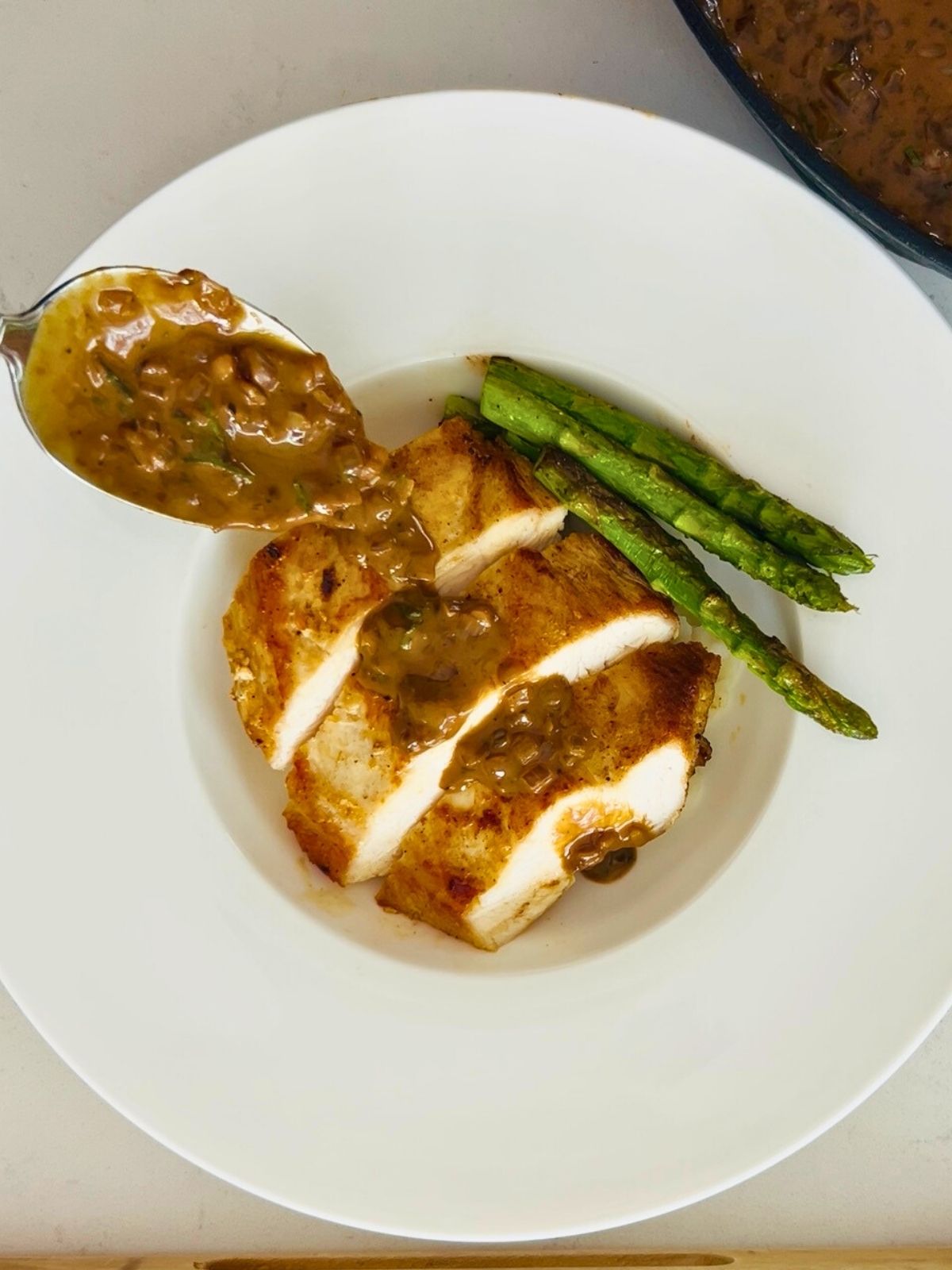
Step 10: To serve, slice the chicken against the grain into medallions and place them on the warm plate. Drizzle the sauce over the chicken.
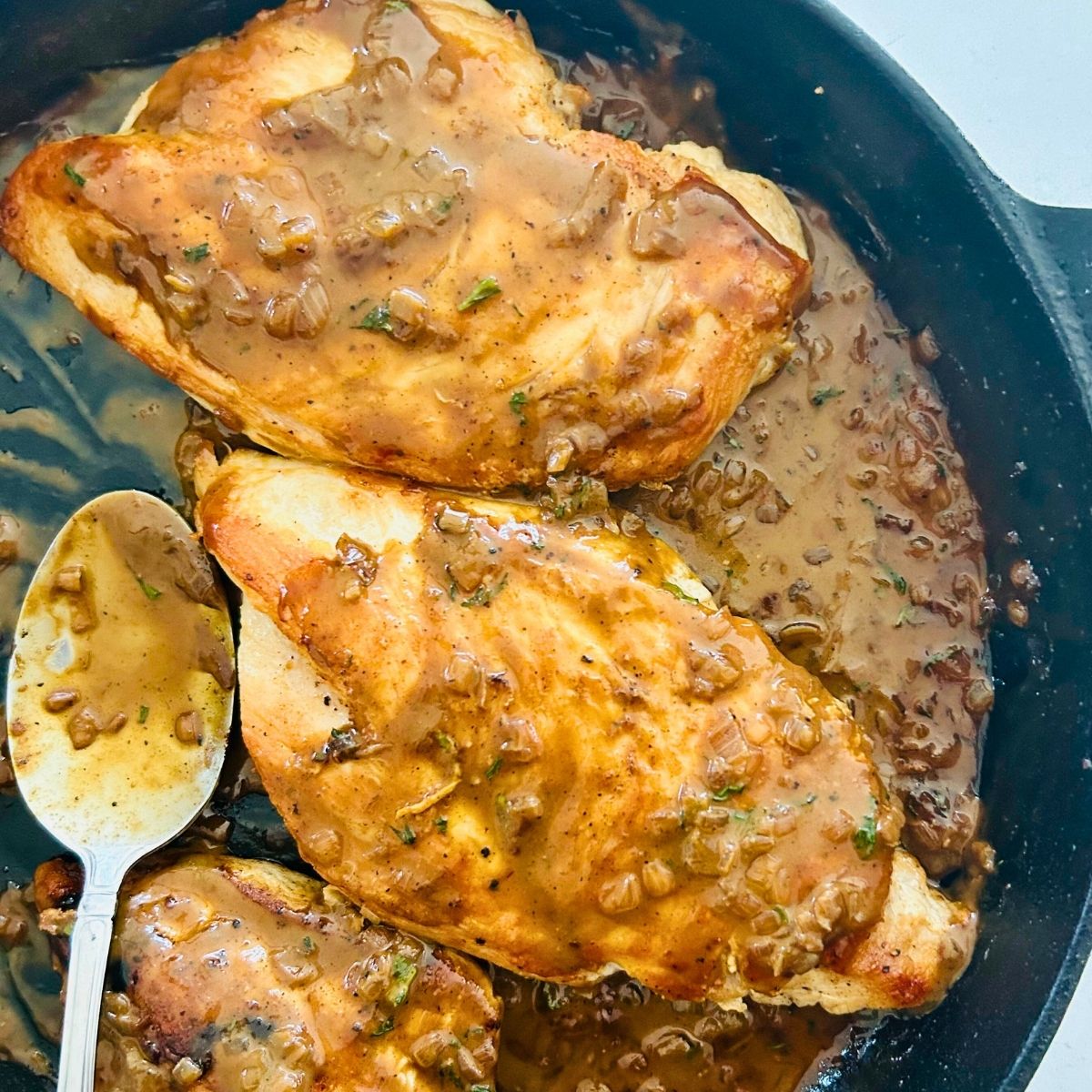
For family style, add the whole chicken breasts back to the skillet, turning to coat in the sauce.
Cleaning Tip
Searing food on the stovetop creates spits and splatters, which are easier to clean while they are still warm rather than waiting until the next day. Carefully, use a bar-mop dish towel or tongs with wadded paper towels to wipe the splattered areas around the stovetop and countertop after you sear.
Dinner Party Game Plan
This dish is best when prepared and held warm rather than reheated.
2-Day Make Ahead Instructions
- Day 1: The chicken can be pounded and seasoned. Store, covered, in the refrigerator.
- Day 2 morning: Prep and measure the remaining ingredients. Store the stock, mustard, cream, and tarragon covered in the fridge.
- 90 minutes before serving: Set the oven to 200℉. Sauté the chicken. Make the pan sauce. Add the chicken back to the skillet, coat them in the sauce, and hold the it warm in the oven until you are ready to serve.
Scaling for Different Occasions
- Dinner party for 8 people: Double the recipe using 2 skillets to sauté the chicken breasts.
- Potluck for 12 people: Triple the recipe. Sauté the chicken in batches and transfer to an oven-proof casserole dish held warm at 200℉ in the oven. Clean the skillet after sautéing 2 batches, or the brown bits will burn and become bitter. After the last sauté, prepare the pan sauce and pour it over the chicken in the casserole. Keep warm in the oven, covered, until ready to serve.
Storage Instructions
To Store: Leftovers will hold in the refrigerator for up to 4 days in a covered dish. Freezing is not recommended.
To Reheat: Reheat in the oven at 325℉ until warm, or microwave individual portions. The sauce reheats well in the microwave.
FAQ
You might be turning it too soon. Give it more time to brown. It will release when it's ready.
I don't recommend it. Half-and-half will separate when you boil or simmer it.
Boneless, skinless chicken thighs are an excellent substitute. Cook them to 165℉. Their extra fat content protects them from drying out.
Store-bought chicken stock, minimal browning of the chicken, or extra heavy cream will create a sauce that is lighter in color. It is still tasty.
Continue simmering the sauce to reduce it. Alternatively, make a beurre manie paste by mixing 1 tablespoon of room temperature unsalted butter and 1 tablespoon of all-purpose flour in a bowl. Whisk in 1 teaspoon of the beurre manie at a time to thicken your gravy, then let it simmer for a few minutes before serving.
Yes, you can substitute dried herbs, though I haven't tested it. Start with ½ teaspoon and taste the sauce after 2-3 minutes to see if more is needed.
I find it rare, however, cream can split when it over-reduces. Whisk in 1 tablespoon of water at a time to the pan sauce to fix it.



Did you try any of these tips? Leave a comment below to let us know how it turned out! Thanks for visiting!
📖 Recipe

Sautéed Chicken Breasts With Mustard Pan Sauce
Equipment
- 12-inch cast-iron skillet
- instant-read meat thermometer
- wooden spoon
- wire whisk
Ingredients
- 4 boneless, skinless chicken breasts (6-8 ounces each)
- 1½ teaspoons Diamond Crystal kosher salt
- freshly ground black pepper
- 2 tablespoons cooking oil, divided (canola, vegetable, or olive oil)
- 1 shallot, diced (⅓ cup)
- ¼ cup dry white wine or dry vermouth
- 1 cup brown chicken stock (or storebought chicken stock, unsalted)
- 1 tablespoon Dijon mustard
- ¼ cup heavy whipping cream
- 1½ teaspoons fresh tarragon, chopped
Instructions
- In a zip-lock bag, add a chicken breast and pound the thick side with a rolling pin or heavy skillet to match an even thickness.
- Pat the chicken dry with paper towels. Season with Diamond Crystal kosher salt and pepper.
- Heat a large cast-iron or stainless steel skillet over high heat. When hot, add the oil and coat the skillet.
- Add half the chicken, smooth side faced down. You should hear a strong sizzle. If not, remove the chicken and wait a few minutes longer for the pan to heat up sufficiently. Cook until brown and easily releases from the pan, about 4-6 minutes.
- Turn the chicken. Cook until the internal temperature is 158-160℉, about 4-6 minutes longer. The temperature will increase 5-8℉ from carryover cooking. Transfer to a plate. Repeat with the other half of the chicken.
- Turn the burner off. Add the shallots to the hot skillet. Stir frequently for about 1 minute while scraping the bits from the pan.
- Add the white wine to the skillet, turn the heat to medium-high. Reduce the wine. Once it's half reduced, add the chicken stock. Let it boil and reduce to half again. This takes about 5 minutes.
- Whisk in the Dijon mustard, heavy whipping cream, and any accumulated juice from the plate. Bring to a boil to reduce the liquid for 1-5 minutes until thickened to your liking. Reduce the heat to low. Taste the sauce to see if salt is needed. Stir in the fresh tarragon.
- To serve, slice the chicken against the grain into medallions and place them on the warm plate. Drizzle the sauce over the chicken. For family style, add the chicken back to the skillet, turning the breasts to coat in the sauce.
Video
Notes
- Day 1: The chicken can be pounded and seasoned. Store, covered, in the refrigerator.
- Day 2 morning: Prep and measure the remaining ingredients. Store the stock, mustard, cream, and tarragon covered in the fridge.
- 90 minutes before serving: Set the oven to 200℉. Sauté the chicken. Make the pan sauce. Add the chicken back to the skillet, coat them in the sauce, and hold the it warm in the oven until you are ready to serve.
- Dinner party for 8 people: Double the recipe using 2 skillets to sauté the chicken breasts.
- Potluck for 12 people: Triple the recipe. Sauté the chicken in batches and transfer to an oven-proof casserole dish held warm at 200℉ in the oven. Clean the skillet after sautéing 2 batches, or the brown bits will burn and become bitter. After the last sauté, prepare the pan sauce and pour it over the chicken in the casserole. Keep warm in the oven, covered, until ready to serve.
Nutrition
The provided nutritional information is an estimate per serving. Accuracy is not guaranteed.
Comments
No Comments