
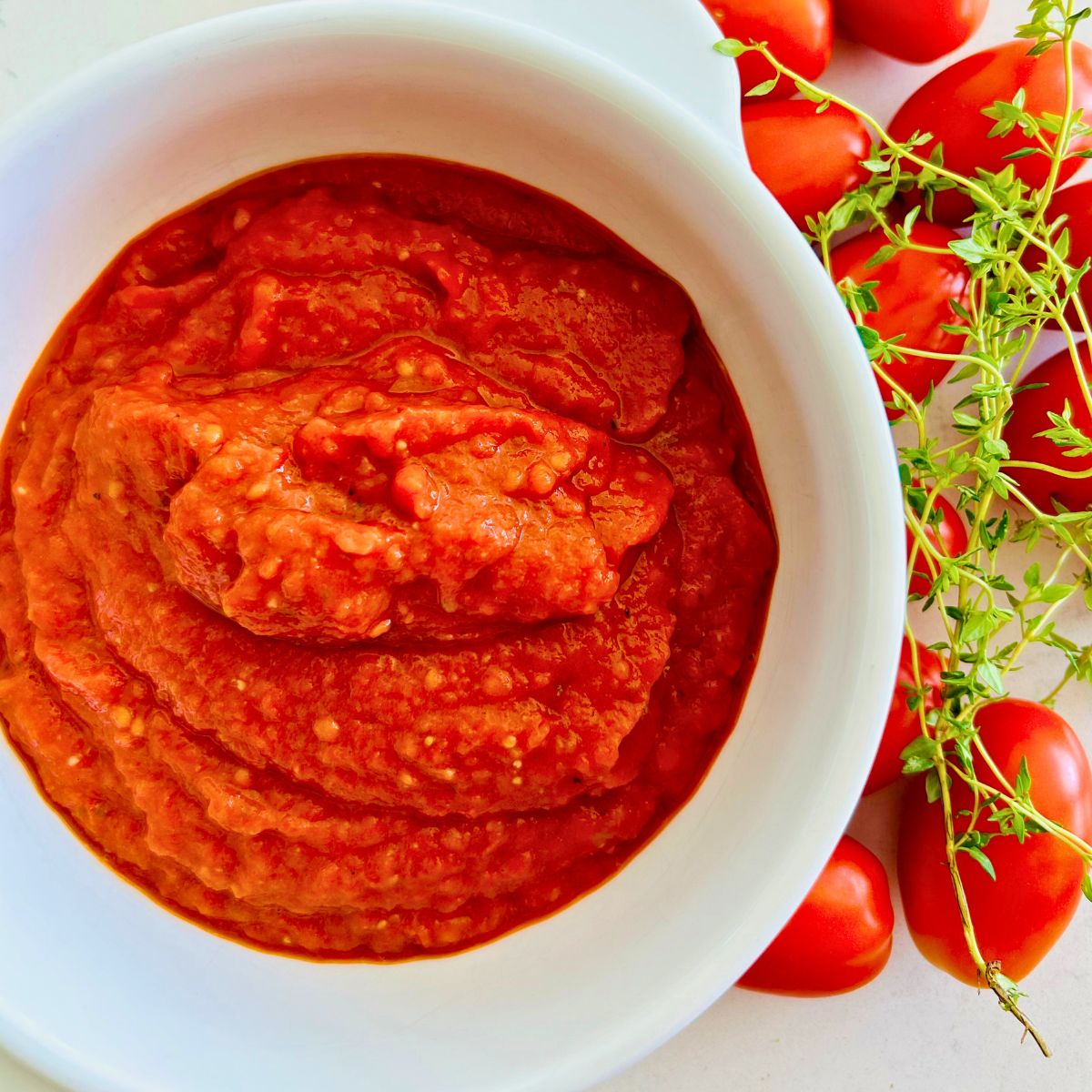
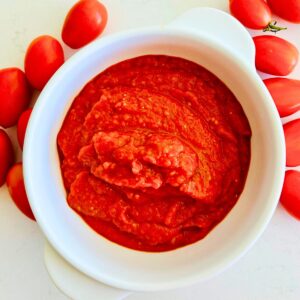
This tomato paste recipe is one of the best things you can do on a late summer afternoon when your tomato plants produce more than you can eat. You can process pounds of tomatoes in a couple of hours, and freeze enough paste to carry you through winter.
The tomatoes roast until dry and concentrated, then they blend into a smooth paste that tastes nothing like what comes out of a can. No garden? No problem. I have provided suggestions on what tomatoes to buy.
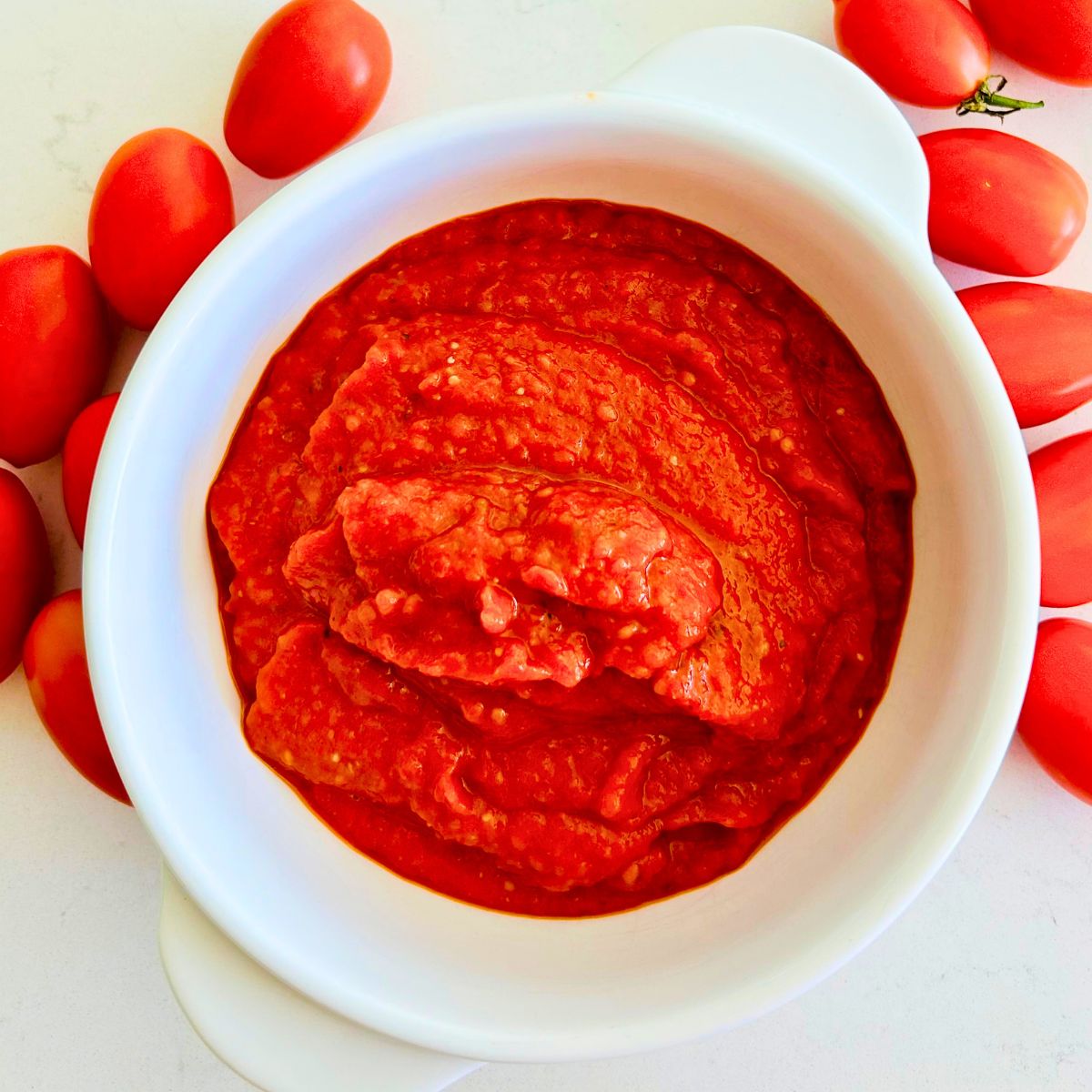
I first learned this technique in a cooking class at Krause's, a beloved multi-course restaurant in Lawrence, Kansas, that also taught a handful of evening classes before they retired. Chef Robert Krause used his roasted tomato paste as the base for a shrimp bisque that was unforgettable.
What stood out was how simple the process was to get this complex flavor. That class changed how I think about tomatoes at the end of summer.
My favorite tomato to grow for this is the Juliet, an oblong cherry tomato that produces more fruit than you could ever eat fresh. If you grow Roma tomatoes, San Marzano-style, or any paste variety, this works just as well with those.
By late summer, I am looking for ways to preserve them, and this is how I do it. I am a freezer preserver, not a canner, and small frozen portions work better for me than a jar on a shelf.
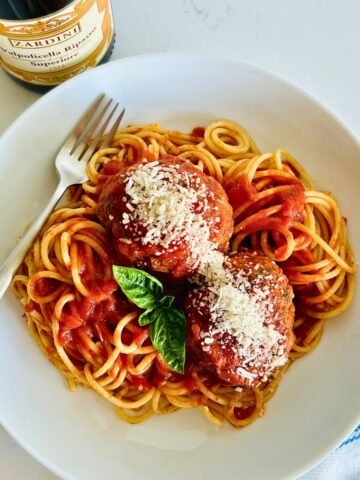
I reach for it all year as a pizza sauce, add it to my taco casserole, thick homemade chili, and brown chicken stock, and use it to help thicken marinara sauce. It can be used anywhere else a recipe calls for a spoonful of tomato paste.
Jump to:
Why You Will Love This Recipe
- You get a deeply savory, smooth paste that is noticeably richer than anything from a can.
- No blanching, peeling, food mill, or stovetop stewing. That is a lot of work, several dirty dishes, and a food mill taking up cabinet space. I donated mine and never looked back.
- No canning equipment. Freeze it in small portions, so you always have exactly what a recipe calls for.
- Seeds stay in. I've never tasted bitterness from them. If you prefer no seeds, scoop them out of the halved tomatoes before roasting.
What Tomatoes To Use
- Juliet Cherry Tomatoes (Garden): My first choice. A small oblong cherry tomato shaped like a miniature plum tomato. They are good raw or cooked, low in water, and incredibly prolific in the garden. Roasting time is about 2 hours.
- NatureSweet Cherub Tomatoes (Store-Bought): The closest store-bought match to the Juliet. Small, oblong, and similarly meaty. Available year-round at Walmart, Target, Costco, and most major grocery stores. Expect a similar 2-hour roasting time.
- Roma Tomatoes (Garden, Store-Bought): A reliable option when the garden is done, and Cherub tomatoes are not available. Roma tomatoes are larger than Juliet or Cherub varieties, so budget closer to 4-5 hours of roasting time. They are widely available at every grocery store and still produce a rich, flavorful paste.
- San Marzano-Style Tomatoes (Garden): Another excellent paste tomato from the garden, but similar in size to Roma. Plan for up to 5 hours in the oven.
If you do not want to roast for the full time, you can pull them early and blend anyway. The result will be closer to a thick tomato sauce than a concentrated paste. That is still useful and far better than anything canned.
Ingredients
Here are the ingredients needed to make tomato paste from fresh tomatoes!
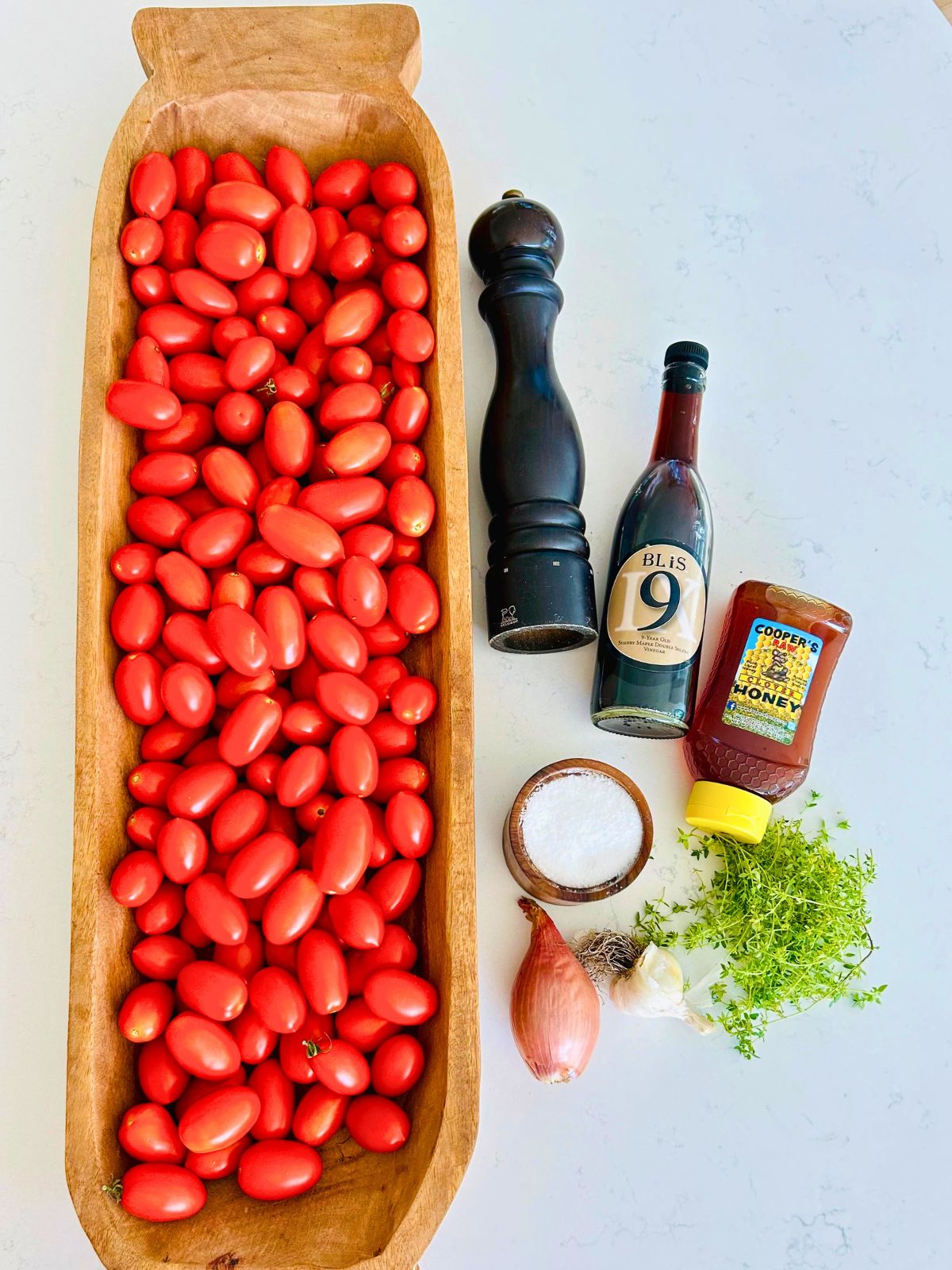
- Plum Tomatoes: See the tomato guide above for variety recommendations and expected roasting times. Choose the tomato with the meatiest flesh and least water. Slicing tomato varieties are watery and not recommended. You can roast them, but the results will be a sauce that needs to be filtered through a sieve, not a paste.
- Sherry Vinegar: Adds a touch of acidity and brightness to the finished paste. I buy it at Whole Foods. Red wine vinegar is a reasonable substitute if you do not have sherry vinegar on hand.
- Honey: Just a little rounds out any tartness. It does not make the paste sweet.
- Fresh Thyme: Roasts right alongside the tomatoes and adds a subtle herby depth.
- Shallot and Garlic: Both roast with the tomatoes, softening and sweetening in the oven. Real garlic, not the jarred stuff.
See the recipe card below for ingredient measurements.
Equipment
- food processor: For a big batch, use an 11-14 cup capacity.
- 11 x 18-inch rimmed baking sheet
- parchment paper (optional)
- food scale (optional): Helpful when portioning small quantities to freeze.
Top Tip
Tuck the shallot, garlic, and thyme sprigs toward the center of the baking sheet, not the outer edges. The edges run hotter, and the shallot and herbs can scorch before the tomatoes finish roasting. Moving them inward keeps everything cooking evenly.
Step-by-Step Instructions
Preheat the oven to 300℉. Line a rimmed baking sheet with parchment paper.
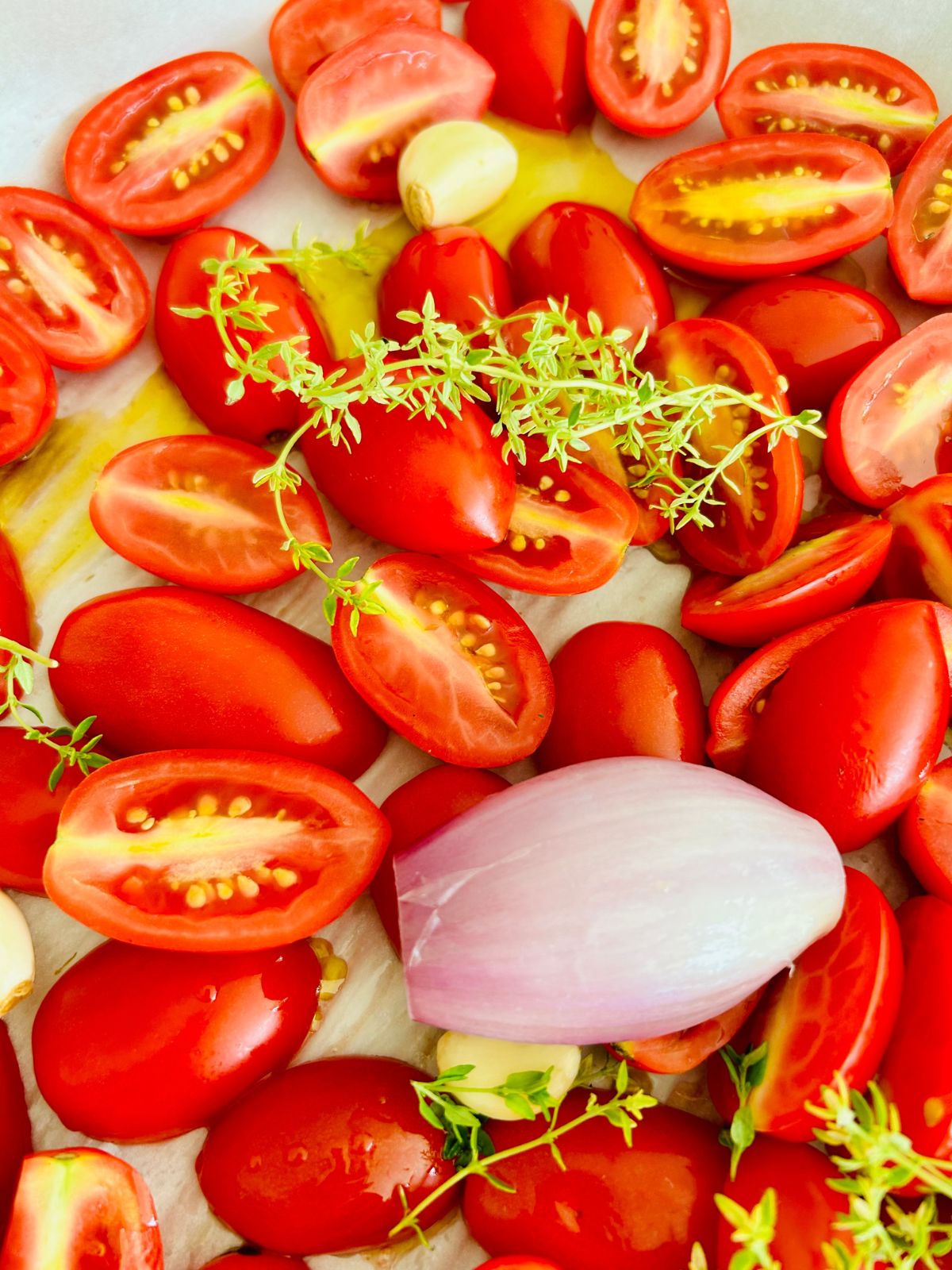
Step 1: Rinse and cut the tomatoes in half, and spread them across the baking sheet. Add the peeled shallot, garlic cloves, and fresh thyme sprigs. Drizzle the olive oil over everything.
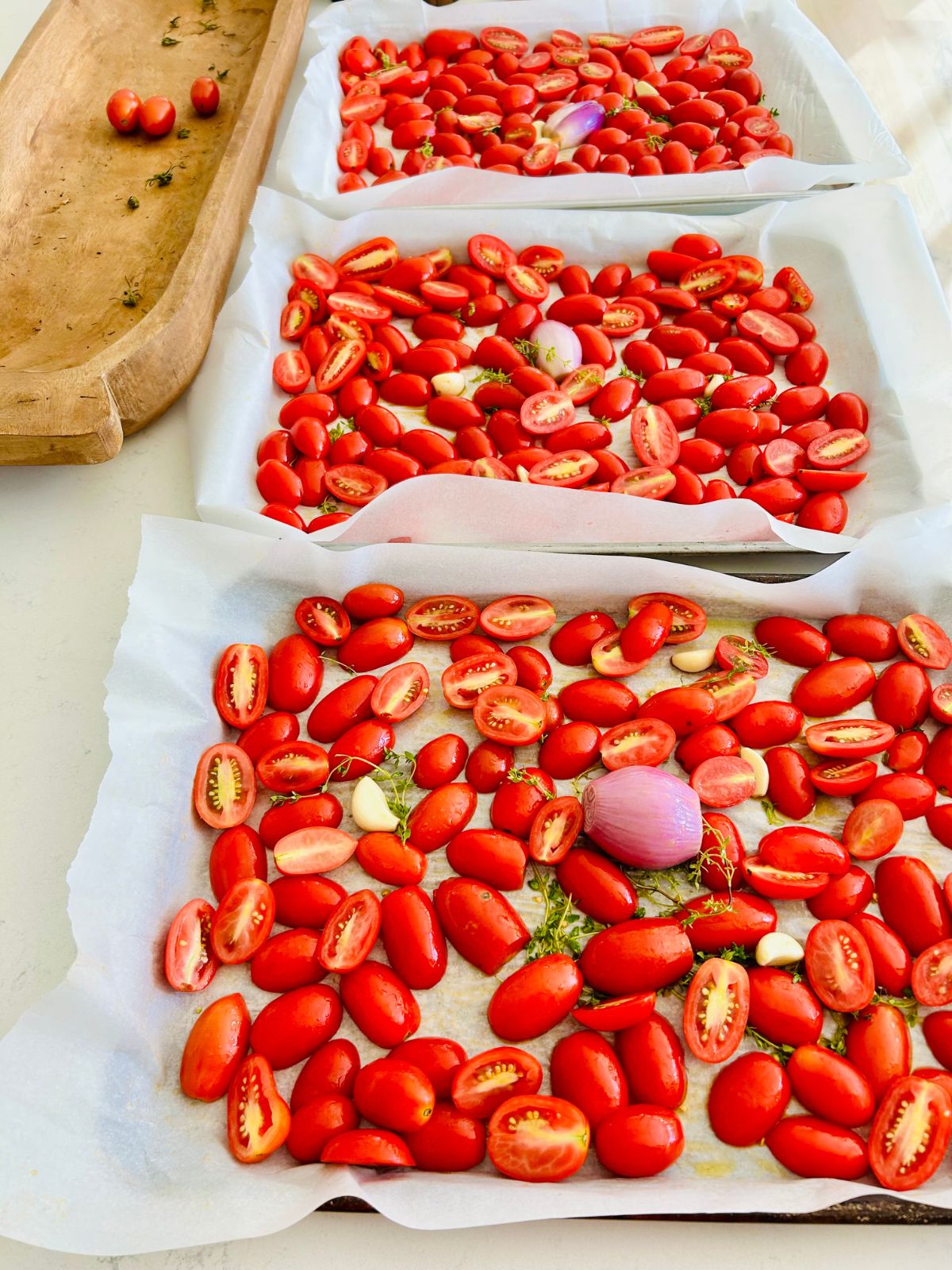
Step 2: Toss gently and spread back into an even layer. Tuck the herbs, garlic, and shallot in the center of the baking sheet to prevent scorching.
The photo above is a triple batch.
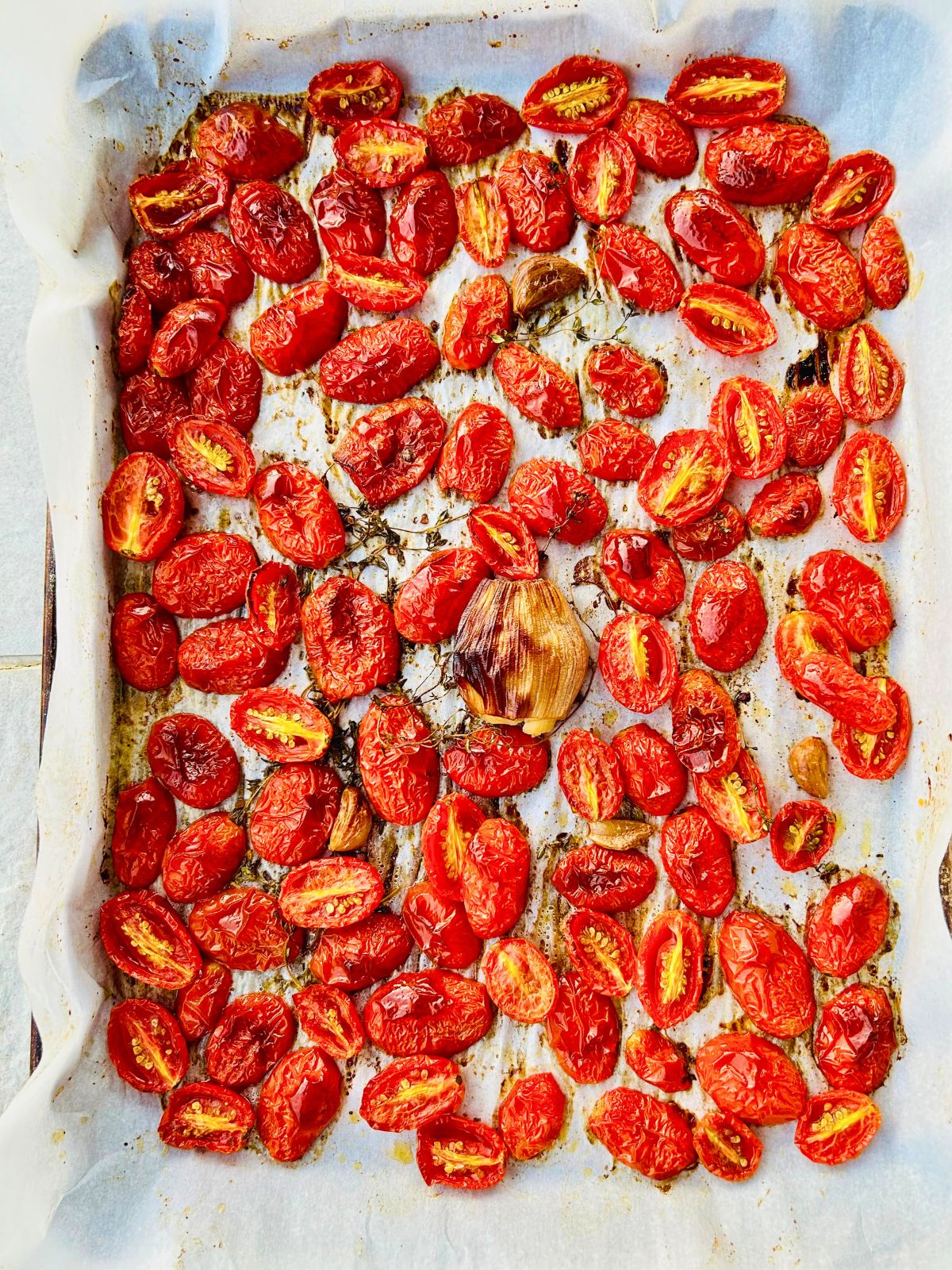
Step 3: Roast until the tomatoes are dry, wrinkled, and the excess liquid has evaporated from the pan.
About 2 hours for Juliet or NatureSweet Cherub tomatoes, up to 5 hours for Roma or San Marzano-style tomatoes. Check at the 2-hour mark and every 30 to 45 minutes after that, if needed.
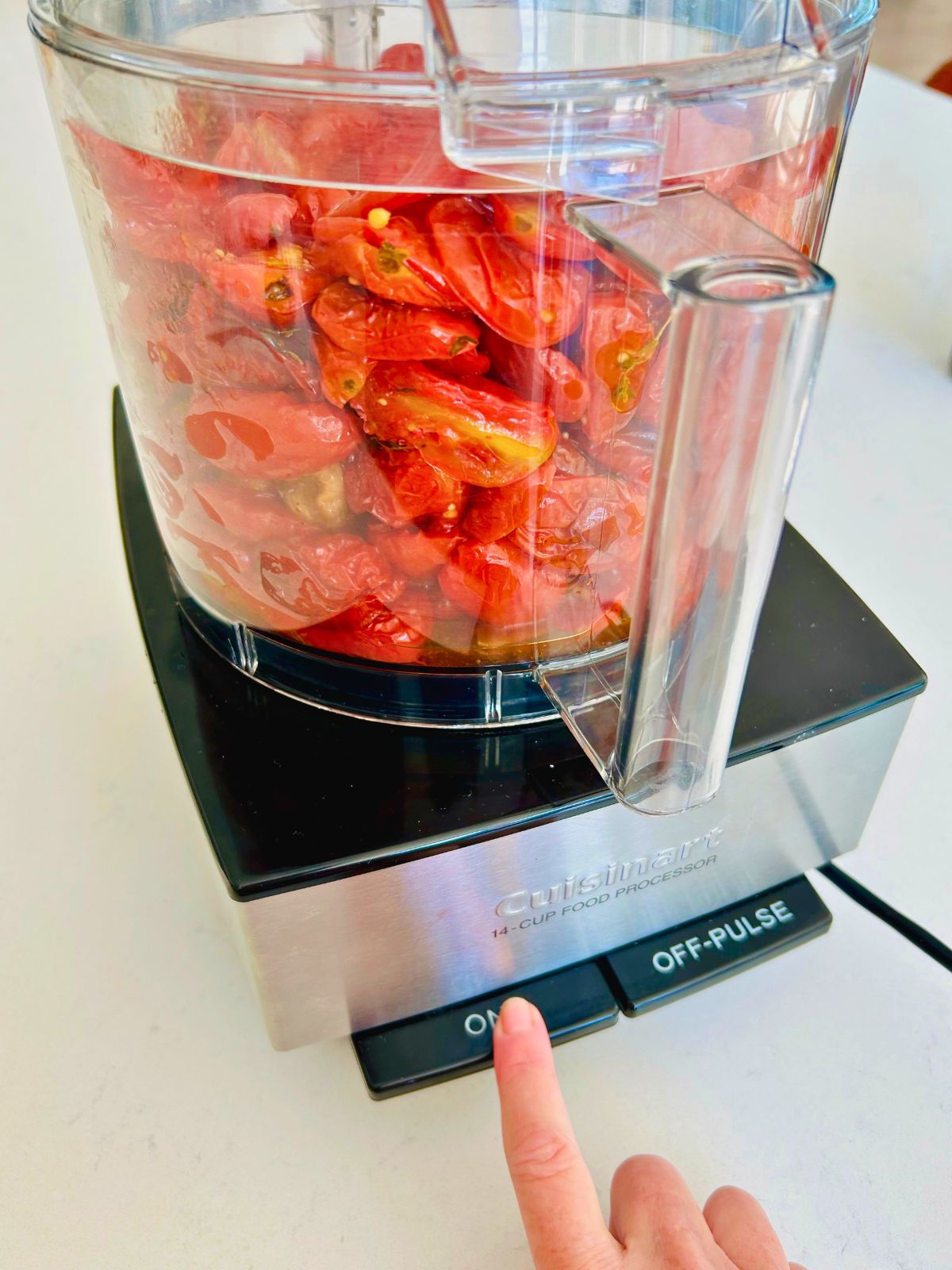
Step 4: Transfer to the food processor bowl fitted with the S blade. Add the sherry vinegar, honey, kosher salt, and a few grinds of black pepper.
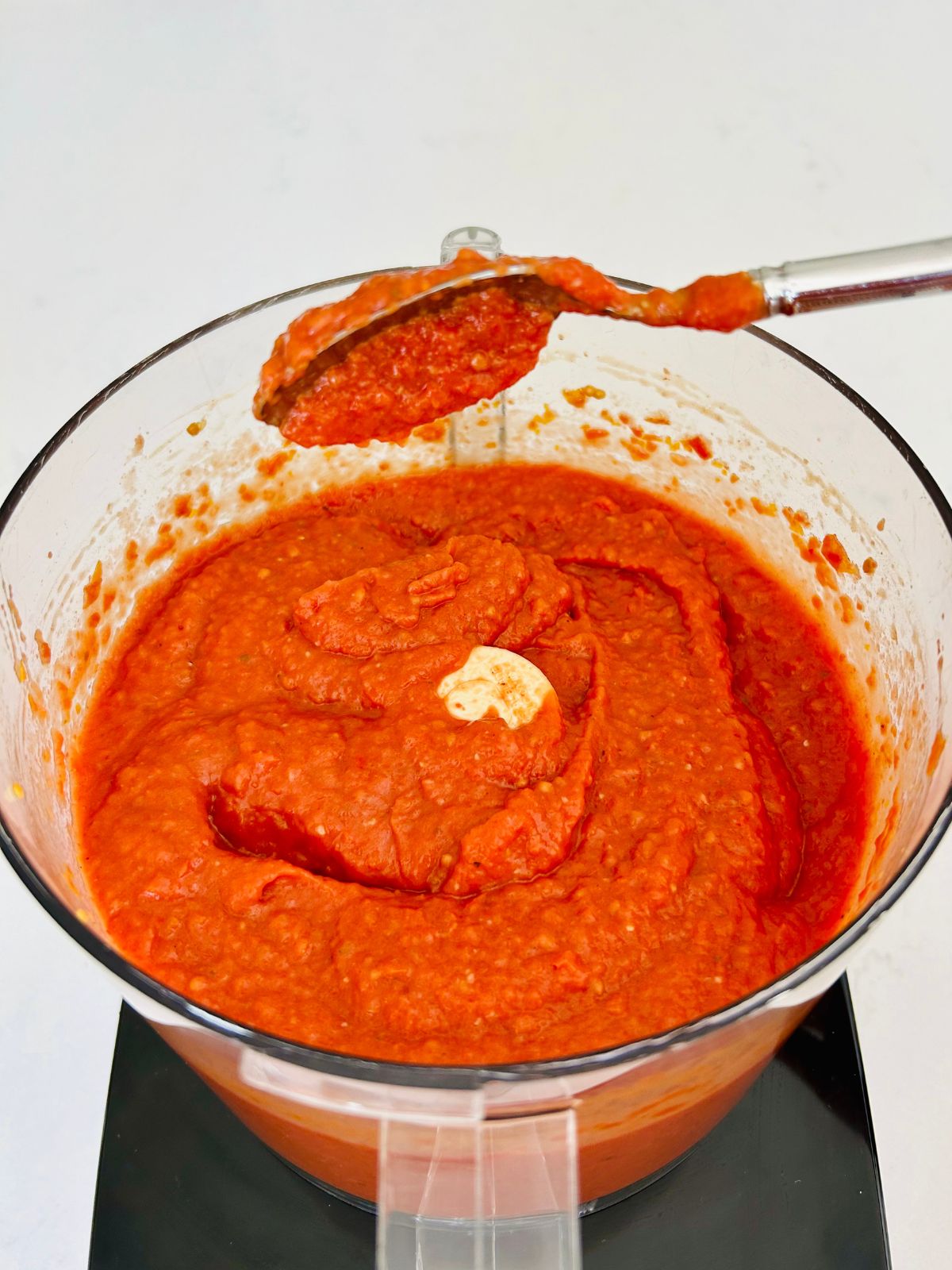
Step 5: Process for 60 to 90 seconds until completely smooth. Let the paste cool to room temperature before portioning and storing.
How To Freeze Tomato Paste From Fresh Tomatoes
Once the paste cools, you can freeze it. Two to four-ounce portions are useful because that is roughly what most recipes ask for. For more ways to use this paste and other fresh-from-the-garden ideas, browse my main dishes.
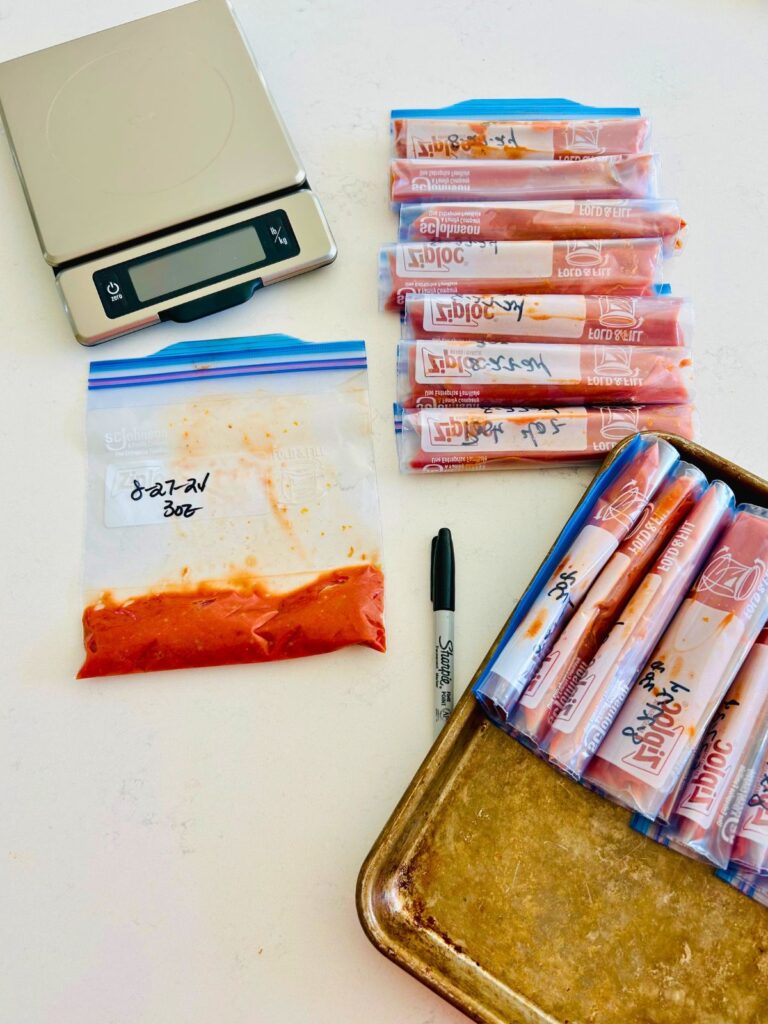
To Freeze
- Scoop chilled portions into quart-sized freezer bags and remove as much air as possible.
- You can also use canning jars (leave head space for expansion) or ice cube trays.
- Label the bags with the description, quantity, date, and freeze for up to 8-12 months.
- I like to lay the bags on a small cookie sheet until frozen, then combine them into a gallon-sized freezer bag for organized storage.
Batch Cooking
This recipe scales up easily for a larger harvest:
- Two pounds of tomatoes fit one standard rimmed baking sheet.
- Roast multiple baking sheets at the same time.
- Rotate them halfway through roasting if your oven runs unevenly.
- Roast one tray while another cools, and you can roast several pounds in a single afternoon.
Storage Information
Refrigerator: Store cooled paste in a sealed container for up to 1 week.
Freezer: Portion into 1 to 4-ounce amounts in freezer-safe bags or containers. Label with the date and portion size. Use within 12 months for best flavor.
Using frozen: No need to thaw for most applications. Drop frozen portions directly into a hot pan or simmering pot and they will melt in quickly.
FAQ
No. The food processor handles the skins completely after roasting. Skipping the peel saves a significant amount of prep time and does not affect the final texture when blended smoothly.
No. I have never noticed bitterness from the seeds in the finished paste. If you prefer a seedless paste, scoop the seeds out of the halved tomatoes before roasting.
Yes, a blender works, too.
Did you try any of these tips? Leave a comment below to let us know how it turned out! Thanks for visiting!
📖 Recipe
Tomato Paste Recipe
Equipment
- food processor, 11-14 cup capacity
- 11 x 18-inch rimmed baking sheet
- parchment paper (optional)
- food scale (optional)
Ingredients
- 2 pounds plum tomatoes (Roma, San Marzano-style, paste variety, or Juliet cherry tomatoes)
- 1 tablespoon olive oil
- 4 whole garlic cloves, peeled
- 2-3 fresh thyme sprigs
- 1 shallot, peeled
- 1 teaspoon sherry vinegar
- ½ teaspoon honey
- ½ teaspoon Diamond Crystal kosher salt
- freshly ground pepper
Instructions
- Preheat the oven to 300℉.
- Line the rimmed baking sheet with parchment paper.
- Rinse and cut the tomatoes in half lengthwise and spread them across the rimmed baking sheet.
- Add the shallot, garlic cloves, and thyme sprigs to the pan.
- Drizzle the olive oil over the ingredients. Mix and spread everything evenly on the baking sheet. Tuck the herbs and shallot in the center of the baking sheet to prevent scorching.
- Roast the tomatoes until they are dry, wrinkled, and the excess liquid has evaporated. About 2 hours for Juliet or NatureSweet Cherub tomatoes, up to 5 hours for Roma or San Marzano-style tomatoes. Check at the 2-hour mark and every 30 to 45 minutes after that, if needed.
- Transfer them to the food processor bowl fitted with the S blade. Add the sherry vinegar, honey, kosher salt, and freshly ground pepper. Process for 60-90 seconds until smooth.
- Let the paste cool to room temperature before portioning and storing.
Notes
- Juliet Cherry Tomatoes (Garden): My first choice. A small oblong cherry tomato shaped like a miniature plum tomato. They are good raw or cooked, low in water, and incredibly prolific in the garden. Roasting time is about 2 hours.
- NatureSweet Cherub Tomatoes (Store-Bought): The closest store-bought match to the Juliet. Small, oblong, and similarly meaty. Available year-round at Walmart, Target, Costco, and most major grocery stores. Expect a similar 2-hour roasting time.
- Roma Tomatoes (Garden, Store-Bought): A reliable option when the garden is done, and Cherub tomatoes are not available. Roma tomatoes are larger than Juliet or Cherub varieties, so budget closer to 4-5 hours of roasting time. They are widely available at every grocery store and still produce a rich, flavorful paste.
- San Marzano-Style Tomatoes (Garden): Another excellent paste tomato from the garden, but similar in size to Roma. Plan for up to 5 hours in the oven.
Nutrition
The provided nutritional information is an estimate per serving. Accuracy is not guaranteed.

Comments
No Comments