
Herb and garlic brined pork rib roast with a gorgeous crackling crust. The brine has a whole head of garlic, handfuls of fresh herbs, salt, and sugar that's briefly simmered until fragrant.
Then, the brine does its work for 10–24 hours of hands-off time for maximum juiciness. This is the pork rib roast that makes guests ask, "What did you do?"

Soaking the rack of pork in a herby savory brine provides great results. The mild meat is thoroughly infused with flavor and moisture that won't cook out in the oven. It's an optional step, but the additional time is worth the flavor.
The best pork brine I've ever used comes from Thomas Keller's Ad Hoc At Home cookbook. But it has a slight flaw: the salt level is too intense if you need a longer brine to fit your prep timeline. This becomes a problem if you need some flexibility.
So, I reduced the salt from 7% to 3% by weight, which means you can brine this roast between 10-24 hours without the worry of oversalting. When we grilled pork chops with this brine, our neighbor Kurt said, "This tastes like steak!"
It's a great option for family gatherings like the holidays, Sunday supper, or lake weekends. You have some hands-off time to focus on preparing your side dishes, whether it's pureed sweet potatoes and roasted broccoli, or this make-ahead mashed potato casserole and sautéed asparagus.
Jump to:
Why You Will Love This Recipe
- The 3-day game plan eliminates hosting stress.
- Brining does the heavy lifting, infusing deep savory flavor into the mild pork.
- This showstopping cut is one that most people have never cooked at home.
- This recipe celebrates fresh herbs, whether you grow your own or buy them from the store.
- Simple roasting equipment with a standard rimmed baking sheet and wire rack that you already own.
What Is Pork Rib Roast?
- This cut is the prime rib of the pig, just like beef prime rib.
- It's from the pig's back, starting just behind the shoulder, and ends at the hip. The meaty side of the roast is the pork loin, while the rib bones are the baby back ribs.
- Pork rib roast has less fat and connective tissue than other cuts of pork, making it tough, stringy, and dry when cooked too long or braised. Dry heat, like roasting, is the best way to cook it.
- You can buy a roast containing up to 8-10 bones for a larger crowd. If it's too big, cut a few bone-in rib chops before roasting for a different meal.
How To Buy A Pork Rib Roast
Most of the time, pork rib roasts are not sitting in the meat case at the store, but butchers can cut one for you with a day's notice. Ordering ahead also gets you the exact size you need. Here is how you find and order this cut:
- Where to look: Start with small, local butcher shops that offer heritage-bred pork, or try Whole Foods.
- What to ask for: "Do you have bone-in pork rib roasts?" Some butchers call them a rack of pork or center-cut rib roasts, which are the same thing.
- How much to order: 1 bone per person or ¾ pound per serving. For 6 people, ask for a 6-bone roast.
- One critical question: "Is this pork natural or injected with a salt solution?" If it's injected, skip the brine entirely, or it will be too salty.
- Optional upgrade: Ask the butcher to "french" the ribs, where they scrape the meat off the bones, making it look elegant. I don't ask to french the bones because we like the meaty ribs.
What Is A Brine?
Brining is salting your meat for a range of time before cooking. Brining is a vital step in producing juicy, flavorful pork and poultry.
There is a downside: It takes time, and you can oversalt your meat if you brine for too long or use too much salt.
You can dry-brine by sprinkling salt on meat, such as a turkey breast or a big tomahawk steak, and letting it rest in the refrigerator. Or, you can use a wet brine where the meat is completely submerged in a solution of salt and water and refrigerated.
I find the best method for pork is a wet brine because you can infuse additional flavors at the same time, and it easily fits in the fridge. Here are some wet brine tips:
- Make the brine the day before you need it.
- The brine has to be completely chilled before you add the meat.
- Stick with the suggested brine time to flavor the meat without oversalting.
- After brining, the pork can be rinsed, dried, and stored covered in the refrigerator for up to 1 day before cooking.
Ingredients
Here are the ingredients needed to make juicy herb and garlic brined pork rib roast!
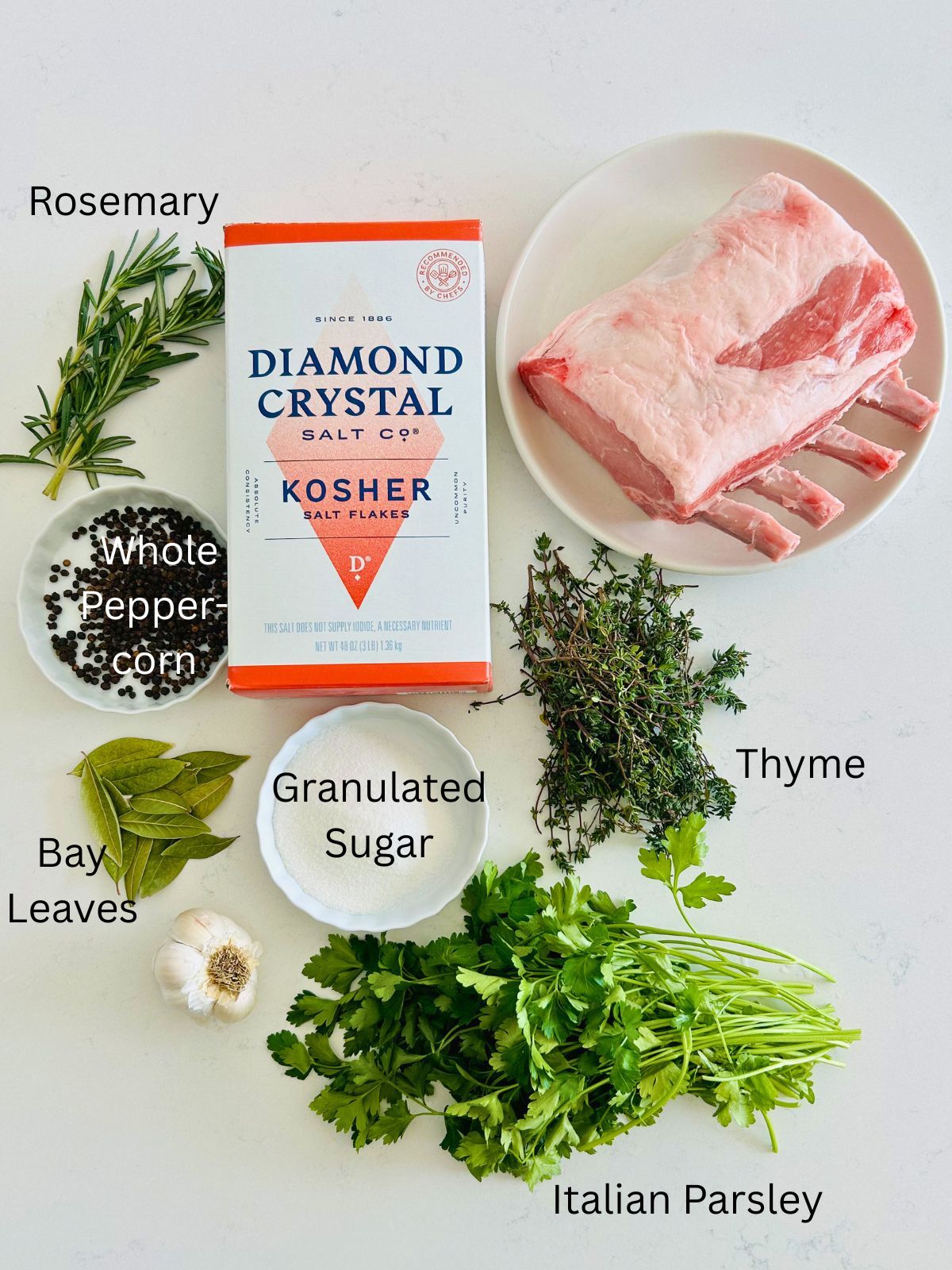
- Bone-In Pork Rib Roast: Look for heritage breeds like Berkshire or Duroc with a rosy meat color, more marbling, and better flavor than common grocery store pork. My closest Whole Foods butcher can prep one in 30 minutes when I call in the morning. Plan to buy 12 ounces (1 bone) per person. Costco offers a rack of pork at Christmas and Easter; however, ours are already injected with salt.
- Diamond Crystal Kosher Salt: I prefer the brand, Diamond Crystal, because their shape is lighter and flakier and dissolves faster, which helps prevent over-seasoning. If using Morton or table salt, reduce the salt measurements by half.
- Granulated Sugar: Sugar provides balance to the salt and helps improve the caramelization of the pork.
- Fresh Garlic Cloves: A whole head of real garlic, not the jarred stuff.
- Rosemary: Rosemary has needle-like leaves and can be strong with a piney flavor. It's excellent for pork and poultry seasoning when used in moderation. In this case, the whole fresh stems are used in the brine. If you only want to use 1 herb, buy this.
- Thyme: Fresh thyme also complements pork without the risk of overpowering it. I've never used too much thyme. The brief simmer allows the oils in the fresh thyme leaves and stems to infuse the brine. Use the freshest thyme possible since whole sprigs will be used.
- Fresh, Flat Leaf Italian Parsley: Italian parsley helps bring a slight grassy brightness. Please don't use dried parsley.
- Bay Leaves: Bay leaves and simmers go together. This herb provides subtle herbal and floral notes. You can locate fresh bay leaves at the store in the produce section next to other herbs, nestled in plastic clamshells. If dried bay leaves are your only option, they will work.
- Whole Black Peppercorns: They add balance with their spice, but not as strongly as cracked pepper. They are easy to remove from the brine compared to ground pepper.
See the recipe card below for ingredient measurements.
Variations And Substitutions
Here are some ideas for how to modify this recipe to better suit you and your dinner guests.
- Simple Brine: Modify the brine by just using salt, sugar, and water.
- Garlic Brine: If you don't have the herbs, just use the fresh garlic cloves. They are terrific in the brine.
- Honey: Substitute ¼ cup of honey for the granulated sugar.
- Boneless Pork Roast: You can substitute a boneless pork loin roast. Cook it to an internal temperature of 140℉.
- Pork Chops: Substitute 4-6 thick-cut pork chops for the pork rib roast. Brine for 12 hours. Sear and finish them in the oven like my pork chop recipe.
- Apples: Sauté 2 apples, peeled and sliced, in 1-2 tablespoons of butter until just soft. Serve with the pork.
Equipment
- 8-quart stock pot
- A food scale to weigh the herbs (optional)
- A container large enough to hold the brine and submerged pork.
- leave-in probe meat thermometer or an instant-read thermometer
- metal cooling rack
- 13 x 18-inch rimmed baking sheet
- aluminum foil (optional)
- butcher string
Step-by-Step Instructions
If the pork is enhanced with salt, skip the brine entirely to prevent oversalting.
To Brine
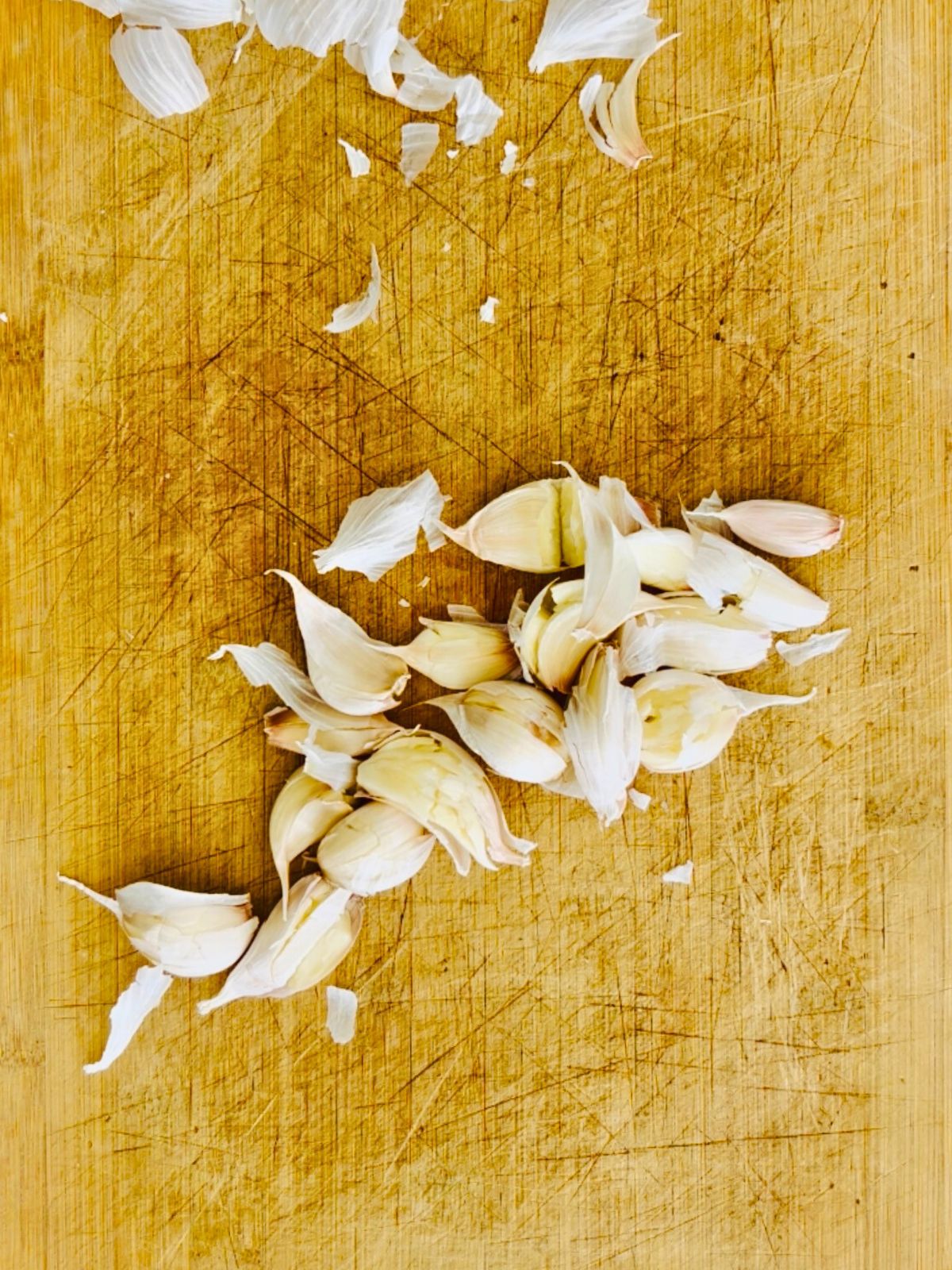
Step 1: Separate the garlic cloves and crush them with the side of a chef's knife to release their oils.

Step 2: In a stockpot, combine 2 cups of water with the salt, sugar, garlic, herbs, and peppercorns. Simmer at 180℉ for 1 minute.
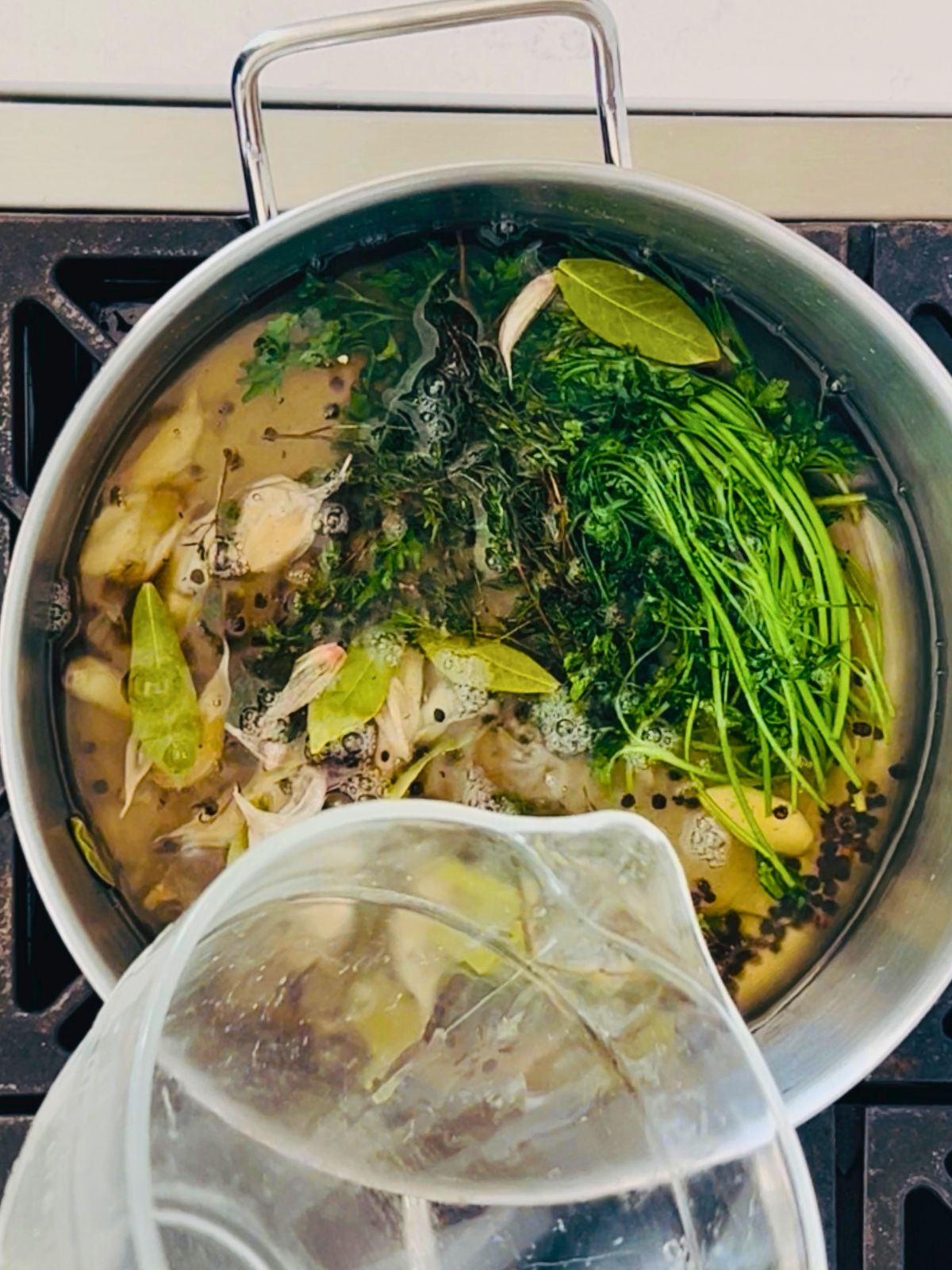
Step 3: Turn off the heat and add the remaining 6 cups of icy cold water to the brine to start the cooling process. Store in the refrigerator, uncovered, for at least 4 hours until cold, 33-40℉.

Step 4: Submerge the pork in the cold brine. If needed, top with a plate or bowl to prevent the pork from floating out of the brine.
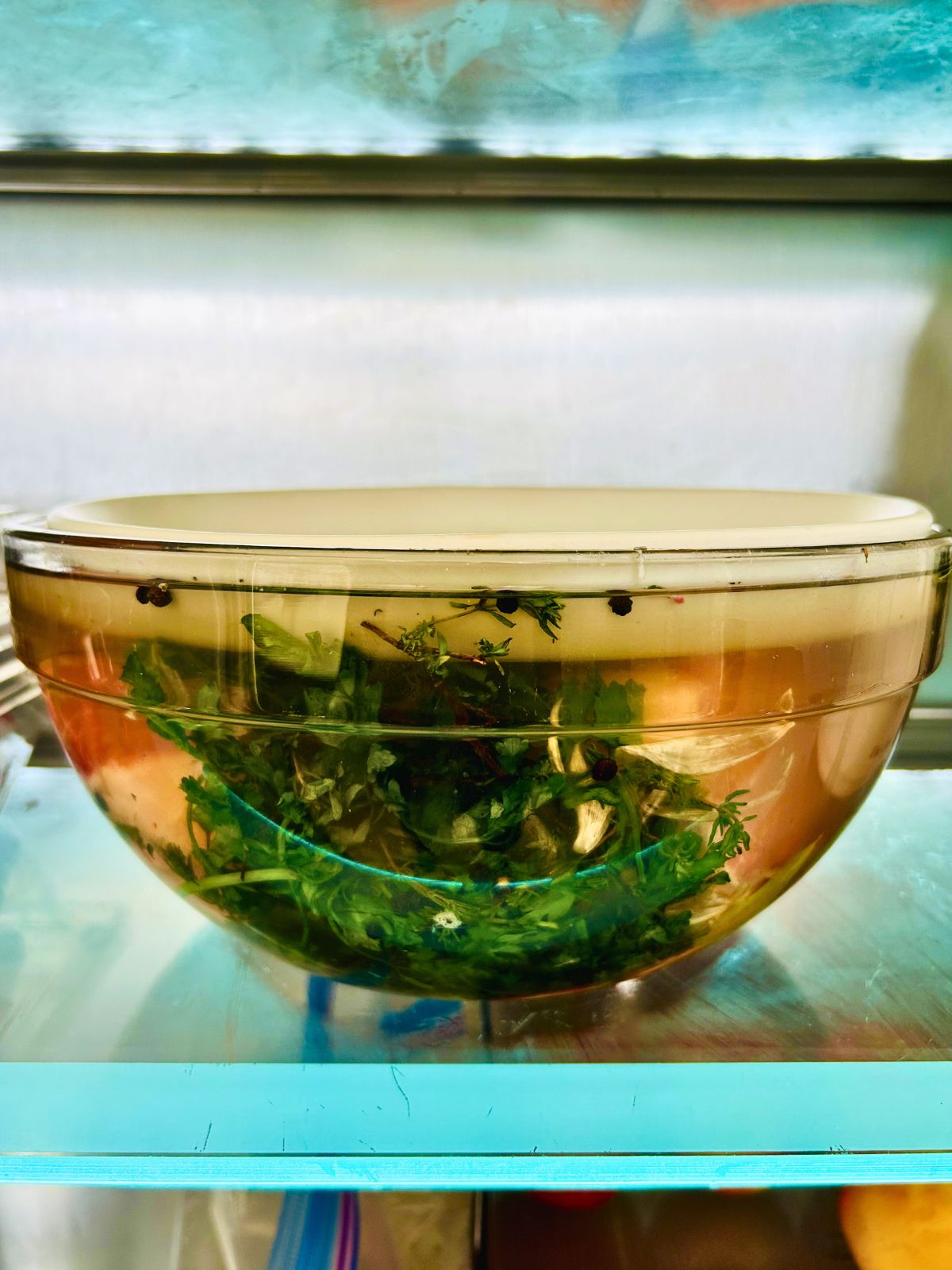
Step 5: Allow the pork to soak in the brine for 10-24 hours in the refrigerator.
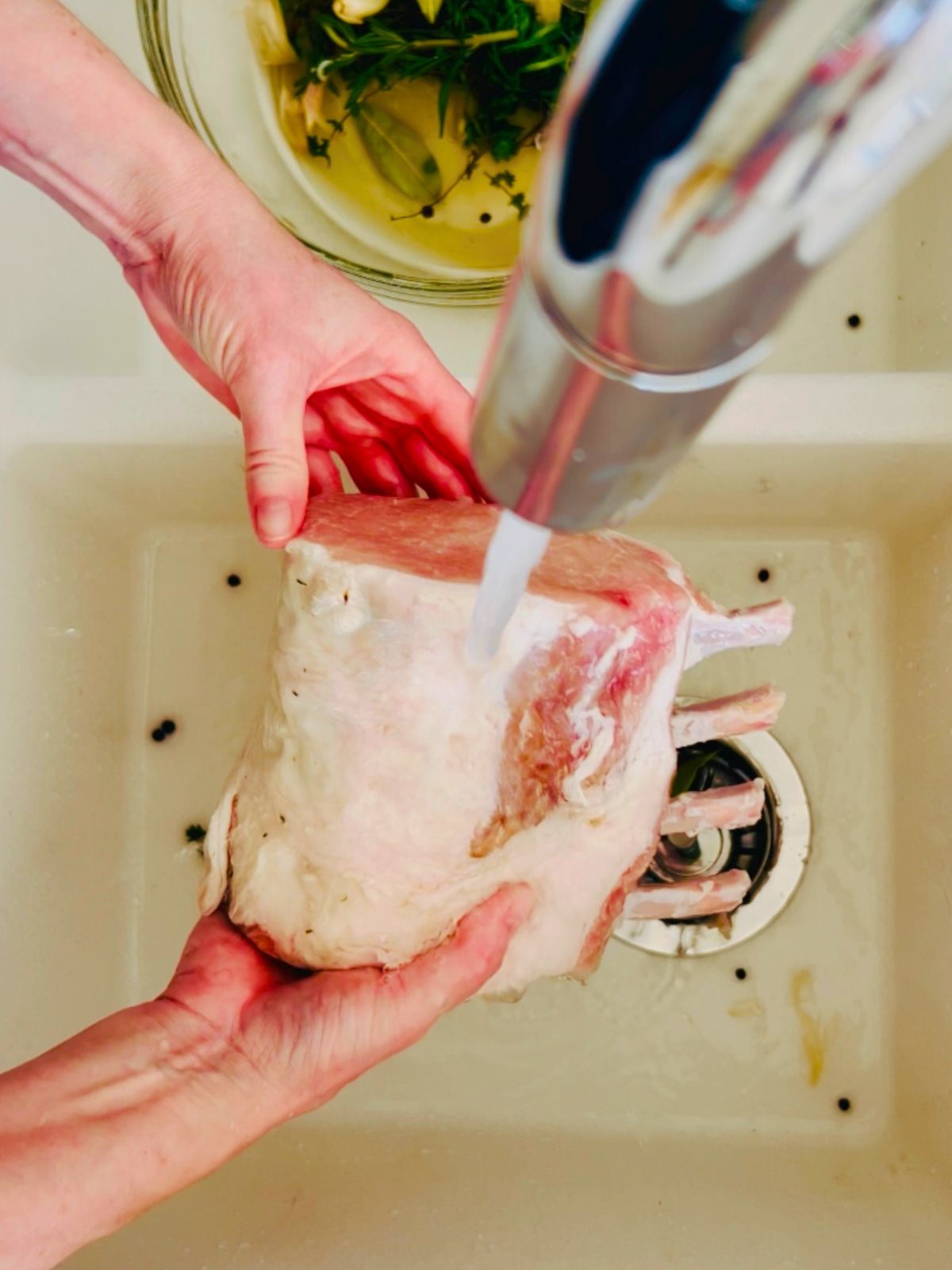
Step 6: Remove the pork from the brine and rinse under cold water. Pat dry with paper towels.
You can store the pork in the fridge, covered, for 1 day, if needed.
To Cook
Place the oven rack in the center and preheat to 350℉.
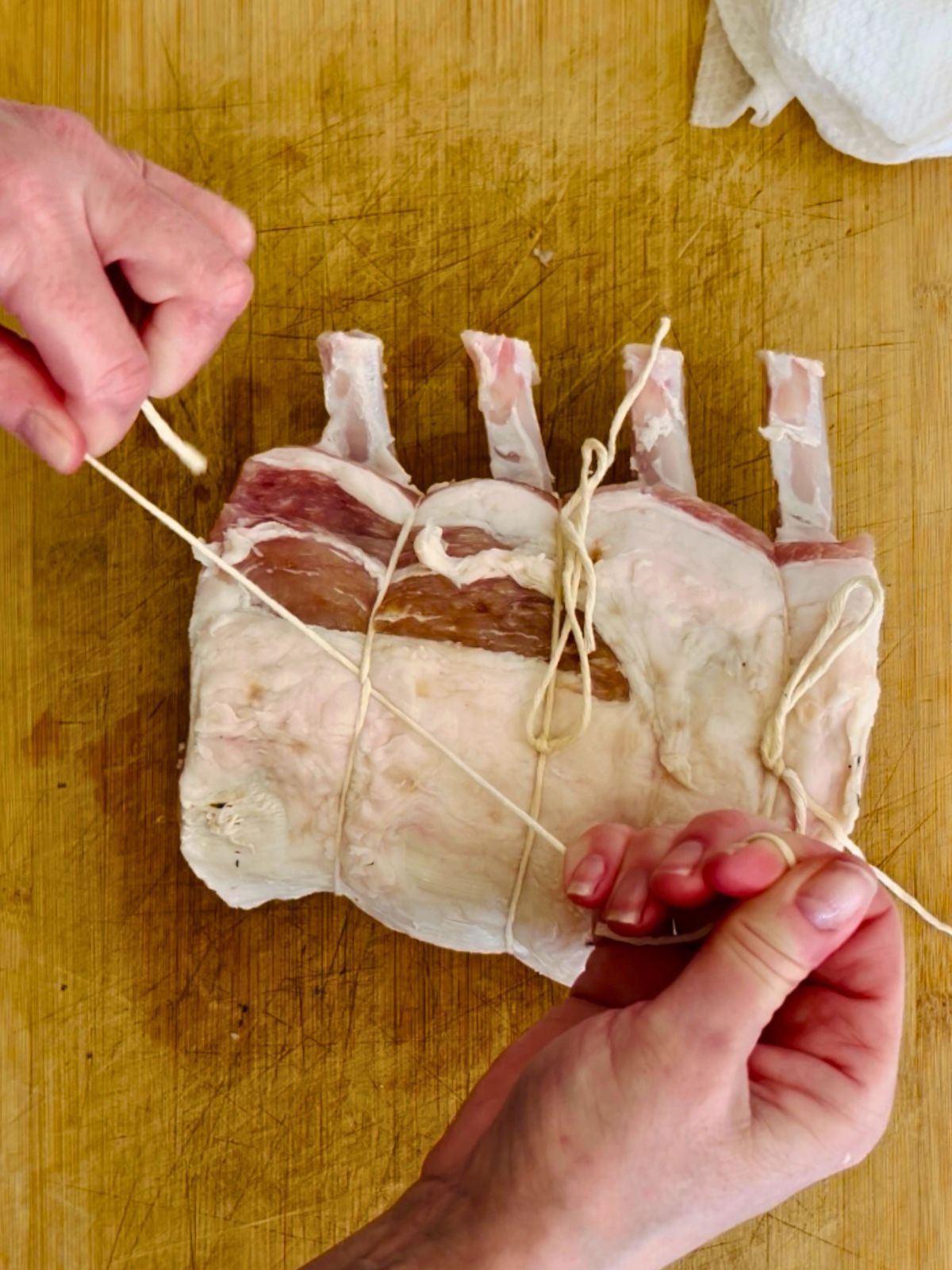
Step 7: To promote even roasting, tie the pork between each bone with butcher string.
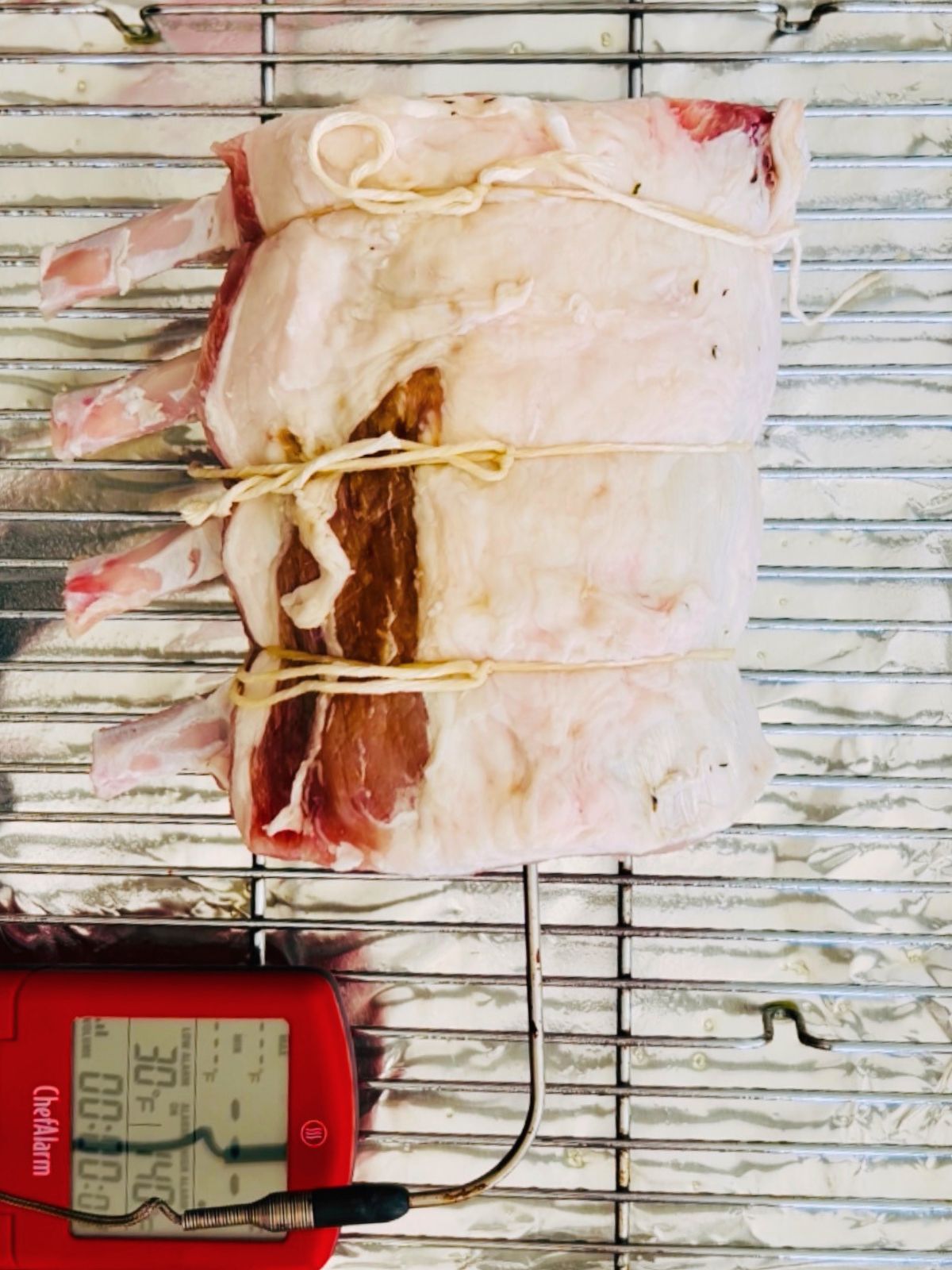
Step 8: Spray a wire cooling rack with non-stick oil and place it over a sheet pan lined with aluminum foil. Place the pork on the rack. Insert a meat thermometer, if using.
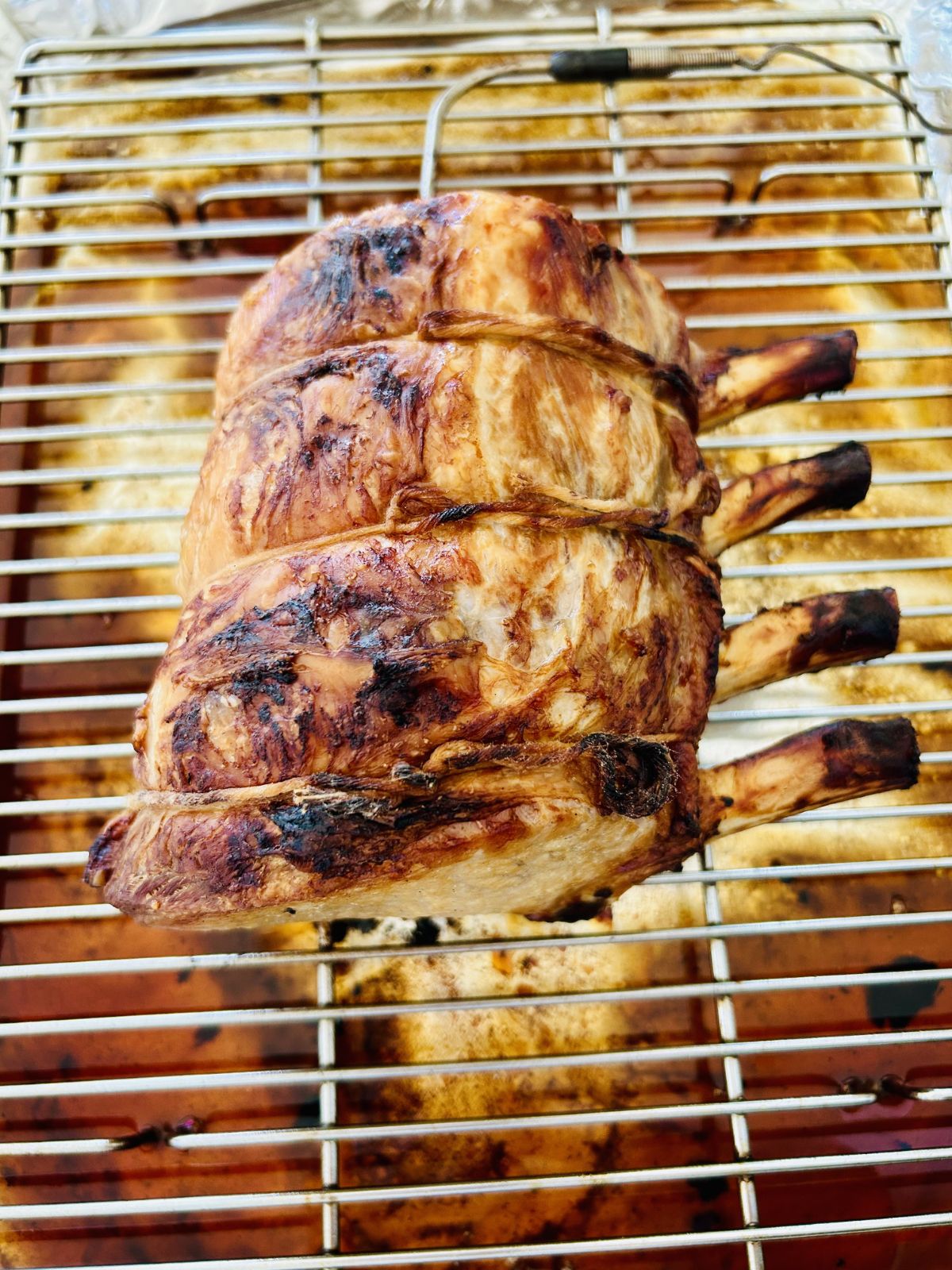
Step 9: Roast in the oven until the internal temperature is 140℉. The temperature will rise well above the USDA's recommended temperature of 145°F with a 3-minute rest. For planning purposes, it takes roughly 15-20 minutes per pound.
Tip: If the oven is getting smoky, pour a cup of water into the sheet pan.
Remove from the oven and let rest at least 15 minutes. To serve, remove the butcher string, then cut between each rib bone to create a pork chop for each serving.
Multi Day Make Ahead Instructions
3-Day Brined Pork Rib Roast Game Plan:
- Day 1: Prepare the brine. Allow it to cool to 90°F, then store uncovered in the fridge. I store the brine in the same stock pot it was made in.
- Day 2: Fully submerge the pork rib roast in the brine to soak for 10-24 hours.
- Day 3: Preheat oven. Rinse, dry, and tie the pork roast. Roast for about 15-20 minutes per pound using a meat thermometer until an internal temperature of 140°F. Rest for 15-30 minutes. Carve and serve.
Day 3 Example: A 5-pound rib roast for a 6:30 p.m. dinner.
- 4:05 PM: Preheat oven for 30 minutes.
- 4:35 PM: Start roasting for around 15-20 minutes per pound (use the lower end!)
- 5:50 PM: Remove from the oven when the internal temperature is 140℉. Rest for 30 minutes.
- 6:20 PM: Carving time 10 minutes
- 6:30 PM: Serve
- Total time needed: 2 hours 25 minutes
- Start preheating at 4:05 PM
Storage And Reheating Instructions
To Store: Store cooked and cooled pork rib roast in a covered container in the refrigerator within 2 hours of cooking, according to the USDA. Store for up to 4 days.
To Reheat: Wrap in foil or use an oven-safe dish, covered, and reheat in a 350℉ oven for 10-15 minutes. You can also reheat it, covered, in the microwave for 60-second increments until warmed.
FAQ
Skip the brine and season with ¾ teaspoon of Diamond Crystal kosher salt per pound of pork before roasting. You can also add freshly ground pepper.
Yes, you can use boneless pork loin. Tie it every 2 inches with butcher's string if it's not already tied.
Yes. You can make the brine and chill it within 1 hour if you substitute ice for chilled water after simmering the brine. Then, you can freeze the slightly warm brine for 45 minutes until it's cold, 40℉.
Yes. This is excellent in the smoker. Set your smoker to 275℉, then monitor the internal temperature of the roast until it gets to 140℉. It depends on your equipment, but plan roughly 20-30 minutes per pound.

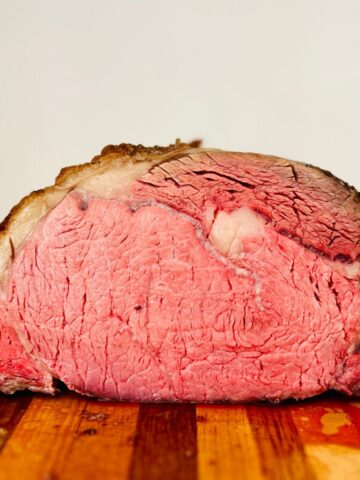

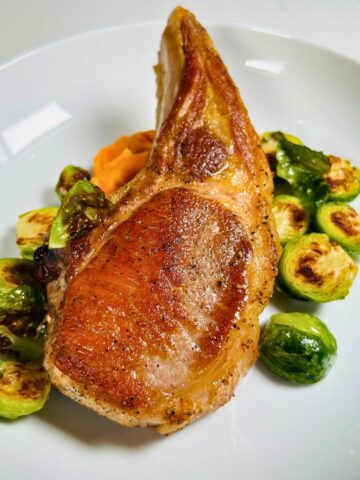
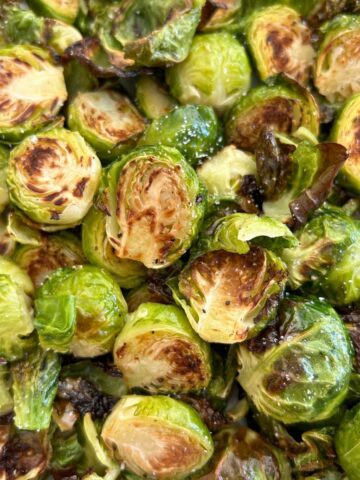
Did you try any of these tips? Leave a comment below to let us know how it turned out! Thanks for visiting!
📖 Recipe

Herb And Garlic Brined Pork Rib Roast
Equipment
- 6 to 8-quart stock pot
- container large enough to hold the brine and submerged pork
- metal cooling rack
- aluminum foil (optional)
- 13 x 18-inch rimmed baking sheet
- meat thermometer
- butcher string
- food scale (optional)
Ingredients
Pork Brine (Enough for 3-8 lbs of Pork)
- 8 cups water
- ½ cup Diamond Crystal kosher salt (reduce to half if using Morton)
- ¼ cup granulated sugar
- 12 bay leaves
- 3 fresh rosemary sprigs
- ½ ounce fresh thyme sprigs, large bunch
- 1 whole head of fresh garlic (12 garlic cloves)
- 2 ounce bunch of parsley
- 2 tablespoons black peppercorns
Pork
- 3 pound bone-in pork rib roast or rack of pork (4 bones)
Instructions
To Brine
- Separate the garlic cloves and crush them with the side of a chef's knife to release their oils. They don't have to be completely peeled.
- In a stockpot, combine 2 cups of water with the salt, sugar, garlic, herbs, and peppercorns. Simmer at 180℉ for 1 minute.
- Turn off the heat and add the remaining 6 cups of icy cold water to the brine to start the cooling process. Store in the refrigerator, uncovered, for at least 4 hours until cold, 33-40℉.
- Submerge the pork in the cold brine. If needed, top with a plate or bowl to prevent the pork from floating out of the brine.
- Allow the pork to soak in the brine for 10-24 hours in the refrigerator.
- Remove the pork from the brine and rinse under cold water. Pat dry with paper towels.
To Cook
- Place the oven rack in the center and preheat to 350℉.
- To promote even roasting, tie the pork between each bone with butcher string.
- Spray a wire cooling rack with non-stick oil and place it over a sheet pan lined with aluminum foil. Place the pork on the rack. Insert a meat thermometer, if using.
- Roast in the oven until the internal temperature is 140℉. Roast by temperature rather than time. For planning purposes, it takes roughly 15-20 minutes per pound.
- Remove from the oven and let rest at least 15 minutes. To serve, remove the butcher string, then cut between each rib bone to create a pork chop for each serving.
Notes
- Day 1: Prepare the brine. Allow it to cool to 90°F, then store uncovered in the fridge. I store the brine in the same stock pot it was made in.
- Day 2: Fully submerge the pork rib roast in the brine to soak for 10-24 hours.
- Day 3: Preheat oven. Rinse, dry, and tie the pork roast. Roast for about 15-20 minutes per pound using a meat thermometer until an internal temperature of 140°F. Rest for 15-30 minutes. Carve and serve.
- 30 minutes: Preheat oven
- 15-20 minutes per pound: Roasting time (use the lower end!)
- 30 minutes: Resting
- 10 minutes: Carving time
- Total time needed: 2 hours 25 m
- Start preheating at 4:05 PM
Nutrition
The provided nutritional information is an estimate per serving. Accuracy is not guaranteed.
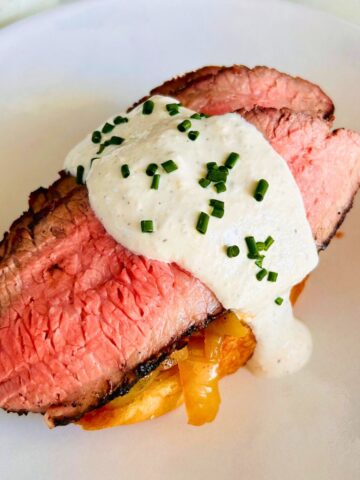
Comments
No Comments