
Do you see Chilean sea bass at the store and wonder what to do with it? It’s expensive. You don’t want to mess it up.
Try this miso marinated sea bass recipe with a simple overnight marinade that locks in moisture so it comes out plump, buttery, and savory every time.
With a low-temperature roast, then finished under the broiler, it makes me actually like fish! See how easy it is to make.
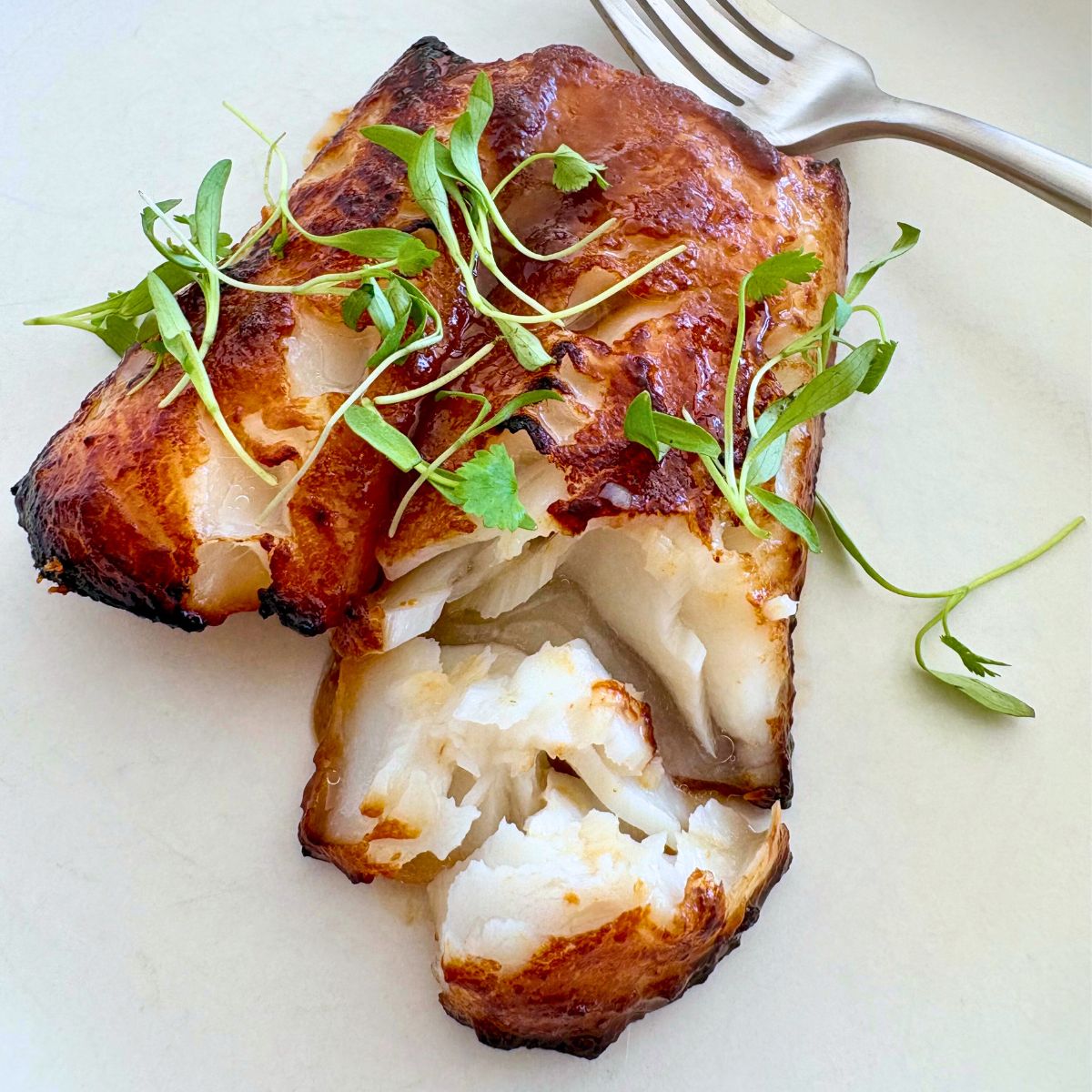
Living in the landlocked Midwest, most of our fish supply is frozen or previously frozen. Sometimes, I didn’t have the courage to serve fish to a large group because so many people don't like it.
That all changed after seeing an Instagram reel with this recipe from Dean Sheremet, a Michelin-trained chef.
Our friends, Jen and John, were coming over for dinner. Here’s the thing: John dislikes eating fish at home. Jen agreed not to tell him I was making miso marinated sea bass and brought an appetizer just in case.
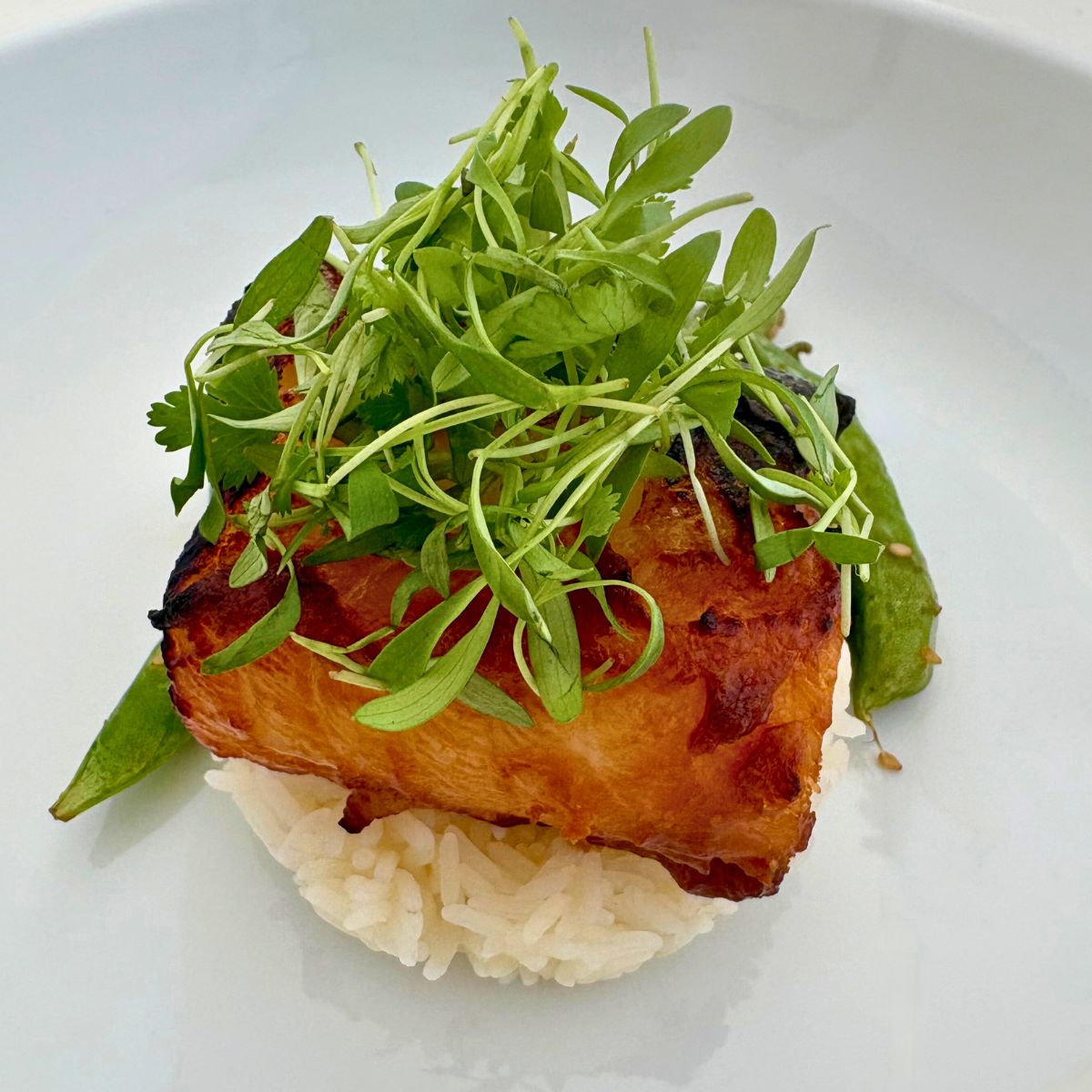
Jen helped by sautéing sugar snap peas while I watched the fish cook in the oven. We presented the pretty plates and told John he didn’t have to eat it. He ate every bite on his plate.
When serving this fish, I pair it with sautéed vegetables like snap peas or asparagus, or salad, so the oven is available to roast and broil the fish. If you prefer a make-ahead vegetable, try these braised collard greens with a bit of spice to complement the miso.
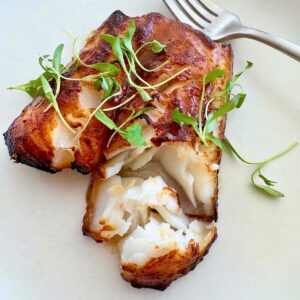
You can serve this over steamed rice or make wasabi mashed potatoes by adding wasabi paste to your favorite mashed potato recipe. Garnish the fish with microgreens, sliced cucumbers, or pickled red onions.
Jump to:
Why You Will Love This Recipe
- Scales easily for a larger crowd.
- Cooks in under 15 minutes.
- This is a dinner party fish without the stress.
- It's very forgiving. Even at 160℉ internal temperature, your sea bass remains buttery and juicy, unlike most fish!
Ingredients
You only need 5 ingredients to make this miso marinated sea bass!

- Chilean Sea Bass: It's a white fish with a firm texture. Its real name is Patagonian toothfish, according to Vital Choice, and caught in the southernmost waters near Antarctica and frozen on the ship. The price of Chilean sea bass ranges from $30–$40/lb. I find it previously frozen at Costco and Whole Foods. Try to look for thick fillets or trim my own into individual servings at 6-8 ounces each. I leave the skin on if that’s how it was packaged, but you can trim it off. Sometimes, the skin sticks to the foil, and I can serve the fillet only.
- Red Miso Paste: A paste from fermented soybeans. It has a salty umami punch. The enzymes in miso break down proteins, tenderizing the flesh while umami and sugar concentrate the flavor of the fish. It's sold in the refrigerated areas of the produce or dairy sections of the store and has a long shelf life in the refrigerator. You can use miso as a substitute for mustard in salad dressing. Red miso is my favorite because of the color, but white or yellow miso paste also works.
- Mirin: A Japanese sweet cooking rice seasoning. It adds sweetness, saltiness, and umami. I buy the Kikkoman Manjo Aji Mirin in the international aisle of the store.
- Unseasoned Rice Vinegar: Made from fermented rice. Rice vinegar has a mildly acidic, tangy flavor and neutral acidity compared to other kinds of vinegar. It is sold in most grocery stores in the Asian section. Look for unseasoned versions because the seasoned varieties have added sugar and salt to the vinegar.
- Granulated Sugar: This sweetener balances the salty, umami-rich punch of miso paste and dissolves easily.
See the recipe card below for ingredient measurements.
Can I Use A Different Fish?
I have tested miso marinade on different fish that are available in my markets. Here are my recommendations from best to least favorite.
- Black Cod: Also called sablefish. It's rich in oil, buttery, and flaky. An excellent substitute, if you can find it. Occasionally, Whole Foods sells it on weekends.
- Halibut: A good lean substitute with a dense texture. It seems to be more available and at a similar price to Chilean sea bass. My husband says fishing for halibut, a flatfish, is like trying to reel in a large piece of plywood from the ocean.
- Salmon: A more common fish for us to find. The marinade works on salmon, but it's not my favorite because I prefer pan-seared salmon. Perhaps the salmon has a higher fat content to start with and doesn't plump up from the marinade like sea bass and black cod do.
- Pacific Cod: Also called Atlantic cod. Many of us make the mistake of buying Pacific cod, thinking it's actually black cod. It's not. Pacific cod is what is used for fried fish and chips. It's economical, lean, and easy to find. I've marinated it a few times and won't do it anymore because it's not as good. If it's your only option, it will work, but it will not be buttery and juicy like sea bass or black cod.
Top Tip
Many of us don’t like fish because of its ‘fishy’ flavor and odor. Here are 2 things you can do about it:
- Rinsing it under water and patting it dry before cooking is effective in removing the smell.
- Thermoworks suggests adding acid, like lemon juice or mild rice vinegar, to balance the compound that is creating the fishy smell.
Variations & Substitutions
Here are some other variations or substitutions you can make to miso marinated sea bass if you are looking for other ideas.
- Sake: You can use sake in place of the unseasoned rice vinegar in the marinade.
- Mirin: Substitute water for the mirin since there is already rice vinegar and sugar in the marinade.
- Spice: Add a touch of heat to the marinade by adding 1-2 teaspoons of paste from canned chipotle peppers.
- Chilean Sea Bass: Substitute Black Cod (Sablefish).
Equipment
- Instant-Read Meat Thermometer: Fish can go from done to overdone in a very short time due to its irregular shape and size.
- 2-quart saucepan
- Rimmed baking sheet
Step-by-Step Instructions
Make The Marinade
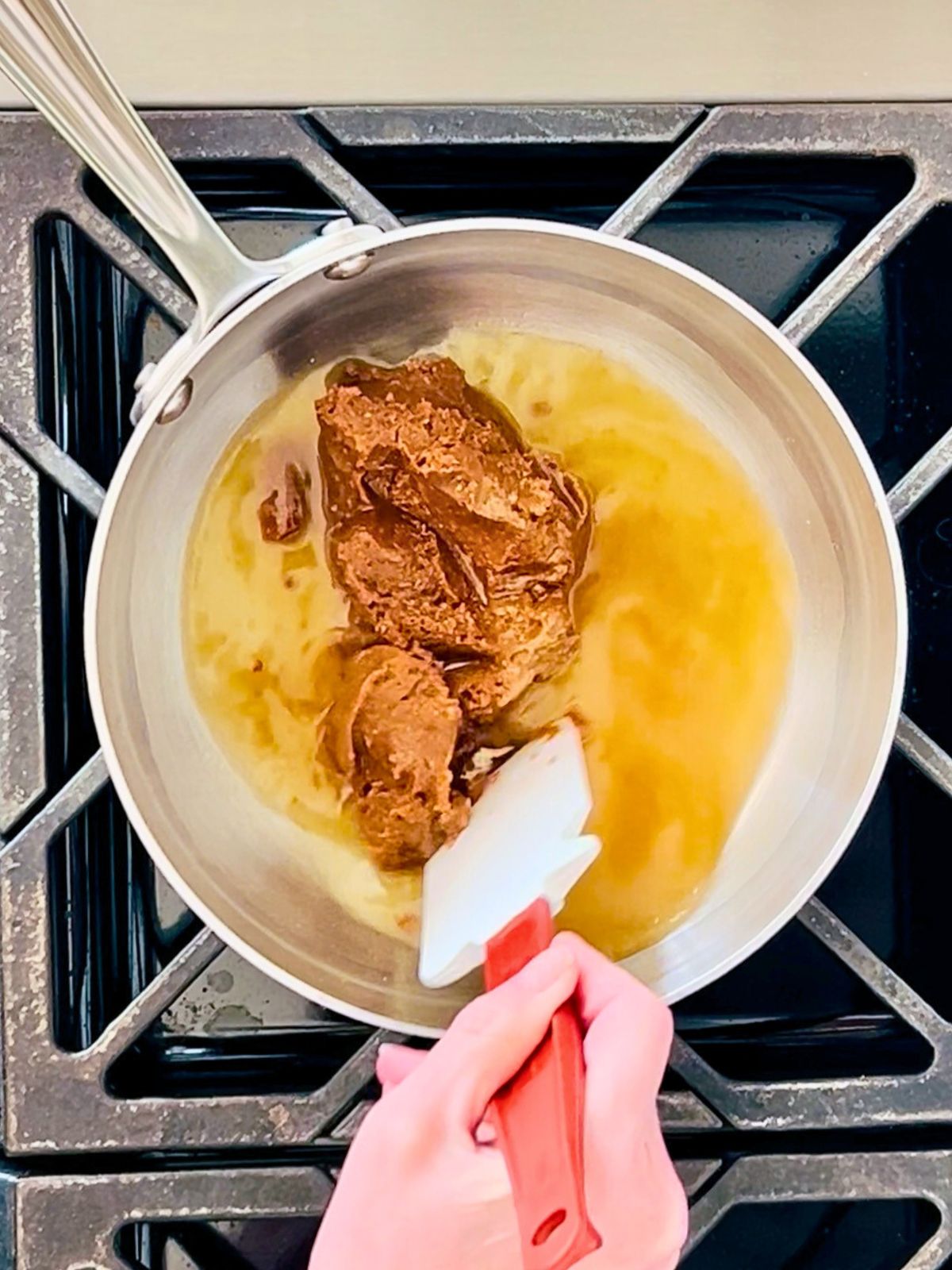
Step 1: In a saucepan, add the miso, sugar, mirin, rice vinegar, and water.
Stir and simmer for 3-4 minutes until the miso has incorporated into the sauce.

Step 2: Turn off the heat. Let it cool to room temperature for 1 hour.
Marinate The Fish

Step 3: Slice the fish into 4 individual portions, if not already.
Place the fish fillets in a container large enough to cover them in the marinade. A Ziplock bag also works.

Step 4: Pour the room-temperature marinade over the fish. Rub it into all sides of the fillets. Cover and store in the refrigerator for 18-24 hours.
To Cook

Step 5: Adjust one oven rack to 5-6 inches below the broiler and a second oven rack in the center of the oven. Preheat to 300℉. Line a rimmed sheet pan with aluminum foil.
Remove the fish and marinade from the refrigerator. Wipe off the extra marinade. Do not rinse it off with water. Place the fish fillets on the lined sheet pan.
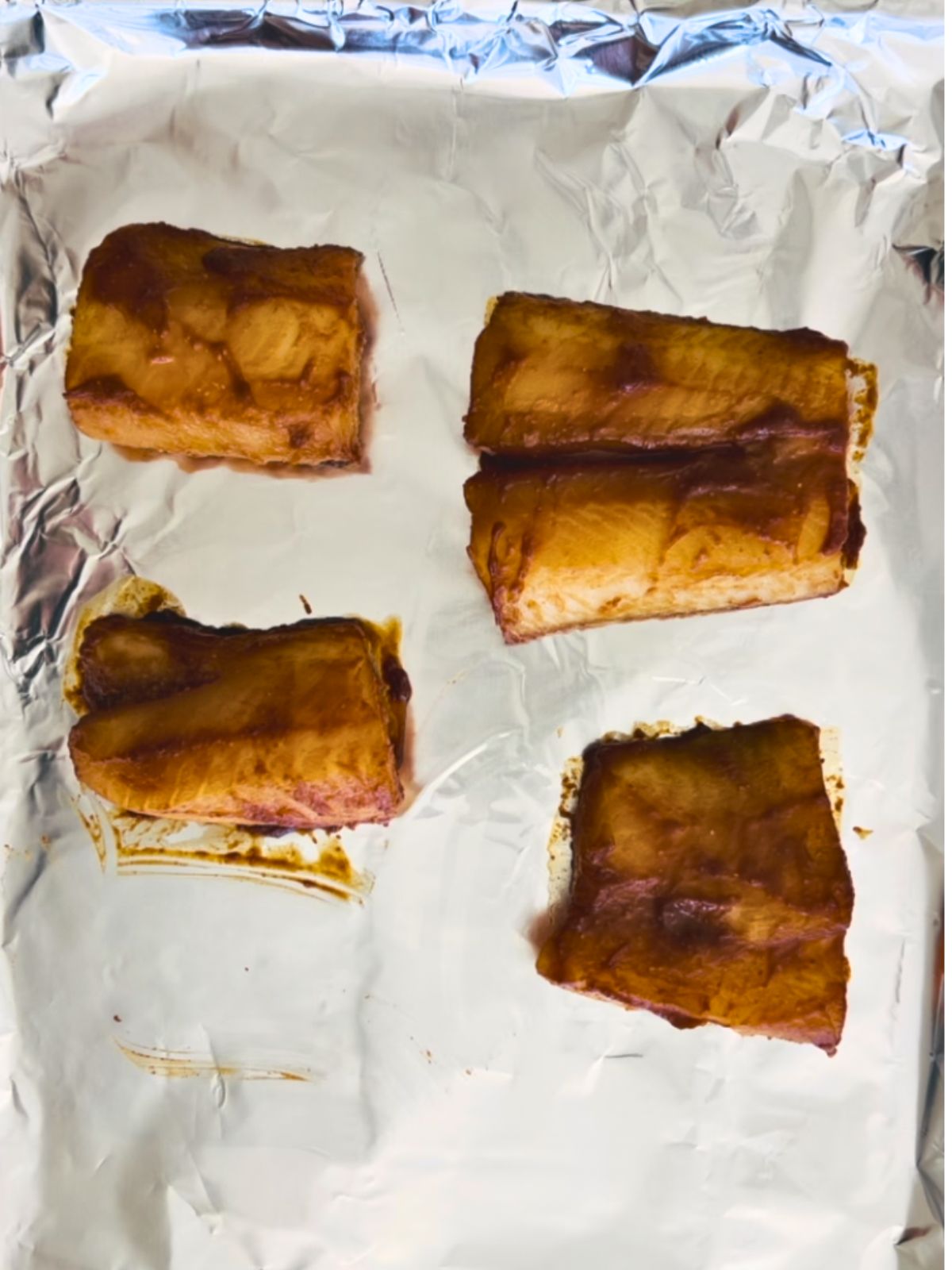
Step 6: Cook on the center rack in the oven for 8 minutes for 1-inch thick fillets. Thicker fish will take 1-2 minutes longer. The internal temperature should be 100-110℉.
Remove the fish from the oven. Turn the broiler on to high. Let it preheat for 10 minutes.

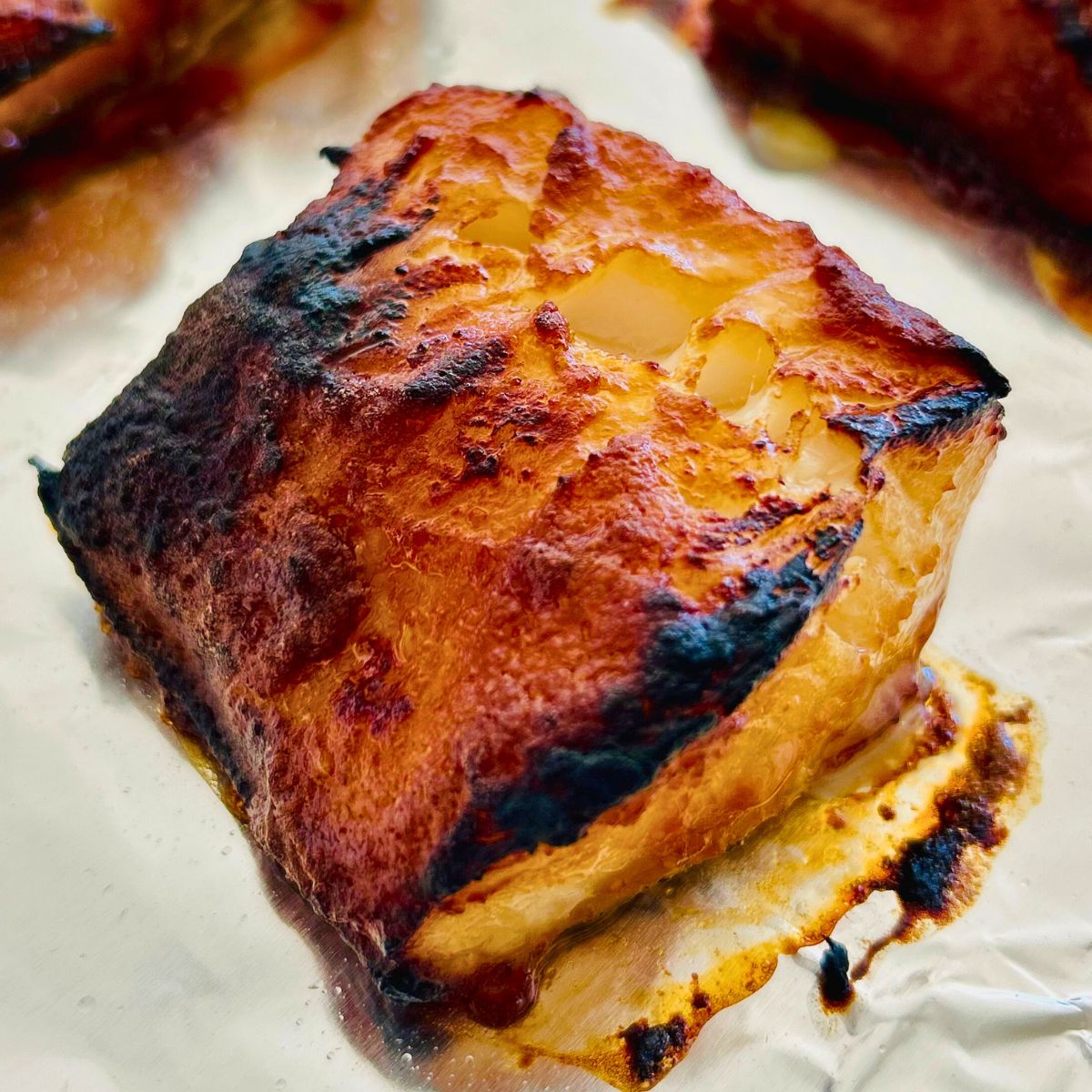
Step 7: Place the sheet pan of fish on the top rack. Broil the fish until caramelized, and the internal temperature of the thickest piece reaches 130-138℉, when the fish becomes flaky. Check every 2 minutes. Depending on your broiler, this can take 3-5 minutes.
Remove the fish from the oven and serve immediately.
Hosting Game Plan
Don't cook the fish ahead of time. Fish needs to be cooked right before serving.
3-Day Miso Marinated Sea Bass Game Plan:
- Day 1: Prepare the marinade. Allow it to cool to 90°F, then store uncovered in the fridge.
- Day 2: Anytime after 6:00 p.m., pour the marinade over the fish and store covered in the refrigerator for 18-24 hours.
- Day 3: Cook the fish. Preheat the oven. Wipe the marinade off the sea bass. Roast for about 8 minutes using a meat thermometer until an internal temperature of 100-110°F. Remove from the oven and preheat the broiler on high for 10 minutes. Broil for 3-5 minutes until internal temperature is 130-138°F.
Day 3 Example: A 6:30 p.m. dinner.
- 5:50 PM: Preheat oven for 15 minutes. Wipe the marinade off the sea bass and place it on a rimmed baking sheet.
- 6:05 PM: Start roasting for around 8-10 minutes.
- 6:13 PM: Remove from the oven and turn the broiler to high. Preheat 10 minutes.
- 6:23 PM: Broil the fish for 3-5 minutes until the internal temp hits 130℉.
- 6:30 PM: Plate and serve.
Total time: 40 minutes
Start oven at: 5:50 PM
Storage And Reheating Instructions
To Store: I try not to have leftover cooked fish because it's not the same as when it's just cooked. If you do have leftovers, store cooled sea bass in a covered container in the refrigerator within 2 hours of cooking. Store for up to 1 day.
To Reheat: Use an oven-safe dish and reheat in a 350℉ oven for 4-5 minutes. You can also reheat it, covered, in the microwave for 20-second increments until warmed.
Do not freeze marinated fish or leftover fish.
FAQ
I like the boldness of red miso paste and the color it adds to the fish. If miso paste is new to you, it comes in a few ‘strengths’, lending a range of colors and flavors from light and sweet to darker and more pungent. Start with a lighter color and try one at a time to see which you prefer.
I tested this recipe by cooking marinated sea bass at 400℉ and did not broil it. The fish was not as good. It needs the caramelization and texture achieved under the broiler.
The flesh will just start to separate into flakes.
No. Throw it away after marinating. Do not reduce it into a sauce because it will be too salty.
I don't recommend it. I tested this after 48 hours of marinating and did not care for it. The fishy flavor starts to resurface in the fish.




Did you try any of these tips? Leave a comment below to let us know how it turned out! Thanks for visiting!
📖 Recipe
Miso Marinated Sea Bass
Equipment
- instant-read meat thermometer
- rimmed baking sheet
Ingredients
Miso Marinade (Enough For 1-3 Pounds Of Fish)
- ¾ cup miso paste (red, yellow, or white)
- ⅓ cup granulated sugar
- 3 tablespoons mirin
- 1 tablespoon rice vinegar
- 3 tablespoons water
- 1½ pounds Chilean sea bass fillets (4 fillets around 6 ounces each)
Instructions
Make The Marinade
- In a saucepan, add the miso, sugar, mirin, rice vinegar, and water. Stir and simmer for 3-4 minutes until the miso has incorporated into the sauce.
- Turn off the heat. Let it cool to room temperature for 1 hour.
Marinate The Fish
- Slice the fish into 4 individual portions, if not already.
- Place the fish fillets in a container large enough to cover them in the marinade. A Ziplock bag also works.
- Pour the room-temperature marinade over the fish. Rub it into all sides of the fillets. Cover and store in the refrigerator for 18-24 hours.
To Cook
- Adjust one oven rack to 5-6 inches below the broiler and a second oven rack in the center of the oven. Preheat to 300℉. Line a rimmed sheet pan with aluminum foil.
- Remove the fish and marinade from the refrigerator. Wipe off the extra marinade. Do not rinse it off with water. Place the fish fillets on the lined sheet pan.
- Cook on the center rack in the oven for 8 minutes for 1-inch thick fillets. Thicker fish will take 1-2 minutes longer. The internal temperature should be 100-110℉.
- Remove the fish from the oven. Turn the broiler on to high. Let it preheat for 10 minutes.
- Place the sheet pan of fish on the top rack. Broil the fish until caramelized, and the internal temperature of the thickest piece reaches 130-138℉, when the fish becomes flaky. Check every 2 minutes. Depending on your broiler, this can take 3-5 minutes.
- Remove the fish from the oven and serve immediately.
Video
Notes
- Day 1: Prepare the marinade. Allow it to cool to 90°F, then store uncovered in the fridge.
- Day 2: Anytime after 6:00 p.m., pour the marinade over the fish and store covered in the refrigerator for 18-24 hours.
- Day 3: Reverse sear the fish. Preheat the oven. Wipe the marinade off the sea bass. Roast for about 8 minutes using a meat thermometer until an internal temperature of 100-110°F. Remove from the oven and preheat the broiler on high for 10 minutes. Broil for 3-5 minutes until internal temperature is 130-138°F.
- 5:50 PM: Preheat oven for 15 minutes. Wipe the marinade off the sea bass and place it on a rimmed baking sheet.
- 6:05 PM: Start roasting for around 8-10 minutes.
- 6:13 PM: Remove from the oven and turn the broiler to high. Preheat 10 minutes.
- 6:23 PM: Broil the fish for 3-5 minutes until the internal temp hits 130℉.
- 6:30 PM: Plate and serve.
Nutrition
The provided nutritional information is an estimate per serving. Accuracy is not guaranteed.
Comments
No Comments