
I didn't grow up eating braised collard greens. What I do have is an obsession with Turkey and the Wolf in New Orleans and a small vegetable garden that left me with bunches of leafy greens I didn't want to waste.
So I figured it out. And here's what I learned: you don't need ham or bacon to make collard greens that taste incredible. You just need the right balance of acid, sugar, and heat.
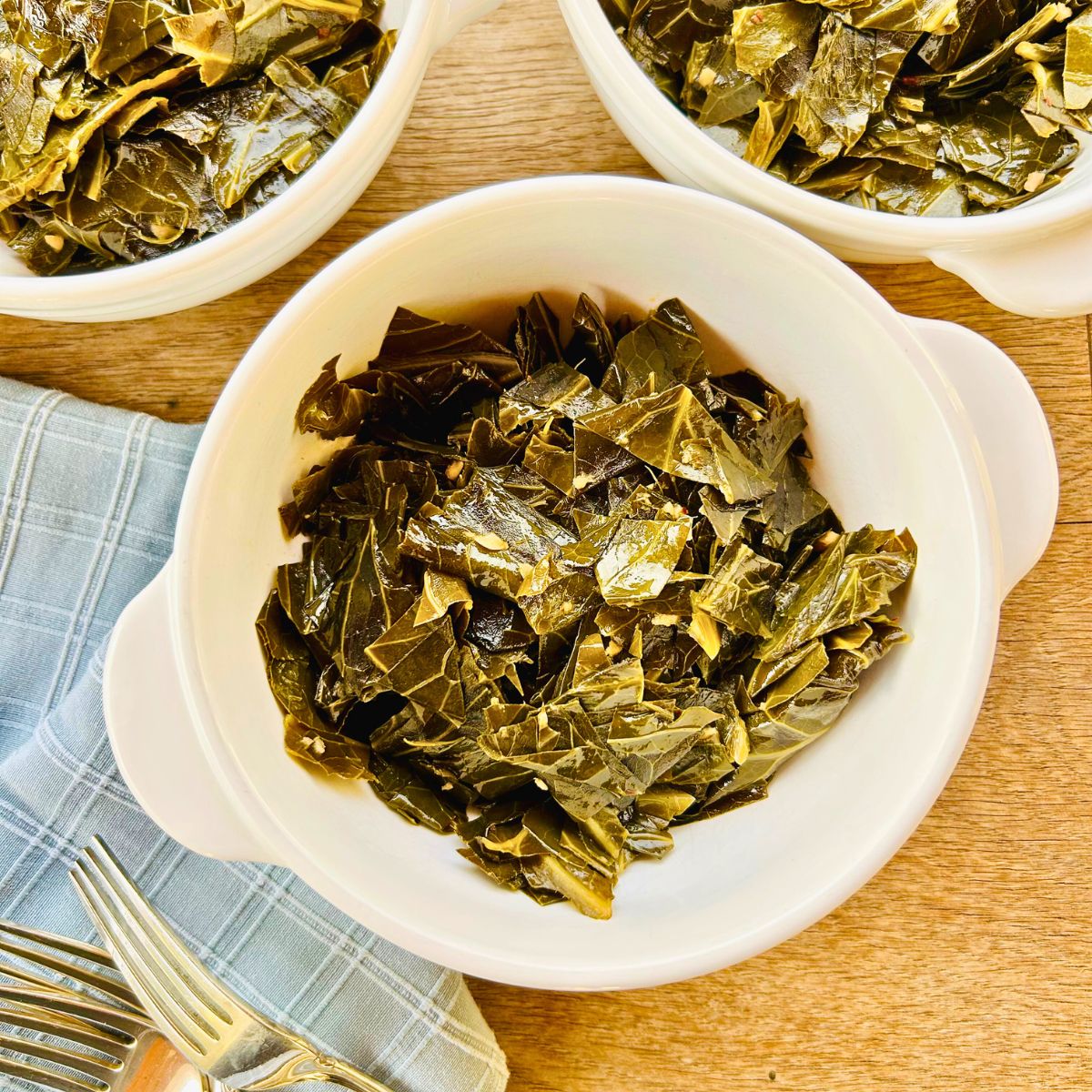
If you make it to New Orleans, stop at Turkey and the Wolf for their collard green melt sandwich. It’s like a Reuben with collard greens instead of corned beef. Sounds weird, but it’s legit good!
When their cookbook was released, I made the greens. My mouth was on fire from the spice. I couldn’t eat much. This recipe is a milder yet still spicy version that actually lets you taste the flavor. If you like a little more intensity, add more hot sauce.
If you've never been a collard greens person, I get it. Maybe you've only had the boiled-to-death version that tastes more like punishment from a can.
But give this recipe a try. This is how a restaurant does it, with a modern technique instead of a traditional one.
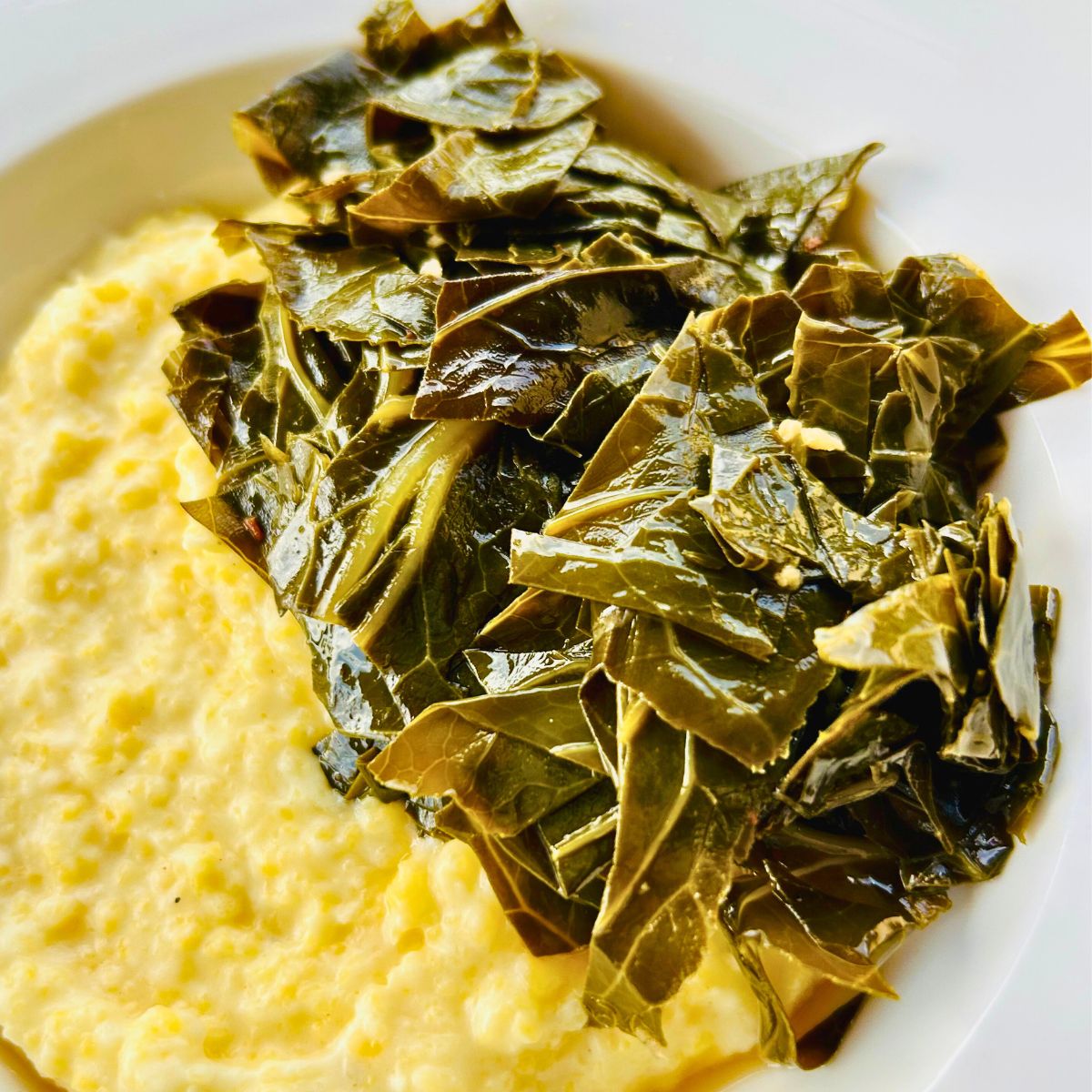
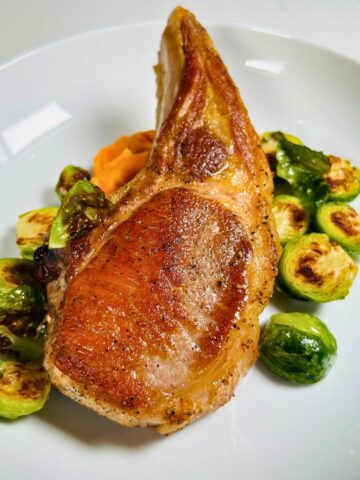
These are flavorful and versatile enough to serve as a side dish with pork chops and chipotle sweet potato puree, pile onto a grilled cheese sandwich, or eat as a meatless meal with creamy polenta and a fried egg on top.
Jump to:
Why You Will Love This Recipe
- Vinegar in the braising liquid. Unlike most recipes, this one contains a lot of vinegar, followed by a fair amount of sugar, and a blend of peppery spices, giving these greens their signature tangy, savory depth.
- No meat: You don't need traditional ham, bacon, or smoked turkey wings to make collard greens that taste incredible.
- These greens work with what you have. You might have a CSA box or farmer's market haul and not know what to do with those leafy extras. This is a technique you can apply to any bitter greens like turnip, kohlrabi, mustard, beets, and kale.
- You can make them ahead. Braised collard greens actually taste better the next day, which makes them perfect for meal prep or getting ahead before hosting.
What Are Collard Greens?
- A leafy vegetable with a rich cultural heritage among African Americans in the South.
- Grown for its large leaves with an earthy, bitter, cabbage-like flavor.
- Collards are tough and need to be cooked.
- Greens are one of the most fiber and vitamin-rich vegetables.
- They are grown as a spring or fall crop and overwinter in mild regions. If you are interested in growing different varieties than the store offers, check out what scientists in East St. Louis are testing.
Ingredients
Here are the ingredients needed to make Turkey and the Wolf's version of Braised Collard Greens!
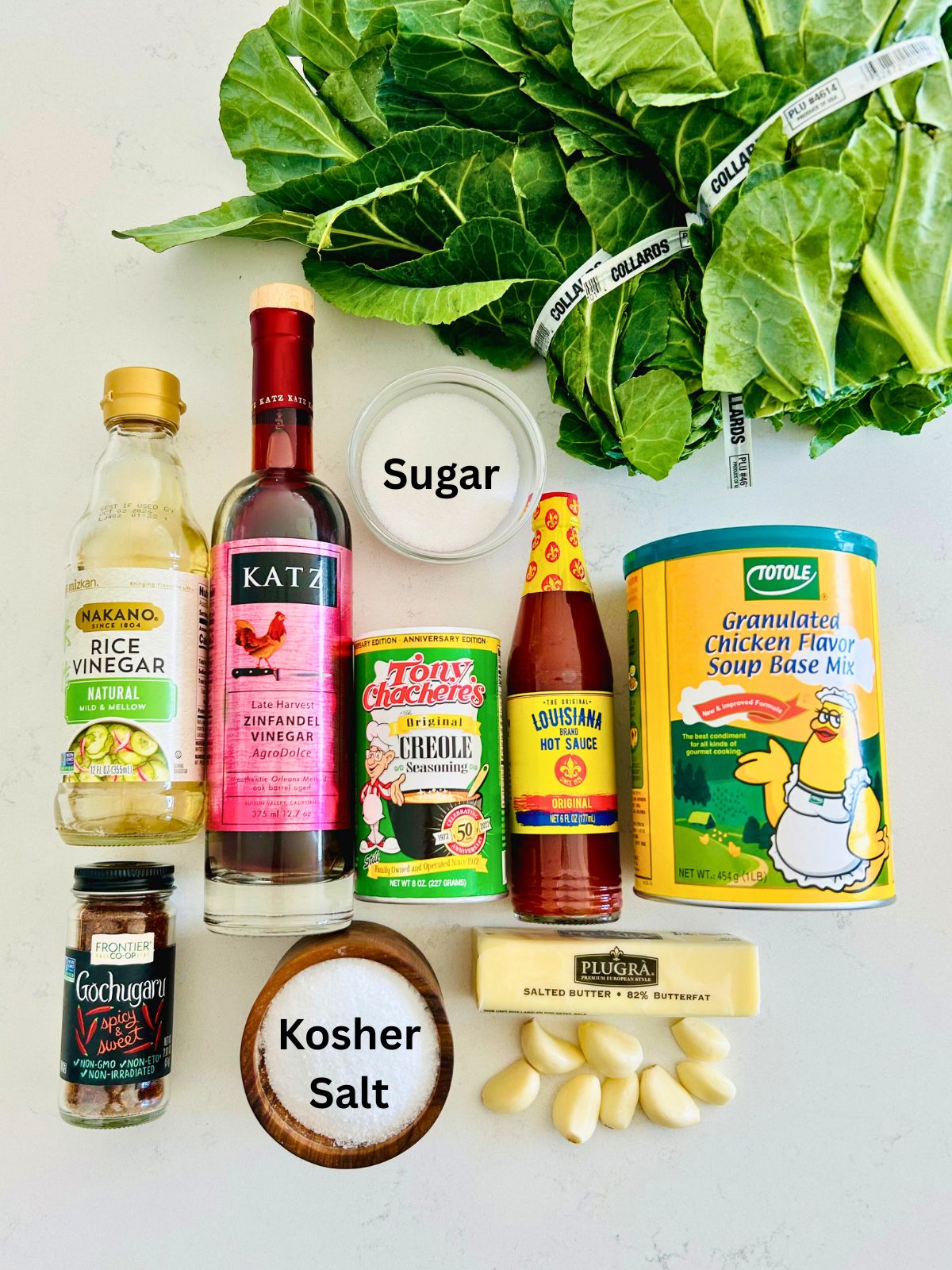
- Collard Greens: A leafy green that is considered extremely healthy and economical. It’s chewy when eaten raw. So, we're going to braise it.
- Butter: I recommend using salted butter since the greens will need salt, but unsalted is fine.
- Garlic: Real garlic, not the jarred stuff.
- Granulated Sugar: This sweetener is needed to balance the vinegars and easily dissolves in the braising liquid.
- Red Wine Vinegar: Vinegar helps build flavor and calm down the bitterness in collard greens. This vinegar, derived from fermenting red wine, can be quite tangy. I try to source red wine vinegar from California and recommend this one from Katz Farms or this from Napa Valley Naturals. You can almost drink it out of the bottle.
- Unseasoned Rice Vinegar: Made from fermented rice. Rice vinegar has a mildly acidic, tangy flavor and neutral acidity compared to other kinds of vinegar. It is sold in most grocery stores in the Asian section. Look for unseasoned versions because the seasoned varieties have added sugar and salt to the vinegar.
- Hot Sauce: Use your favorite brand. I use Louisiana brand hot sauce because I don't think it's quite as spicy as the Tabasco brand.
- Creole Seasoning: A Cajun-style of mixed spices from Louisiana, varying from mild to spicy. Use your favorite brand. There are a couple of options in my region, and I find Tony Chacere's is in most grocery stores.
- Gochugaru (Korean chili flakes): Korean chili flakes (not the paste) are smaller in size and have a darker burgundy color than traditional dried red chili flakes. Their description is sweet with a little heat. Don't let that mislead you because they are spicy. I find them at Sprouts and Whole Foods. You can substitute the more common red pepper flakes in the spice aisle.
- Chicken Bouillon: Turkey and the Wolf highly recommends the Totole brand. I find it at the local Asian markets and on Amazon. You could also use Chicken Better Than Bouillon, or just omit it.
- Diamond Crystal Kosher Salt: I prefer the brand, Diamond Crystal, because their shape is lighter and flakey and dissolves faster which helps prevent over-seasoning. If using Morton or table salt, reduce the salt measurements by half.
See the recipe card below for ingredient measurements.
Variations
This is where you make the recipe to your preference. Taste the greens and adjust as needed:
- Meat: You can cook half a pound of bacon at the start rather than butter. Add a ham hock, ham shank, smoked turkey wing, or smoked pork belly to the braising liquid at the start and cover the pot until tender. Pull the meat out when tender and shred it. Then, return it to the pot and continue to reduce the liquid uncovered.
- Spicier: If you like a lot of spice (like my husband), you can double the pepper flakes, hot sauce, and Creole seasoning.
- Too Tangy: Add more sugar, 1 teaspoon at a time.
- Too bitter: Add a splash more vinegar or a dash of hot sauce.
- Richer: Stir in a tablespoon of butter at the end.
- Aromatics: Add onions and/or a diced jalapeño to the garlic.
- Smoky: Substitute smoked salt for the kosher salt or add a pureed chipotle pepper with the adobo sauce instead of the pepper flakes.
How To Wash Fresh Collard Greens
If you don't want to bite down on sandy pieces, make sure the collard greens are washed and dirt-free. Do this in 2 batches because there are too many greens to clean all at once.
- Fill the clean kitchen sink or a large pot with enough cold tap water to submerge the leaves.
- Add the collard greens (either trimmed or whole) to the water and swirl them in the water with your hand.
- Lift the greens out of the water and onto a clean kitchen towel.
- Drain the sink water.
- Repeat this process until there is no dirt remaining in the bottom of the sink. This might take 3 times.
If you are not cooking the greens right away, dry them with the kitchen towels and store them in a sealed bag in the refrigerator for up to 7 days.
Equipment
8 to 10-quart heavy-bottom stock pot
Step-by-Step Instructions

Step 1: Melt the butter in a large, heavy-bottom pot over medium-high heat. Cook the garlic while stirring for 1 minute. Add the granulated sugar, red wine vinegar, rice vinegar, hot sauce, Creole seasoning, chili flakes, chicken bouillon, salt, and water. Bring to a simmer.
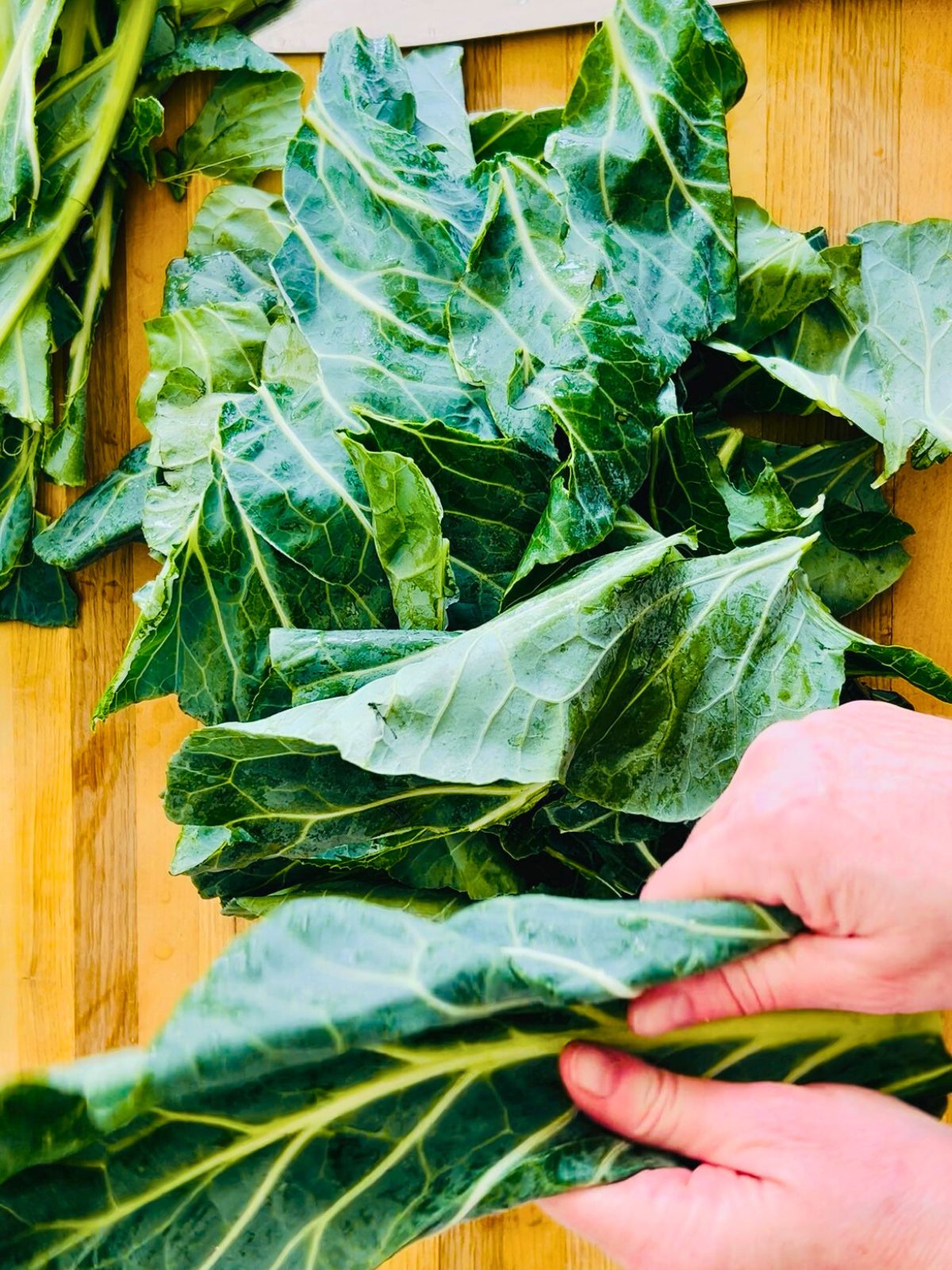
Step 2: Remove the tough stems from the clean collard greens and dispose of them. See how to wash them above.

Step 3: Chop the collard leaves into 1 to 2-inch pieces.

Step 4: Add handfuls of collard greens to the simmering pot. Stir them to let them wilt and make room for the next batch of collard greens. Continue until all of the greens are added and bring to a simmer.

Step 5: Simmer the greens for about 2½ hours until they are soft and the liquid has reduced to 1-inch in the pot.
Taste to see if salt or more hot sauce is needed before serving.
Make Ahead & Storage Instructions
Make-Ahead: You can cook these up to 3 days in advance. Just reheat them over low heat or in a microwave until they've warmed up. Add a bit of water if the liquid has evaporated.
Refrigerate: Store in an airtight container for up to 5 days. The flavor actually deepens as they sit.
Freeze: Freeze for up to 3 months in an airtight container. Thaw overnight in the fridge and reheat gently on the stovetop or microwave.
FAQ
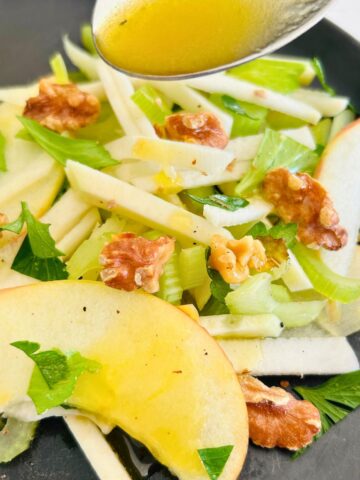
Yes! You might have greens leftover from making my chopped apple kohlrabi salad or roasted beets. You can even mix the types of greens. Turnip, kohlrabi, kale, mustard greens, beets, or Swiss chard all work. Keep in mind that kale, beets, and chard cook faster, so reduce the braising time by 1 hour.
Absolutely. Omit the chicken bouillon and you're all set.
You do not have to remove the stems, but they are tough and can take longer to break down. After trying it, I strongly suggest removing them before cooking.

Did you try any of these tips? Leave a comment below to let us know how it turned out! Thanks for visiting!
📖 Recipe

Braised Collard Greens (Turkey And The Wolf Copycat)
Equipment
- 8 to 10-quart stock pot with a heavy bottom
Ingredients
- 3 pounds collard greens (about 4 bunches)
- 6 tablespoons salted butter
- 8 garlic cloves, finely chopped
- 5 tablespoons granulated sugar
- ½ cup red wine vinegar
- ⅓ cup unseasoned rice vinegar
- 2 tablespoons Louisiana brand hot sauce
- 2 teaspoons Creole seasoning
- 1 teaspoon gochugaru (Korean chili flakes) or red pepper flakes
- 1 tablespoon chicken bouillon
- 2 teaspoons Diamond Crystal kosher salt
- 8 cups water
Instructions
- Melt the butter in a large, heavy-bottom pot over medium-high heat. Cook the garlic while stirring for 1 minute. Add the granulated sugar, red wine vinegar, rice vinegar, hot sauce, Creole seasoning, chili flakes, chicken bouillon, salt, and water. Bring to a simmer.
- Remove the stems from the collard greens and dispose of them.
- Chop the collard leaves into 2-inch pieces.
- Add handfuls of collard greens to the simmering pot. Stir them to let them wilt and make room for the next batch of collard greens. Continue until all of the greens are added and bring to a simmer.
- Simmer the greens for about 2½ hours until they are soft and the liquid has reduced to 1-inch in the pot.
- Taste to see if salt or more hot sauce is needed. Serve.
Video
Notes
- Fill the clean kitchen sink or a large pot with enough cold tap water to submerge the leaves.
- Add the collard greens (either trimmed or whole) to the water and swirl them in the water with your hand.
- Lift the greens out of the water and onto a clean kitchen towel.
- Drain the sink water.
- Repeat this process until there is no dirt remaining in the bottom of the sink. This might take 3 times.
Nutrition
The provided nutritional information is an estimate per serving. Accuracy is not guaranteed.

Comments
No Comments