
This slow roasted prime rib recipe guarantees juicy, tender results with perfect edge-to-edge distribution of medium doneness and a savory brown crust. Dry brine overnight, slow roast, then reverse sear. Easy methods, stunning results!
If you've ever stared at a beautiful prime rib in the butcher case and walked away because you weren't sure you could do it, this recipe is for you. Prime rib feels intimidating. It's an expensive centerpiece for special occasions, and the last thing you want is to disappoint your family or guests with an overcooked roast.
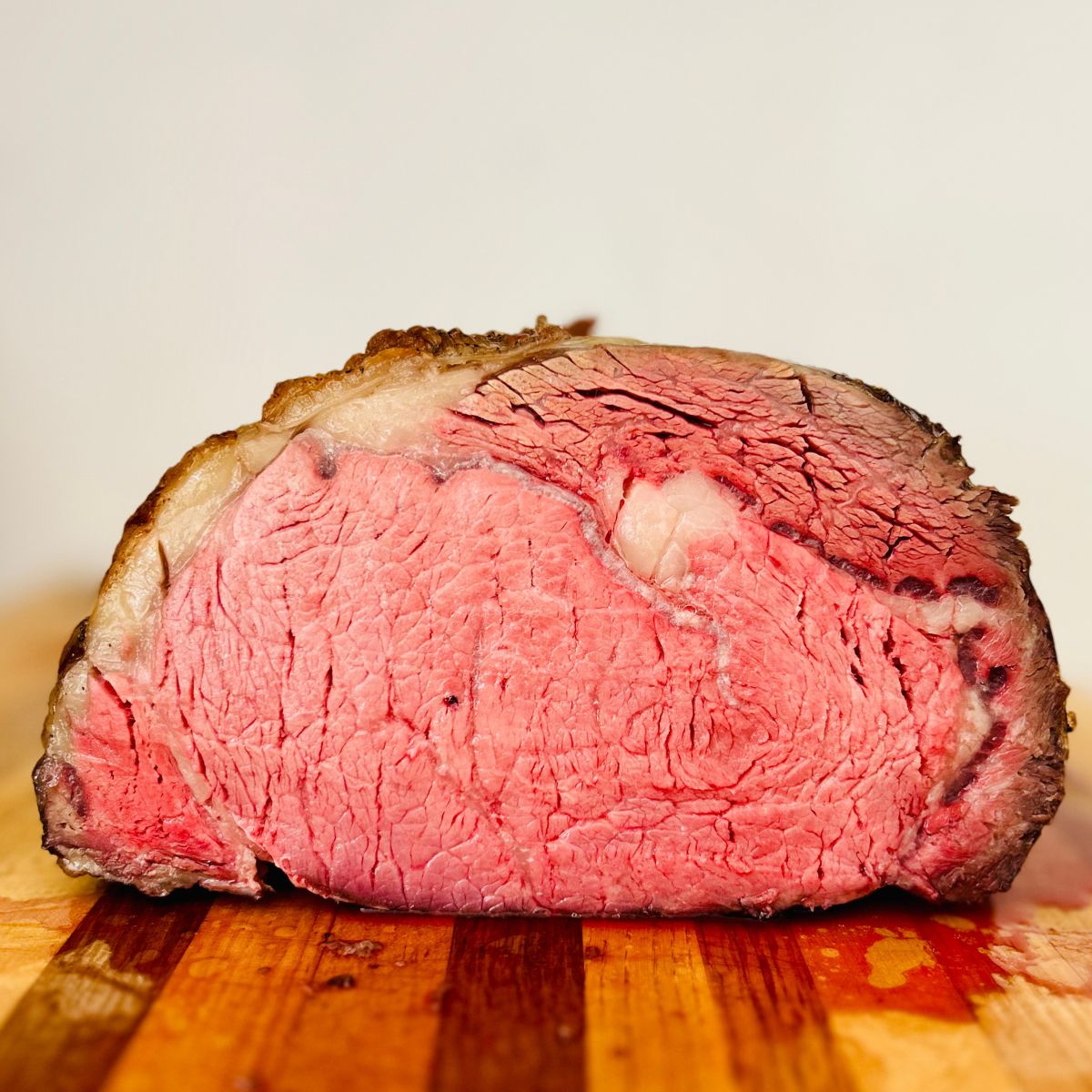
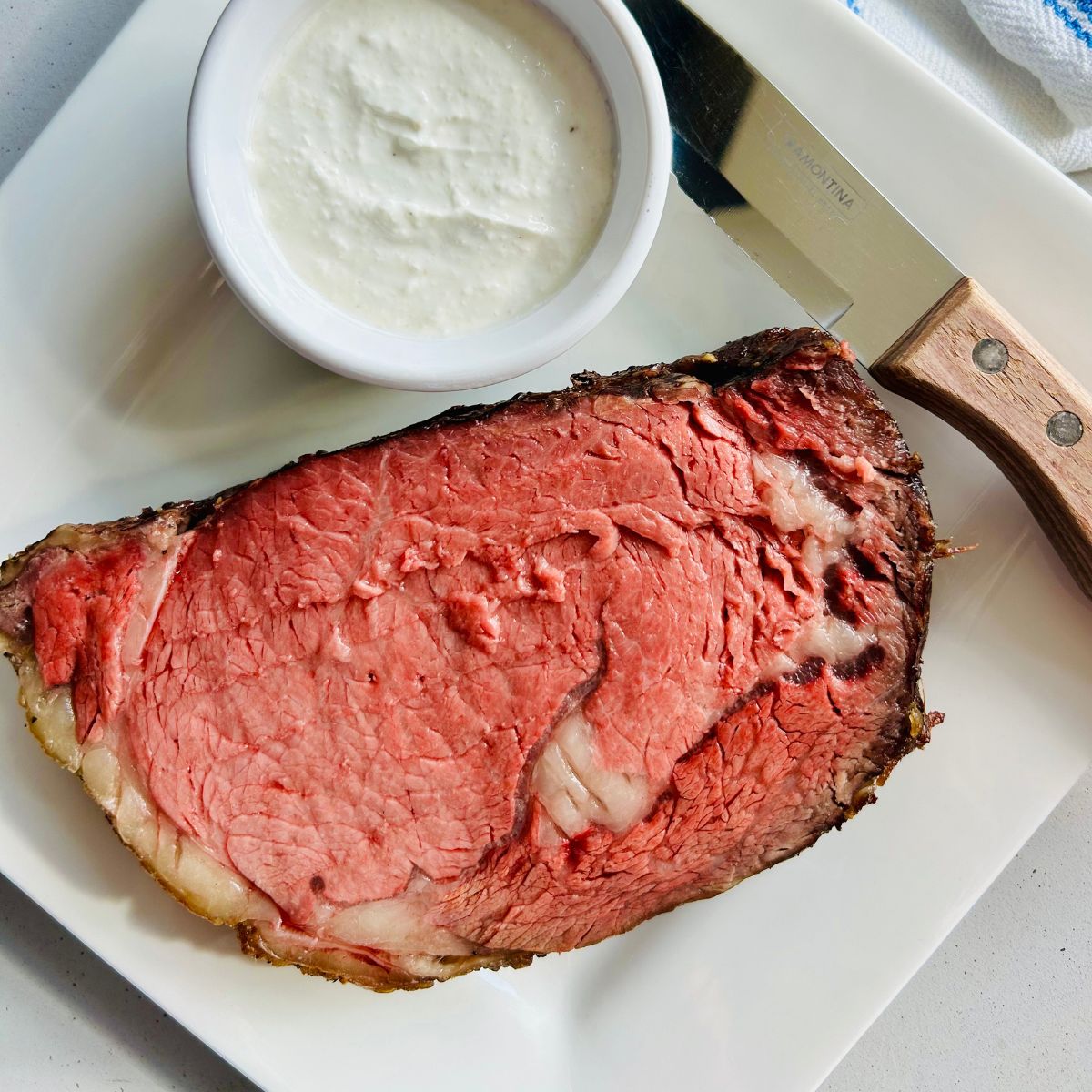
Look closely at prime rib photos online. Do you notice that gray, overcooked ring around the edges? That's what happens with traditional sear then roast methods. Steakhouse prime rib doesn't look like that, and neither should yours.
This reverse sear method, adapted from Serious Eats, keeps your roast beautifully pink from edge to center. You simply need to get your roast into the oven before lunchtime, use a quality meat thermometer, then relax and spend time with the people you're cooking for.
Don't expect an abundance of pan drippings for jus because there is minimal left due to the slow, low-temperature cooking that keeps the juices in the meat rather than the pan. Our guests don't miss the gravy because they are dipping their meat into this creamy horseradish sauce.
You have hours of hands-off time to focus on preparing your side dishes, whether it's potatoes au gratin (family favorite), mashed potato casserole, roasted Brussels sprouts, or an elegant salad like this roasted beet salad with crème fraîche or roasted seasonal vegetable salad. This is prime rib designed for the modern home cook who wants spectacular results without the stress.
Jump to:
Why This Recipe Is Different
- Slow roasting at 175℉.
- No more watching butter smoke and splatter in your oven because you don't need it, since prime rib has plenty of fat.
- No burnt and bitter garlic bits because we only use salt and pepper.
- No waiting for the roast to come to room temperature from the fridge since we are going straight from the refrigerator to the oven.
Why This Recipe Will Be Your Favorite
- It works for both boneless cuts and bone-in (aka standing rib roast).
- It gives you time to cook your sides before the high-temperature sear.
- Simple roasting equipment with a standard rimmed baking sheet and wire rack that you already own.
- You'll feel like the chef serving restaurant-quality prime rib at home.
Dry Brining A Prime Rib Roast
I recommend dry-brining a rib roast by seasoning it with salt and letting it rest uncovered in the fridge for a day or two in advance, just like my tomahawk steak and roasted turkey breast recipes. This allows the salt to penetrate the beef while drying it out to help with quick browning. It's an optional step, but the additional time is worth the flavor.
Here is how much salt is needed to dry brine:
- Boneless rib roast = ¾ teaspoon of Diamond Crystal kosher salt per pound
- Bone-in rib roast = ½ teaspoon of Diamond Crystal kosher salt per pound
Should I Buy Boneless Or Bone-In Prime Rib?
Costco is an excellent source for prime rib, especially during holiday seasons when they stock both choice and prime grades. We don't notice a significant difference between the two, so save money and go with the choice grade.
Here are some bullet points to help you decide which one to choose.

- My favorite.
- Costs more per pound.
- More readily available.
- More meat is accessible to season with salt.
- Easiest to carve.
- Plan to buy ¾ pound per person.
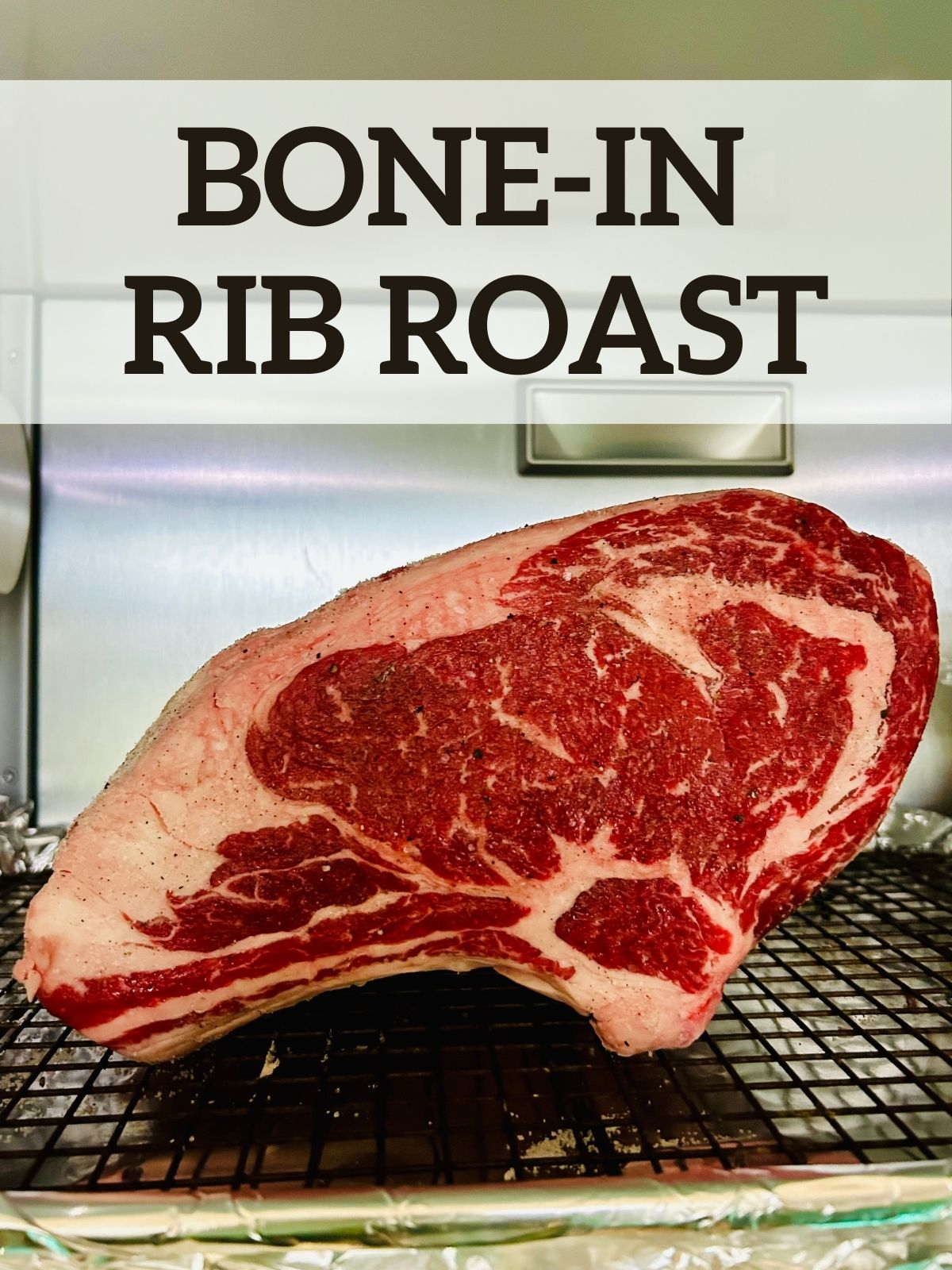
- Hubby's favorite.
- Costs less per pound, but you have more waste.
- You can easily remove the rack of bones after roasting, as shown in this Omaha Steaks video.
- You can gnaw the meat off the bone.
- Plan to buy 1 pound per person or 3 servings per bone.
How Long To Cook A Prime Rib Roast
Since equipment and cuts of prime rib vary, cook by the internal temperature and not by time. I have found that slow roasting at 175℉ takes 27-46 minutes per pound to reach an internal temperature of 130℉. That's a huge range!
There is one thing they have in common. They take about the same time to cook. The total time has been 5 hours and 30 minutes, bone-in and boneless. This data was collected from cooking a 7-pound boneless, a 9.3-pound bone-in, and a 12-pound bone-in roast.
Equipment
- leave-in probe meat thermometer
- instant-read thermometer (to double-check internal temperatures)
- metal cooling rack
- 13 x 18-inch rimmed baking sheet
- aluminum foil (optional)
- butcher string
Step-by-Step Instructions
Dry-Brine (Day 1)
Tip: Don't forget to clean your oven to minimize smoking.
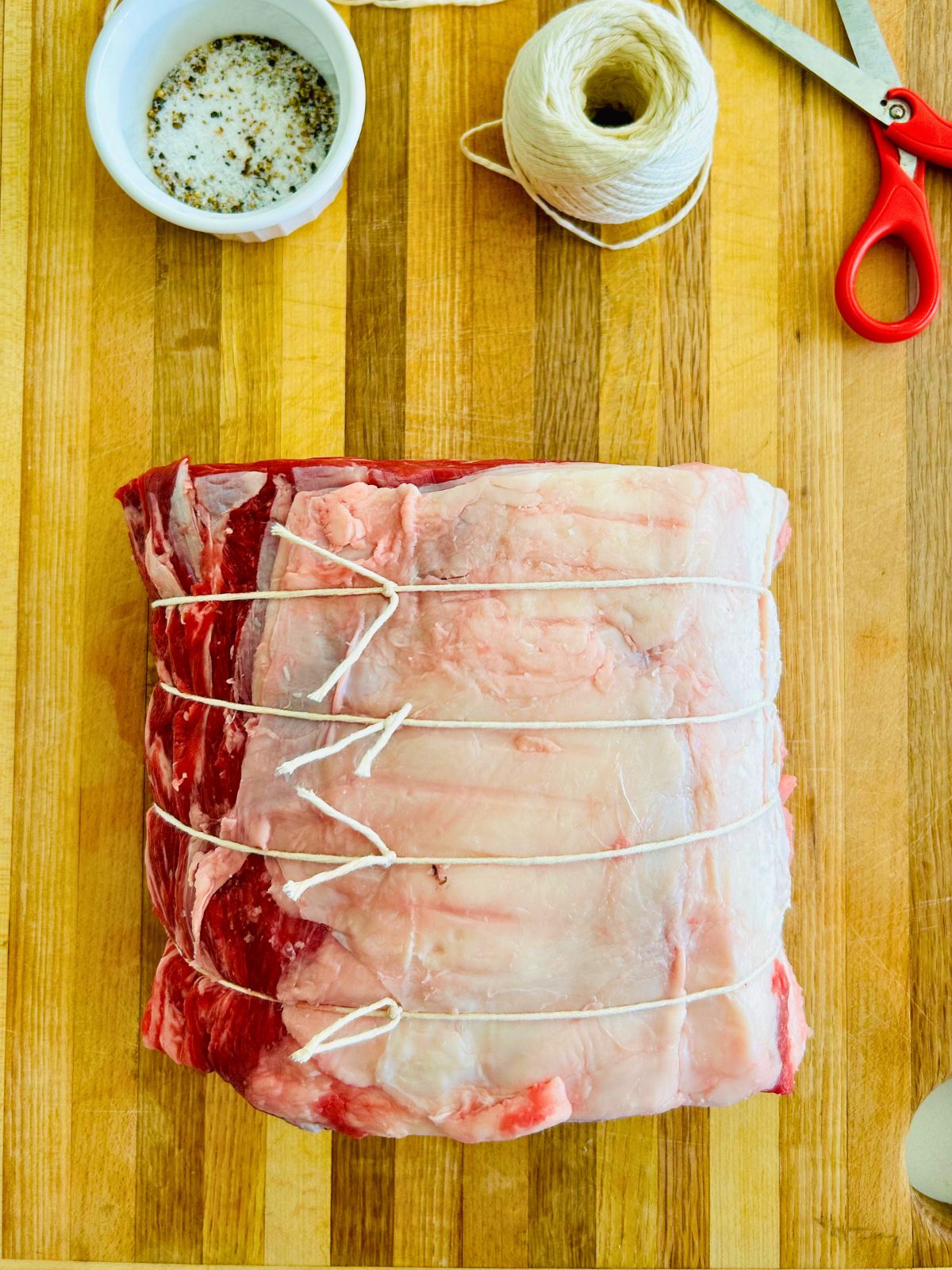
Step 1: Trim the fat down to ¼ inch thickness, if needed. Using butcher string, tie the rib roast, spacing the strings about an inch apart from each other to promote even cooking.
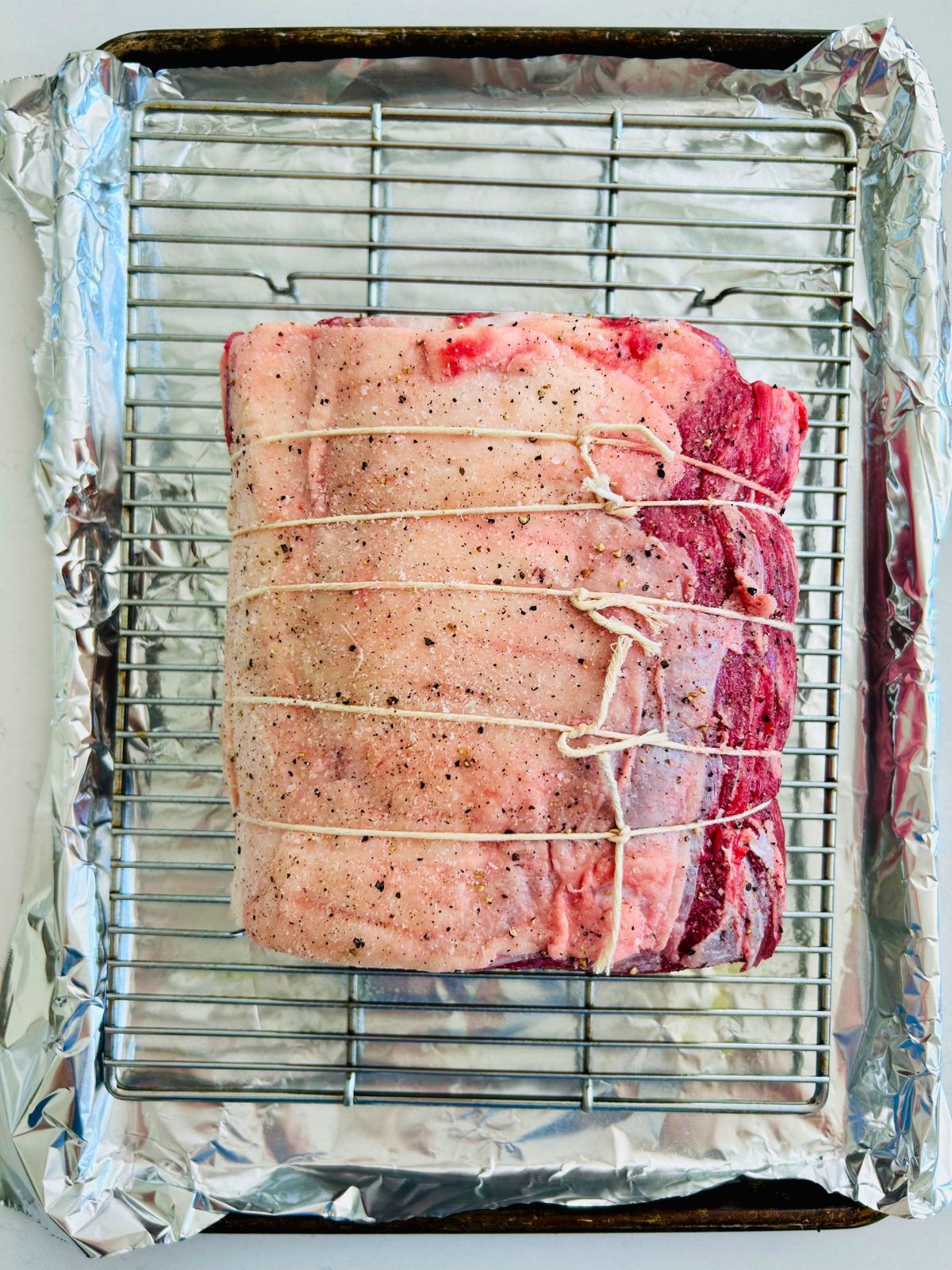
Step 2: Apply the salt and pepper on all sides of the roast.
Place the rib roast fat side up on top of a wire cooling rack placed over a foil-lined cookie sheet so air can circulate underneath it.
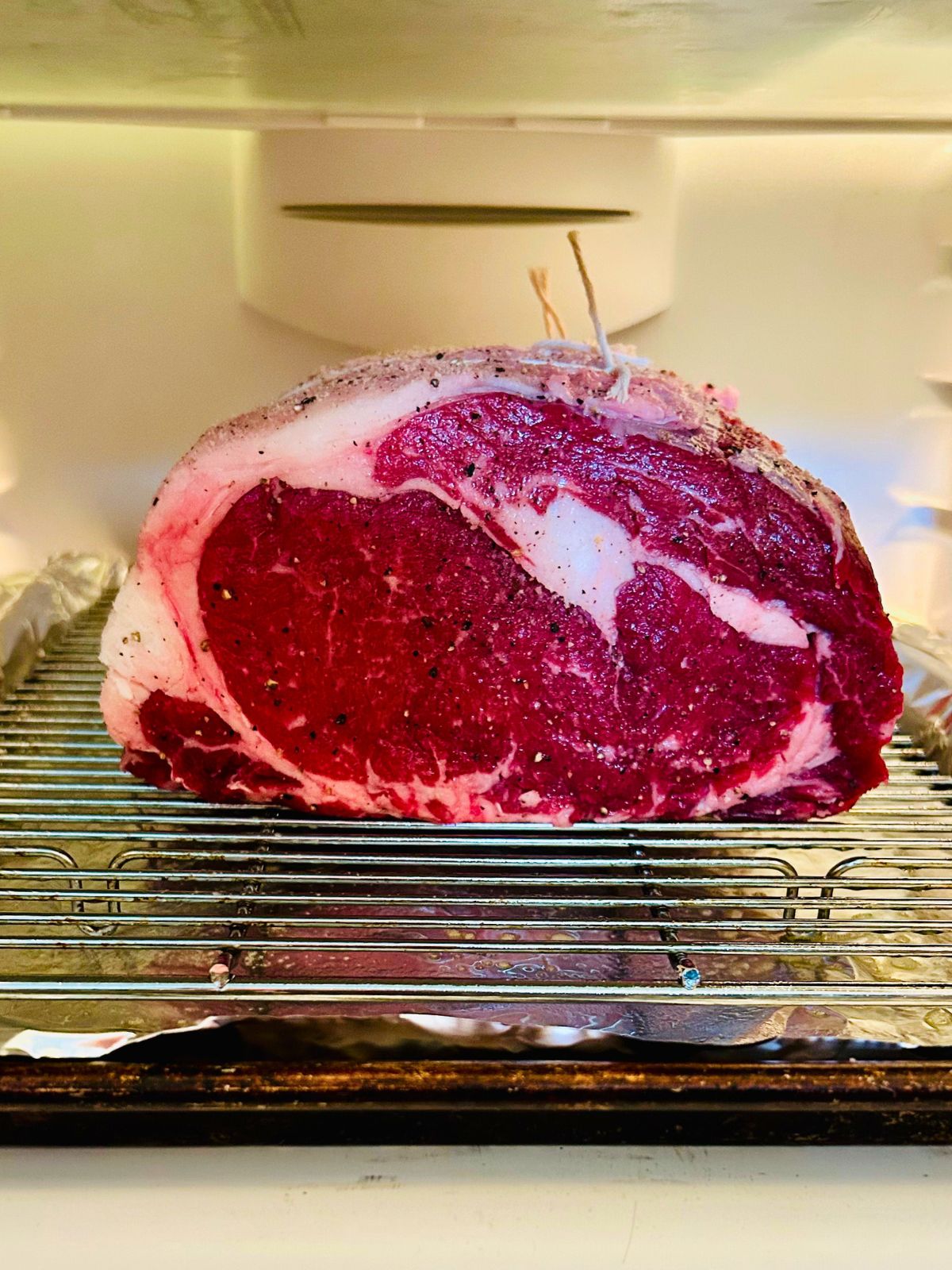
Step 3: Store, uncovered, in the refrigerator for 18 to 48 hours.
Slow Roast The Prime Rib (Day 2)
Place the oven rack in the center of the oven and preheat to 175℉.
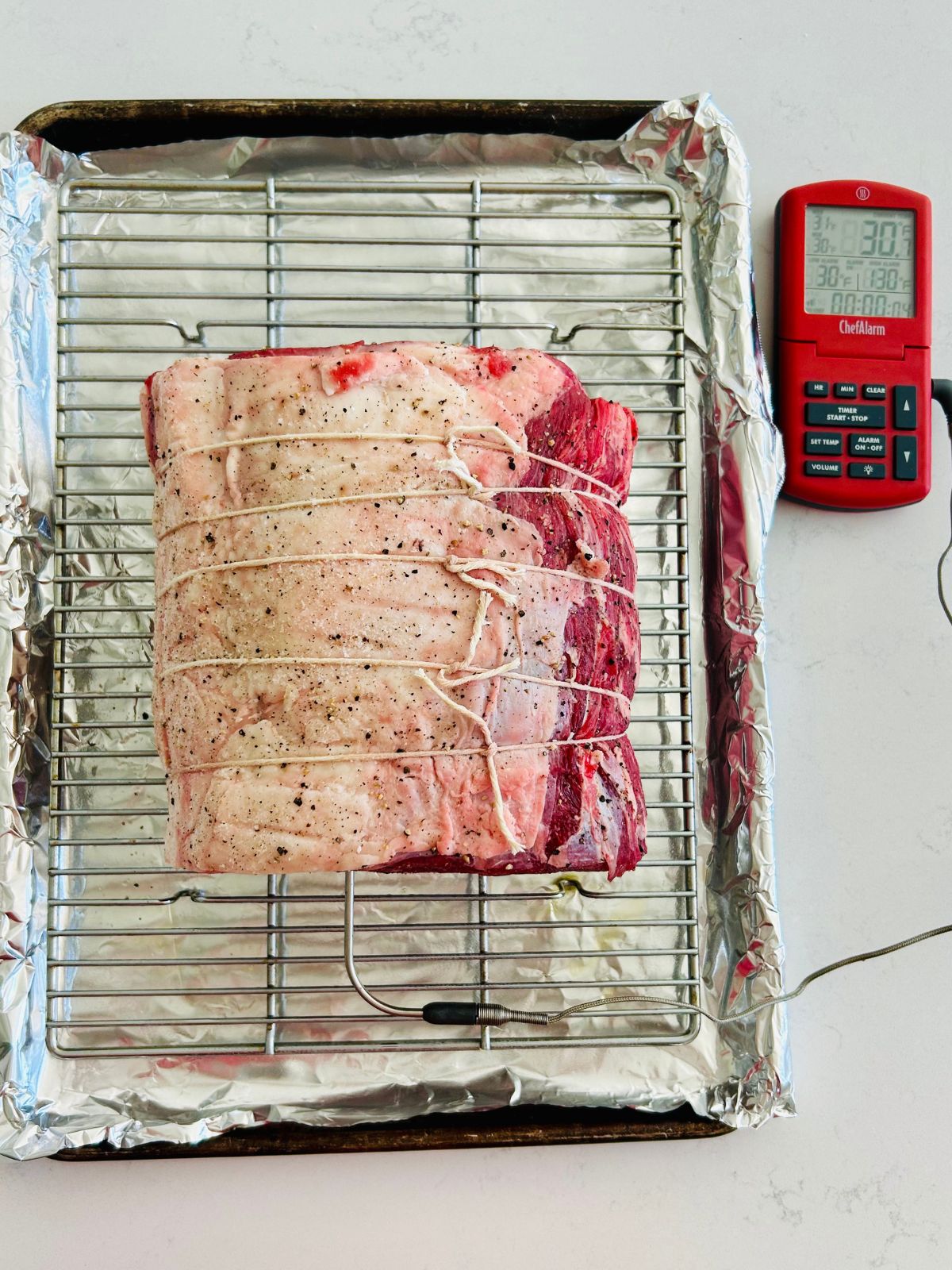
Step 5: Place the probe of a wired meat thermometer into the center of the roast, preferably into a cut side. Avoid any fatty areas that will provide an erroneous temperature reading. Set the high-temperature alarm to 130℉ for a medium cooking temperature for beef.
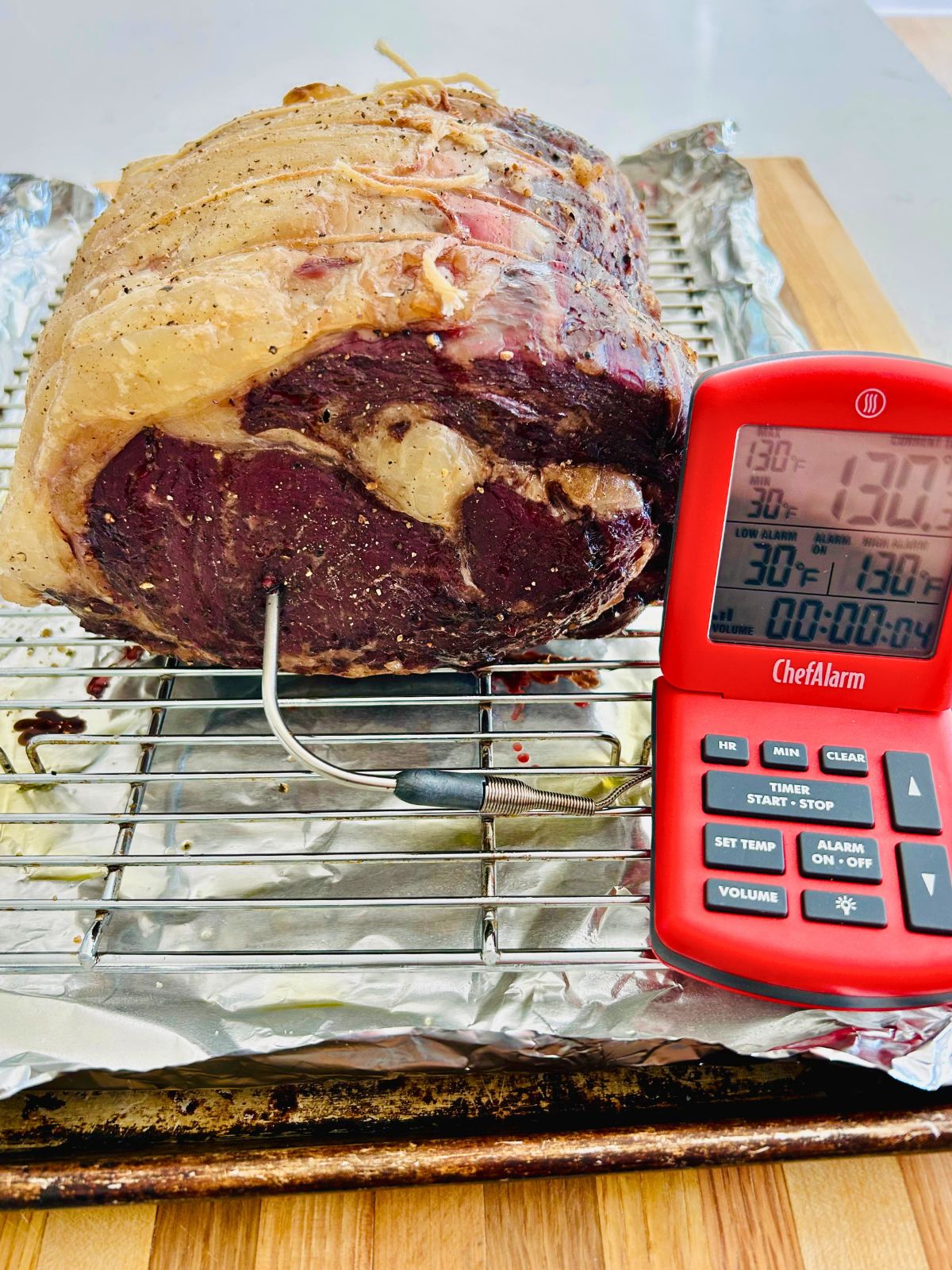
Step 6: Place the rib roast in the oven to cook until it reaches 130℉ internal temperature. This will take around 5½ to 6 hours. If you have an instant-read thermometer, use it to recheck the temperature. Remove the roast from the oven. The temperature of the roast will go up 4-5℉ after removing it from the oven.
Tip: If you have other side dishes to cook in the oven, now is the time to do it. Place the roast towards the back of the stove, covered, to stay warm while you cook the sides.
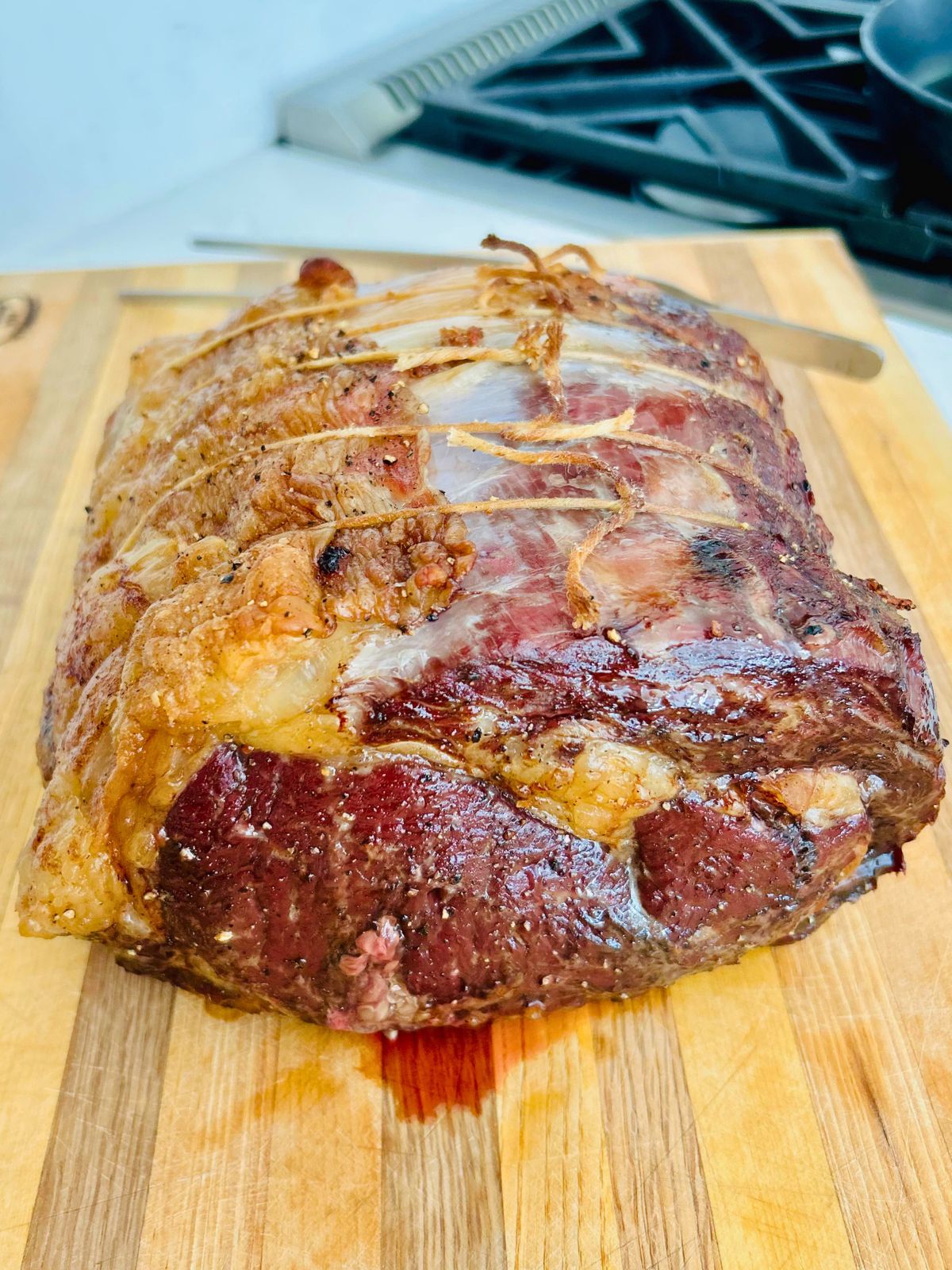
Step 7: Increase the oven temperature to 500℉.
Remove the thermometer probe, then return the roast to the preheated oven for 7-10 minutes to sear the outside. Be careful of the splattering oil when removing the roast.

Step 8: The prime rib roast is ready to serve. No resting time is needed. Remove the butcher twine and slice against the grain.
Tip
If you have a crusty and dirty oven, it will smoke at 500℉, and the smoke detectors will interrupt the baby's nap (true story).
Clean your oven or use the self-cleaning setting before the holiday to get it ready.
Storage & Reheating Information
Prime rib is meant to be eaten soon after cooking rather than made ahead of time.
How to Store Leftovers: Cover and keep in the refrigerator for 3 days.
How to Reheat: This does not reheat easily without overcooking, but you can take the chill out of the leftover beef by microwaving individual portions in 20-second increments.
FAQ
Here are the internal temperatures to pull from the oven before searing:
Medium-Well: 140℉
Well-Done: 150℉
The temperature will continue to increase by 4-5 degrees.
Check the temperature in the thickest part of the meat.
Use the lowest temperature setting on your oven and monitor the roast's internal temperature since the cook time will be shorter.
Cut a slice off and cook it in the microwave for 1-2 minutes, like my father-in-law does. You can also carve a portion and return it to the oven to cook longer.


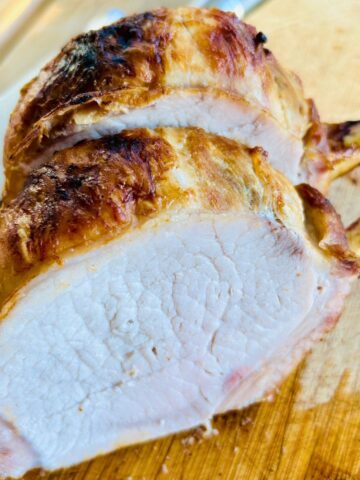

Did you try any of these tips? Leave a comment below to let us know how it turned out! Thanks for visiting!
📖 Recipe

Slow Roasted Prime Rib Recipe
Equipment
- leave-in probe meat thermometer
- instant-read thermometer (to double-check internal temperatures)
- metal cooling rack
- 13 x 18-inch rimmed sheet pan
- aluminum foil (optional)
- butcher string
Ingredients
- 7 pounds boneless rib roast
- 5¼ teaspoons Diamond Crystal kosher salt (¾ teaspoon per pound for boneless or ½ teaspoon per pound for bone-in)
- 1 teaspoon freshly ground black pepper
Instructions
Dry-Brine (Day 1)
- Trim the fat down to ¼ inch thickness, if needed. Using butcher string, tie the rib roast, spacing the strings about an inch apart from each other to promote even cooking.
- Apply the salt and pepper on all sides of the roast.
- Place the rib roast fat side up on top of a wire cooling rack placed over a foil-lined cookie sheet.
- Store, uncovered, in the refrigerator for 18 to 48 hours.
Slow Roast The Prime Rib (Day 2)
- Place the oven rack in the center of the oven and preheat to 175℉.
- Place the probe of a wired meat thermometer into the center of the roast, preferably into a cut side. Avoid any fatty areas that will provide an erroneous temperature reading. Set the high-temperature alarm to 130℉ for a medium cooking temperature for beef.
- Place the rib roast in the oven to cook until it reaches 130℉ internal temperature. Estimated time is 5½-6½ hours. If you have an instant-read thermometer, use it to recheck the temperature. Remove the roast from the oven. The internal temperature will go up 4-5℉ after removing it from the oven.
- If you have other side dishes to cook in the oven, place the roast towards the back of the stove, covered, to stay warm while you cook the sides.
- Increase the oven temperature to 500℉.
- Remove the thermometer probe, then return the roast to the preheated oven for 7-10 minutes to sear the outside. Be careful of the splattering oil when removing the roast.
- The prime rib roast is ready to serve. No resting time is needed. Remove the butcher twine and slice against the grain.
Notes
-
- Boneless rib roast = ¾ teaspoon of Diamond Crystal kosher salt per pound
-
- Bone-in rib roast = ½ teaspoon of Diamond Crystal kosher salt per pound
Nutrition
The provided nutritional information is an estimate per serving. Accuracy is not guaranteed.
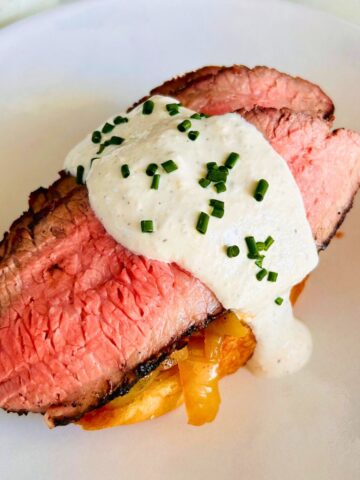
Ali Mairet says
Yummy! So excited to make this for Christmas dinner. Ali