
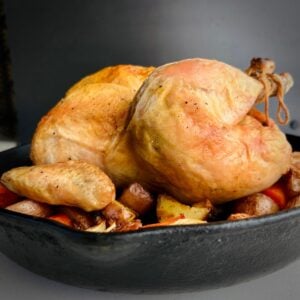
Want to roast a juicy, flavorful whole chicken every time? Skillet roasted chicken with caramelized vegetables starts the night before with a dry brine. From there, a hot oven, the right internal temperature, and one extra step at the end that most recipes skip entirely.
The chicken is juicy and pairs perfectly with potatoes and carrots that roast in the same pan. This is a cozy one-pot dinner with very little hands-on time while the refrigerator and oven do the work for you.
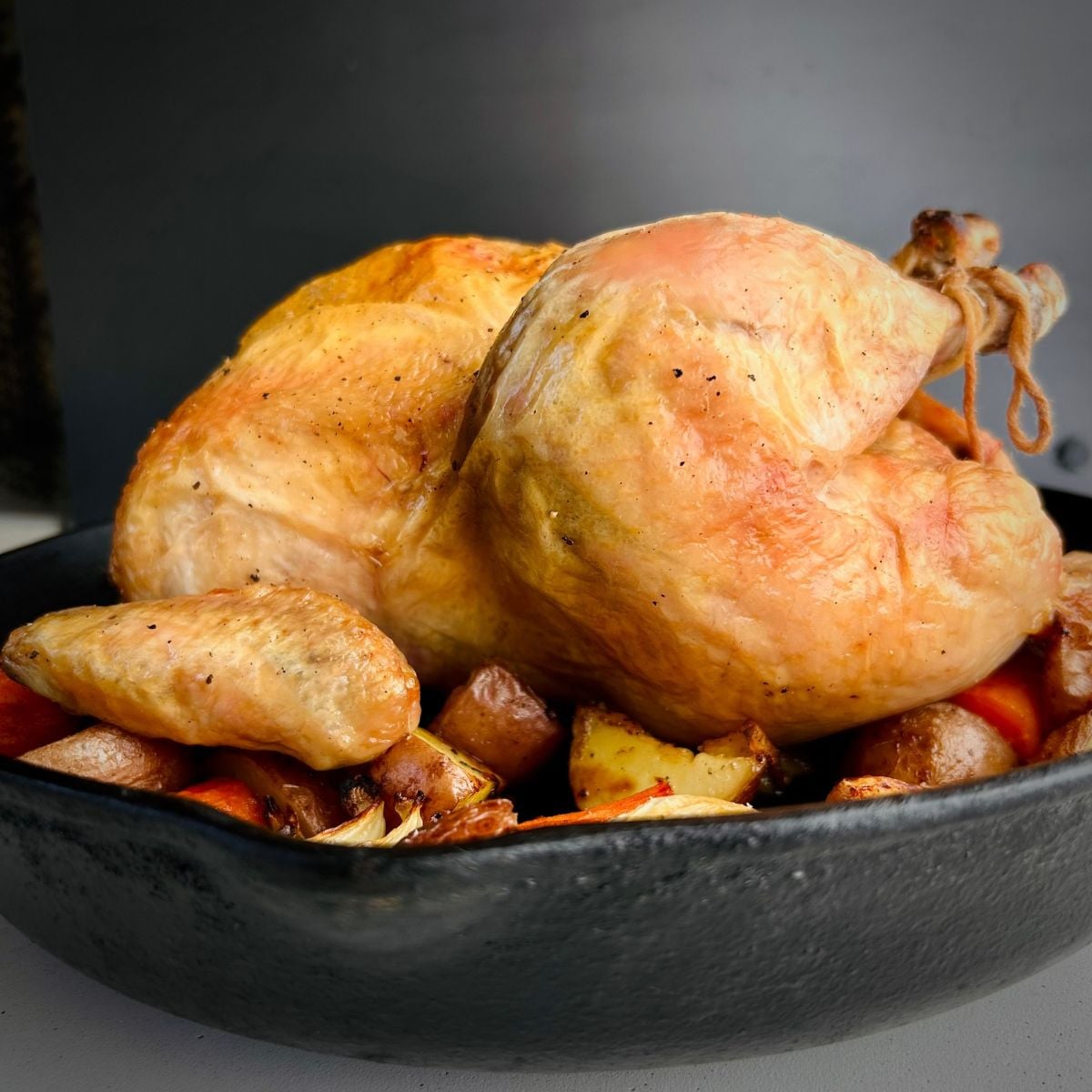
Seasoning meat in advance of cooking is one of the easiest steps toward improving your cooking. Most chicken recipes have you salt right before cooking. It works, but it's not the best it can be.
A dry brine gives the salt time to work its way deep into the meat and helps protect against overcooking. Leaving the chicken uncovered in the refrigerator overnight also dries the skin out, and that's exactly what you want for a crispy finish.
This is a very simple recipe with a few easy techniques to help you make it the best it can be. Perfect for a Sunday dinner, or put it in the oven after you get home from work and go on a walk while it roasts.
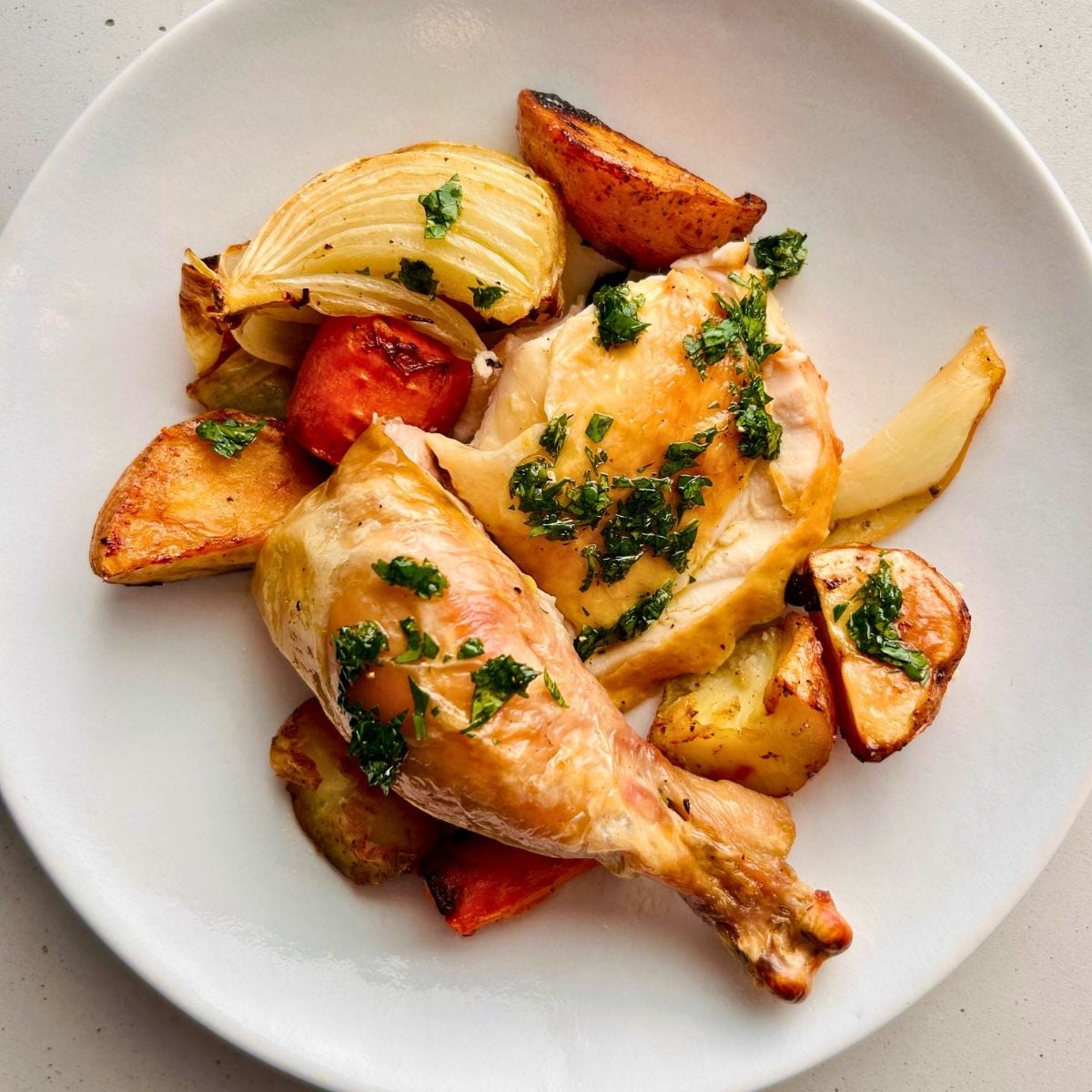
If you want to add an easy sauce, my chimichurri with cilantro and parsley drizzled over the sliced chicken right before serving is a perfect pairing for this dish. For something starchy on the side, my easy homemade garlic bread is a great addition.
Jump to:
Why You Will Love This Recipe
- It's a one-skillet dinner with very little active time.
- Dry brining the chicken builds flavor and juiciness.
- The vegetables absorb the drippings from the chicken, coating them in a flavorful sauce as they roast.
- Works for a relaxed Sunday dinner or a regular weeknight.
What Is Dry Brining?
- Dry brining is sprinkling salt on meat and letting it rest in the refrigerator for a set amount of time. It seasons and improves the moisture of the chicken.
- The amount of salt may look like a lot, but it soaks into the meat overnight and distributes evenly.
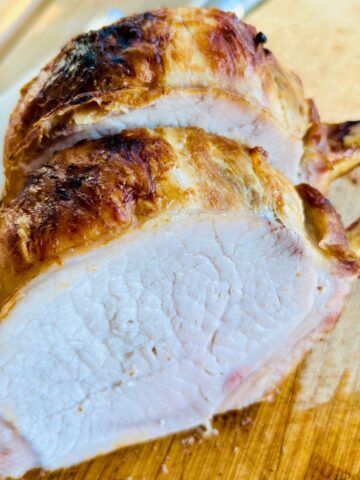
- No water is involved, like my wet-brined pork rib roast, making it very easy and manageable.
- It gives you some extra protection from a dry and stringy bird.
Tips for Roasting A Whole Chicken
- Use A Hot Oven: Roast at 425°F and stay there. High-temperature oven roasting helps keep the skin crisp.
- Legs Point To The Back: Start with the legs facing the back of the oven where it's the hottest to protect the breast meat. Rotate the pan after 45 minutes of cooking.
- Don't Baste: Basting softens the skin and requires the oven door to be opened several times, reducing the oven temperature.
- Cook To 160°F Internal Temperature: Prevent overcooking by removing the chicken from the oven when the breast registers 160°F. The temperature will go up 5-8°F while it rests.
- Resting Time: Let the chicken rest at least 15 minutes before carving it to allow the juices to redistribute.
Ingredients
You only need a few simple ingredients to make this juicy whole chicken with vegetables.
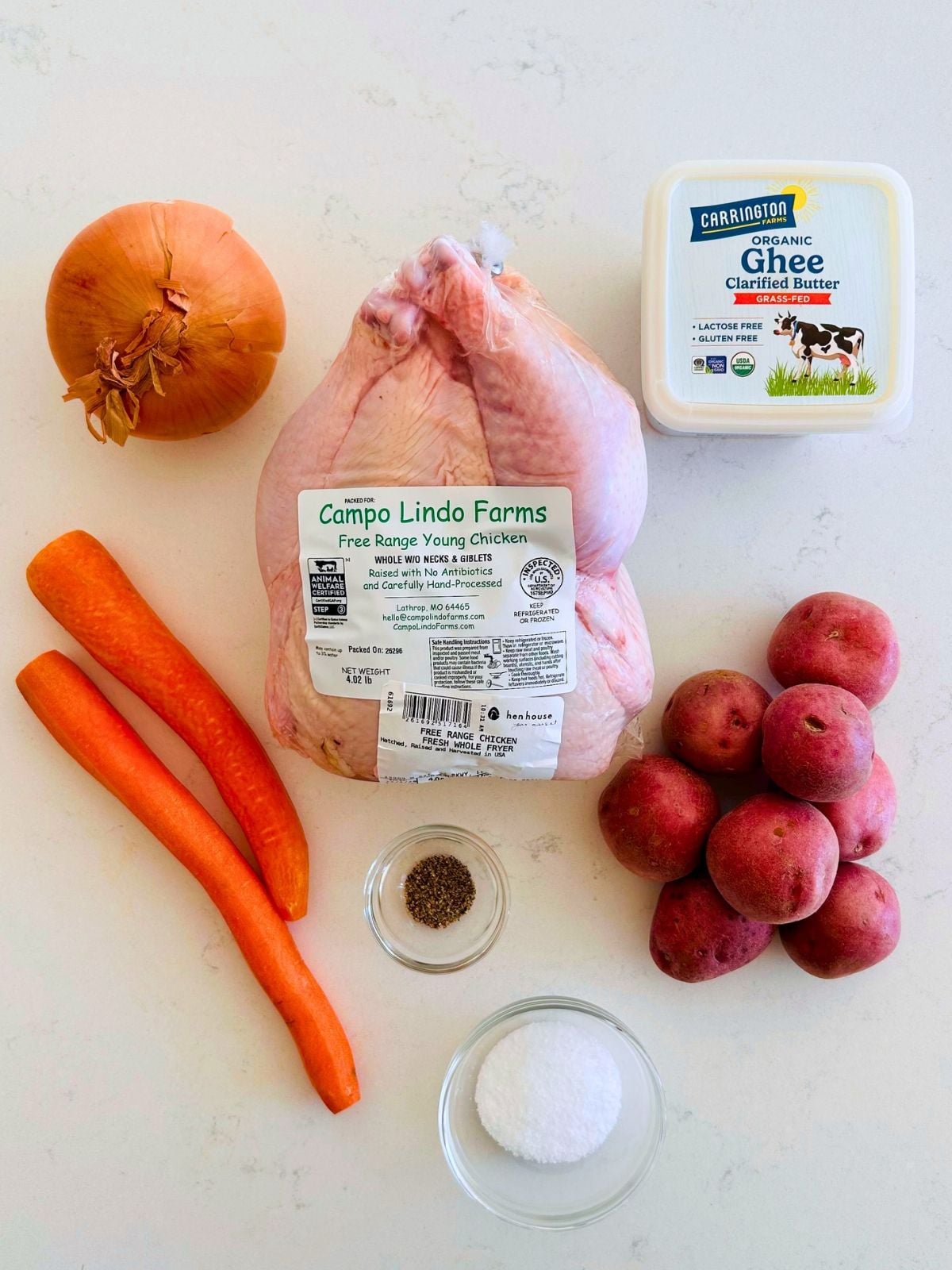
- Whole Chicken: If you can find a smaller, locally sourced chicken at 3.5 to 4 pounds, buy it over the larger grocery store birds. Smaller birds tend to have better flavor and are more tender. They can be harder to find, so check local farms, butcher shops, Whole Foods, Sprouts, or farmers' markets when you can. Larger chickens in the 4.5 to 5-pound range still work; they will take longer to cook.
- Diamond Crystal kosher salt: Plan for 1 teaspoon per pound of chicken. The amount of salt may look like a lot, but it soaks into the meat overnight. If you are using Morton's kosher salt, use half the amount called for. Morton's is denser than Diamond Crystal and significantly saltier by volume.
- Cooking Oil: To coat the vegetables and the skin (ghee, vegetable, or canola).
- Potatoes: Use waxy potatoes like red, gold, or fingerling because they hold their shape. Russet (baking potatoes) are too dry and will fall apart.
- Carrots: Whole, mature carrots are best for roasting with a chicken because they hold up better than the pre-cut baby carrots.
- Onion: Yellow is great for all manner of cooking. It has a bite when raw but very sweet when caramelized. Shallots would also work.
See the recipe card below for ingredient measurements.
Variations
Potatoes, carrots, and onion are the classic base for roast chicken. Here are some other ideas if you want to mix things up.
- Root Vegetable Options: Sweet potatoes, turnips, golden beets, parsnips, rutabaga, leek, and fennel.
- Fresh Herbs: You can tuck fresh thyme or a small amount of rosemary in with the vegetables before roasting for more depth. Woody herbs handle the heat well and infuse the drippings with good flavor.
- Lemon: Cut a lemon in half and roast with the vegetables, with the cut side facing down. Remove it from the pan when the chicken is done. Squeeze the lemon juice over the chicken and vegetables before serving.
Cut everything into similar-sized pieces so they cook at the same rate.
Equipment
- 12-inch oven-safe skillet: Cast iron is ideal for this recipe. It holds heat evenly and gives the vegetables good contact for browning. A sheet pan or roasting pan works if you don't have one.
- Leave-in probe thermometer with an alarm: This is the tool that makes the biggest difference. Set it to 160°F and let it tell you when the chicken is done rather than guessing. I use a Thermapen for spot-checking.
- Rimmed baking sheet: For dry brining the chicken overnight in the refrigerator.
- Butcher's twine: For tying the legs together.
Step-by-Step Instructions
The Night Before
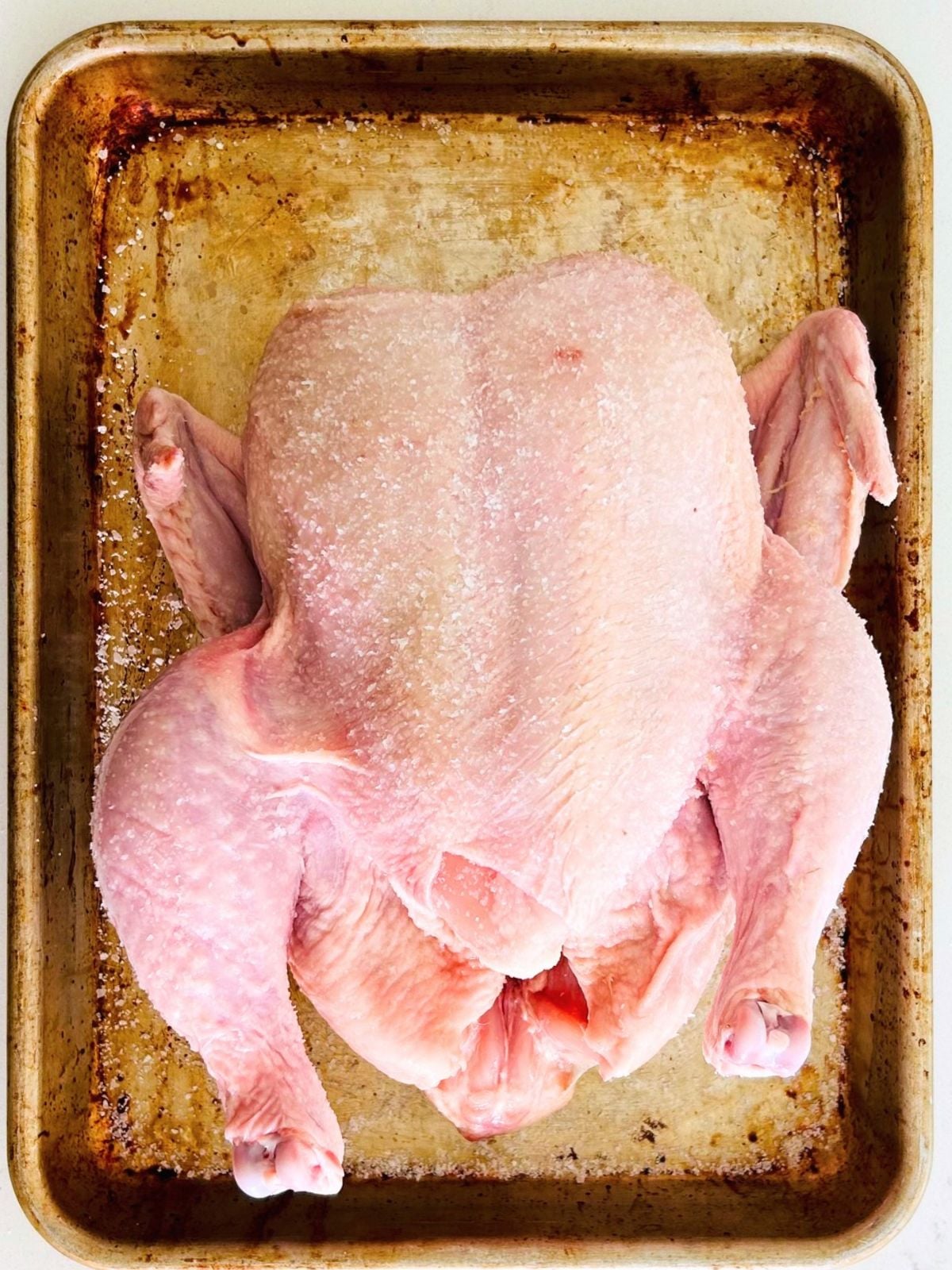
Step 1: Unwrap the chicken and remove the neck and packet of gizzards from the cavity. Pat the chicken dry with paper towels and place it on a rimmed baking sheet. Sprinkle the kosher salt evenly over the skin and sides of the chicken.
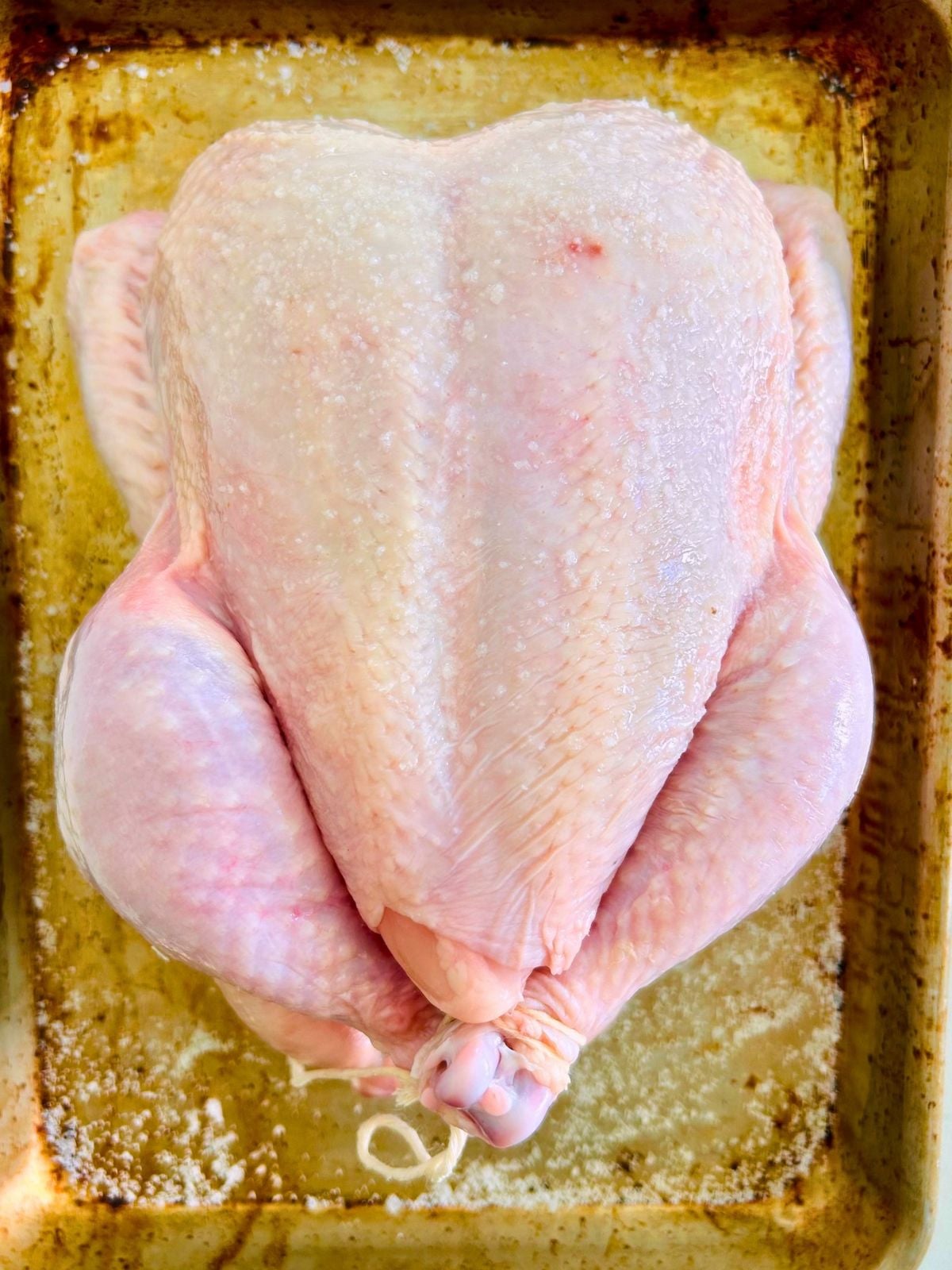
Step 2: Tie the legs together with butcher's twine and tuck the wing tips under the bird. Place uncovered in the refrigerator for 8 to 24 hours.
Before Roasting
Remove the chicken from the refrigerator and let it sit on the counter while the oven preheats to 425°F for 30 minutes.
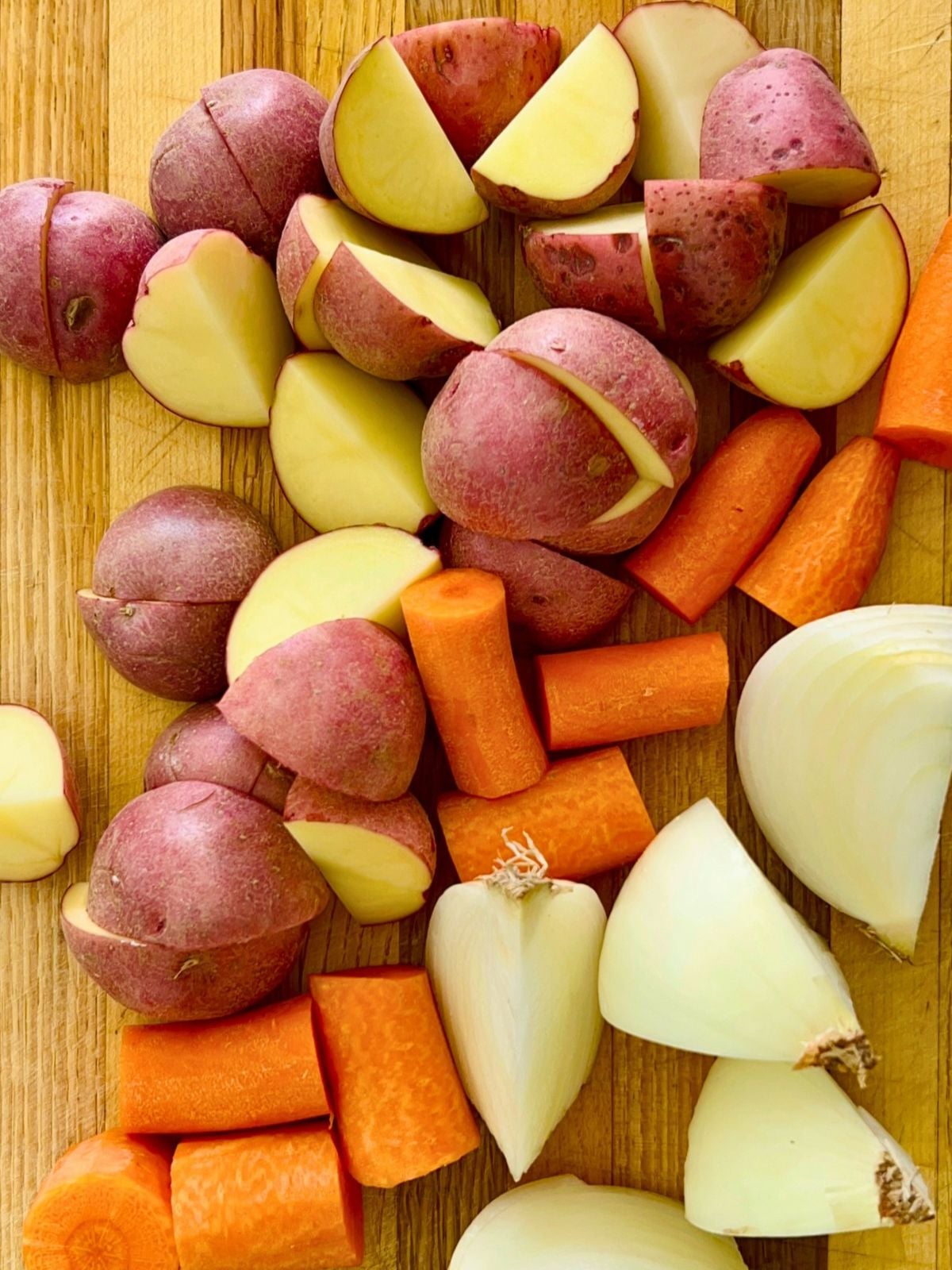
Step 3: Cut the potatoes into 1-inch pieces. Peel and cut the carrots into 2-inch chunks. Trim the top of the onion, keeping the root end intact to help keep the layers together. Peel the papery skin and cut the onion into 6 wedges.
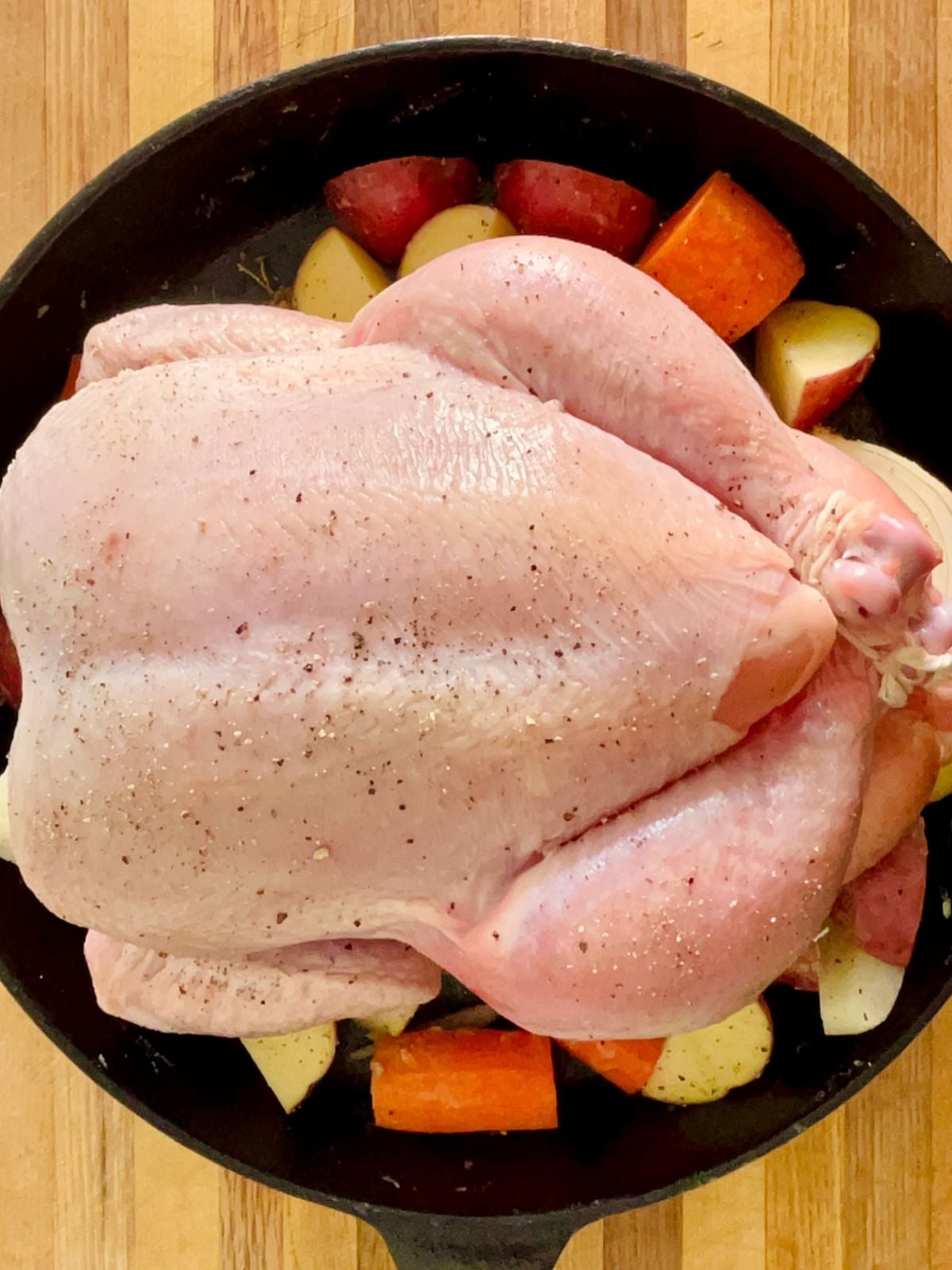
Step 4: Add the vegetables to the skillet. Toss with 1 tablespoon of oil, ½ teaspoon of kosher salt, and a few cranks of black pepper. Place the chicken on top of the vegetables, breast side up.
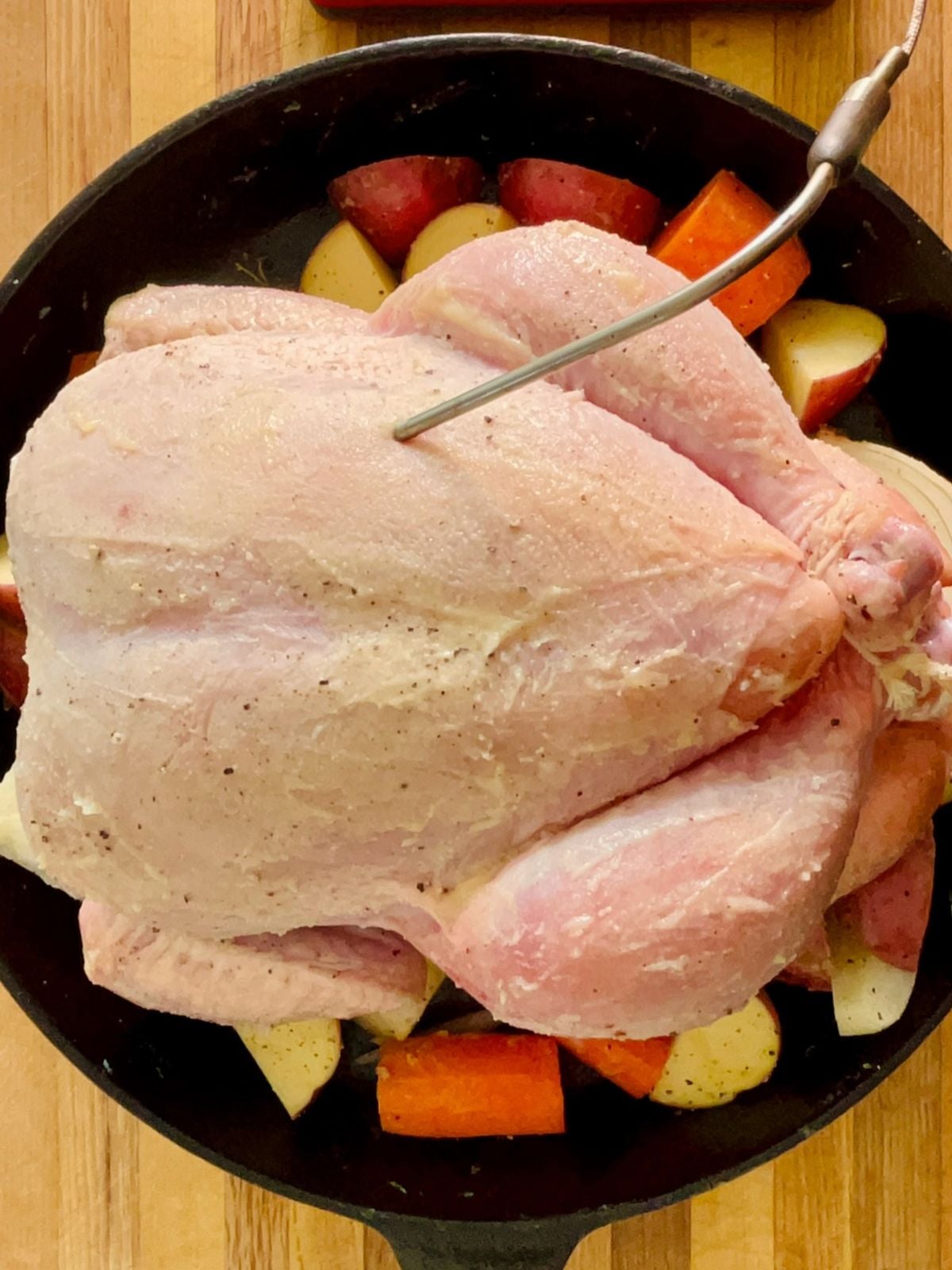
Step 5: Rub 1 tablespoon of oil over the skin of the chicken. Insert the probe thermometer into the thickest part of the breast. The tip should be about half an inch from the bone and not touching it. Set the alarm to 160°F.
Roasting
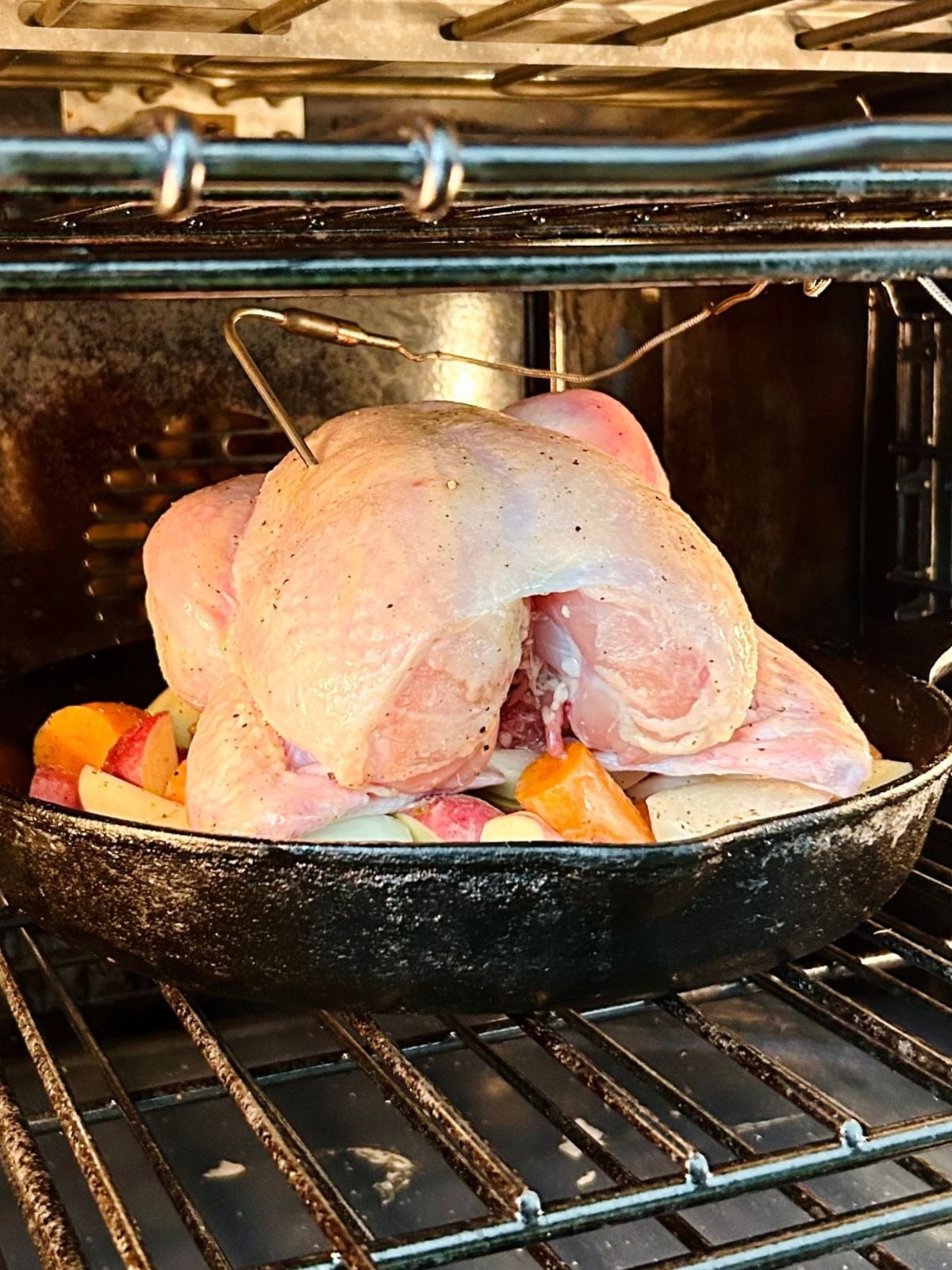
Step 7: Place the skillet in the oven with the legs facing the back. Roast for 30 minutes, then rotate the skillet 180°. Continue roasting until the alarm goes off.
For planning purposes, expect about 15 minutes per pound, but cook by temperature, not by time alone.
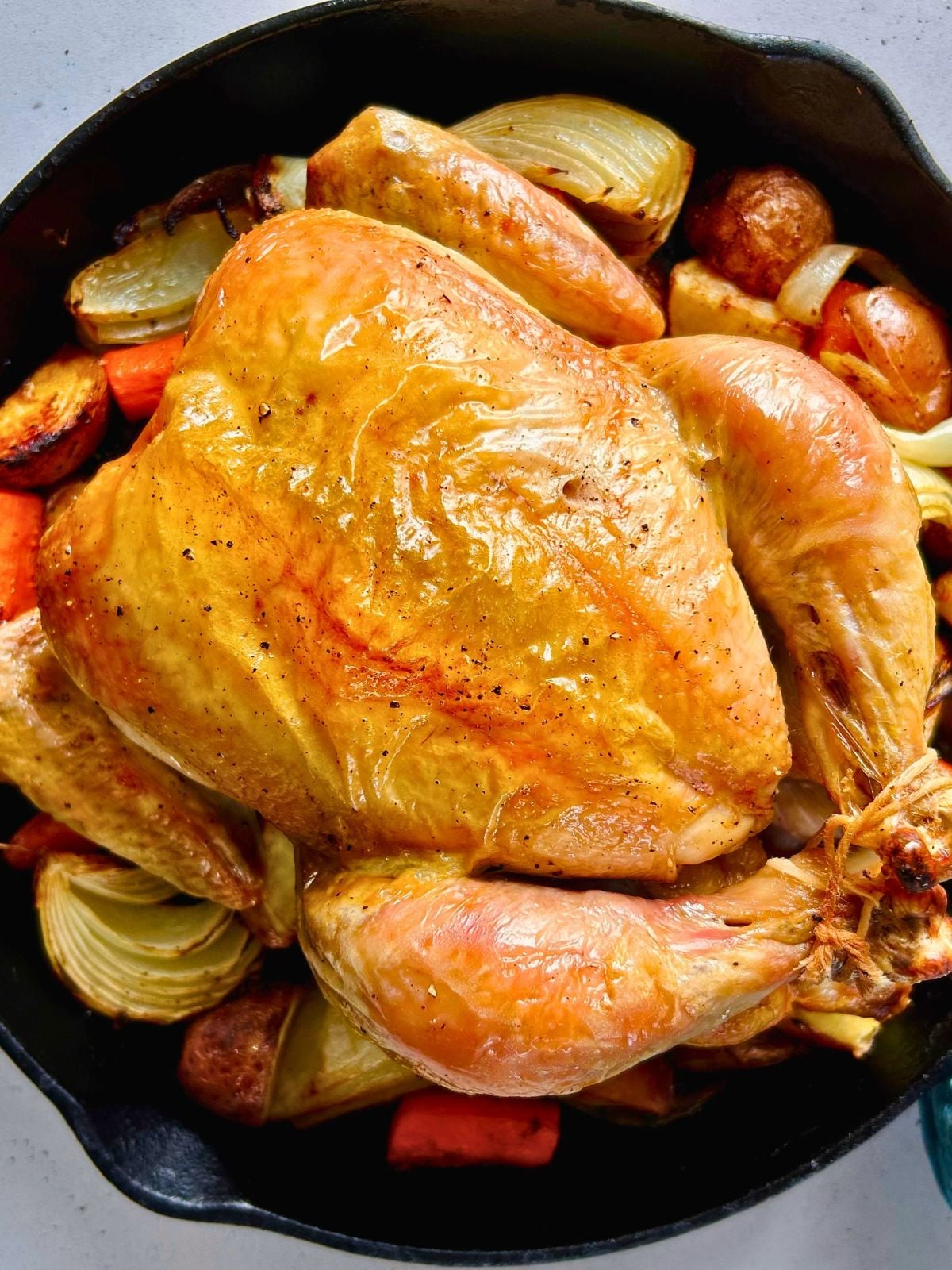
Step 8: When the alarm sounds at 160°F, verify the temperature on both sides of the breast. Then check the center of the thickest part of both drumsticks. Drumsticks should read at least 175°F. If any part is under temperature, rotate the pan so those areas face the back of the oven and keep roasting until everything hits temperature.
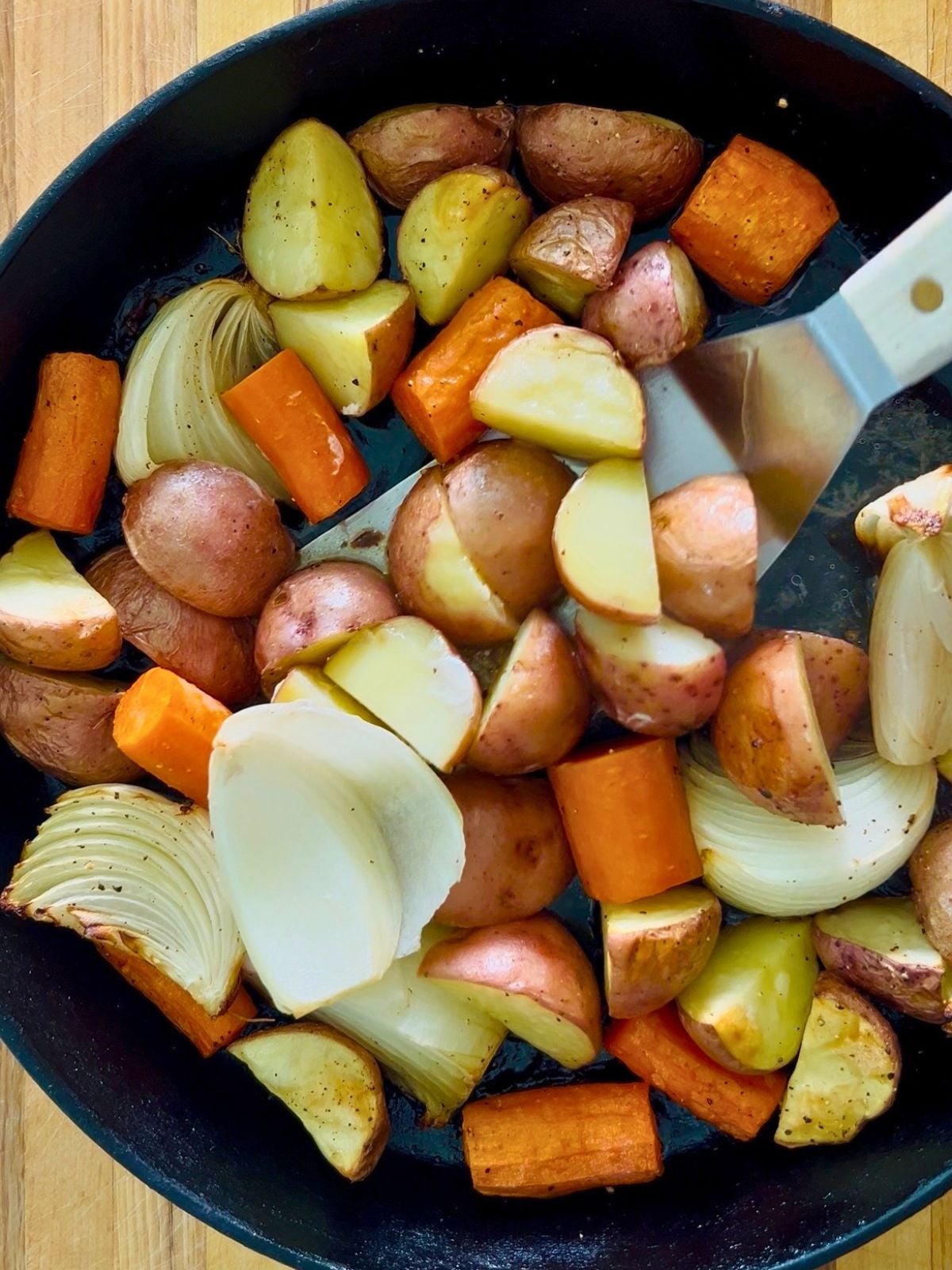
Step 9: Remove the skillet from the oven and transfer the chicken to a cutting board to rest. Flip the vegetables to coat them in the drippings, then return the skillet to the oven for about 15 minutes until the vegetables are deeply browned and caramelized. This is where the flavor develops. Do not skip this step.
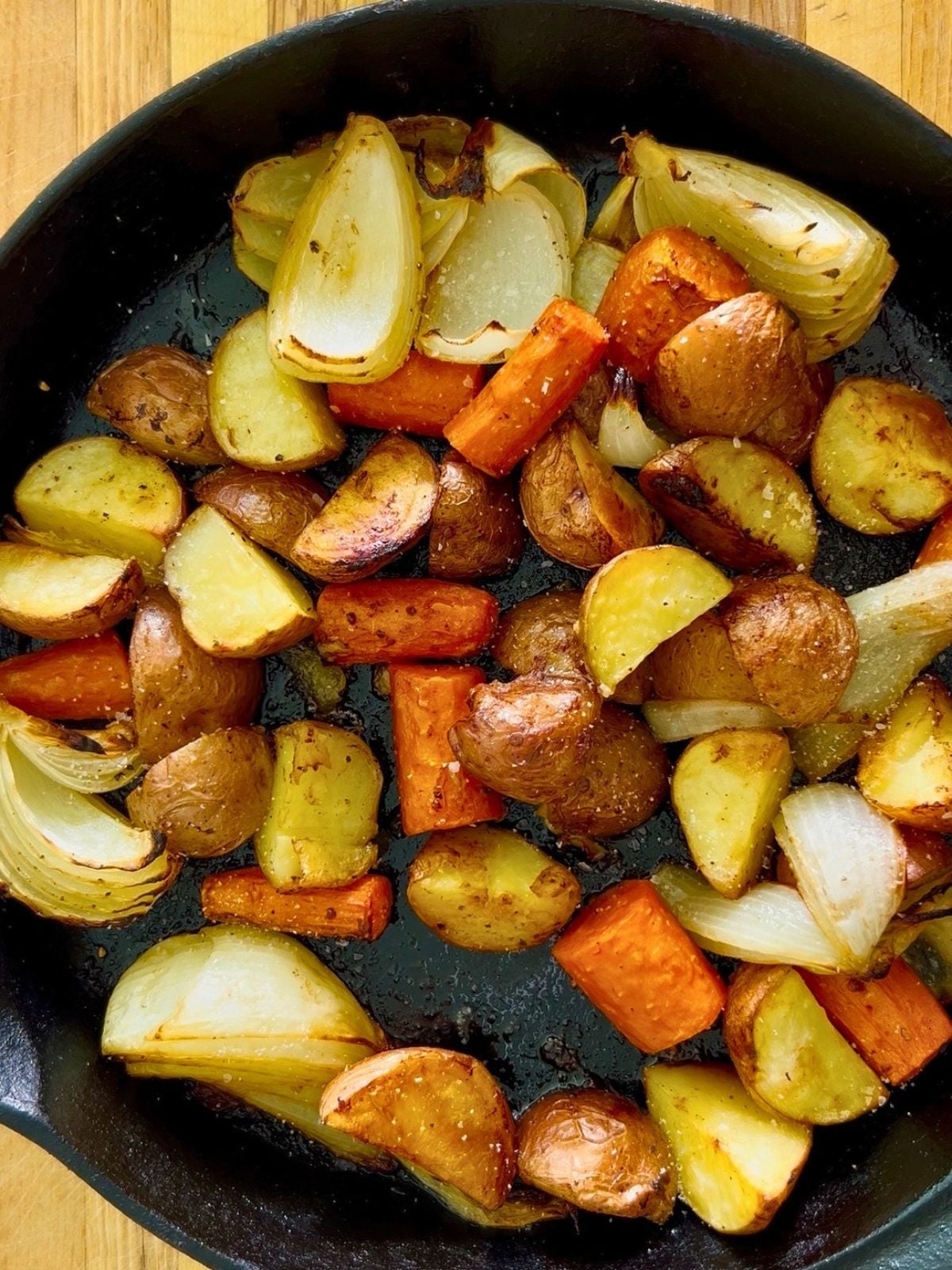
Step 10: Remove the vegetables from the oven. Taste them and season with kosher salt and black pepper if needed. Carve the chicken and serve over the caramelized vegetables.
Two Day Game Plan
Here is how to plan your skillet roasted chicken with vegetables so dinner is ready when you want it.
Quick Example: 5-pound chicken for a 6:30 PM dinner
- The night before: Salt the chicken and store uncovered in the refrigerator.
- Start preheating at 4:15 PM and remove the chicken from the refrigerator.
- Chicken goes into the oven at 4:45 PM
- Chicken comes out around 6:00 PM to rest
- Vegetables go back into the oven at 6:05 PM for 15 minutes
- Carve at 6:20 PM
Day of is about 15 minutes of active time. The oven handles the rest. Browse the main dish recipes if you want more ideas like this to rotate into your week.
Storage & Reheating Information
To Store: Remove leftover chicken from the bone and store covered in the refrigerator for up to 4 days. Store the vegetables separately in a covered container for up to 4 days.
To Reheat: Reheat chicken in a 350°F oven covered with foil for 10 to 15 minutes, or in the microwave in 20-second increments until warmed through. The vegetables reheat well in a microwave until warmed through.
Bones: Do not throw the carcass away. Freeze the bones and use them to make brown chicken stock later.
FAQ
The time depends on the size of your chicken and the temperature of your oven. If you move the chicken from the refrigerator to the countertop for 30 minutes before putting it in a 425°F oven, it takes around 13-15 minutes per pound to cook. Cook to an internal temperature of 160°F, not by time alone.
You can salt the chicken 1 hour before roasting and have a good meal. I've noticed the vegetables can get a bit salty when you don't dry brine. So, reduce the Diamond Crystal kosher salt to ¾ teaspoon per pound of chicken.
Yes, if you want caramelized vegetables. They will be cooked through after the chicken comes out, but the center will be pale in color. Without that extra time in the hot oven with the drippings, they won't develop the color and deep flavor that makes this dish. Caramelization=flavor.
Yes. A rimmed sheet pan or roasting pan both work fine. Cast iron is ideal because of how well it holds and distributes heat, but the equipment should not stop you from making this.



Did you try any of these tips? Leave a comment below to let us know how it turned out! Thanks for visiting!
📖 Recipe
Juicy Skillet Roasted Chicken With Caramelized Vegetables
Equipment
- 12-inch oven safe skillet
- leave-in probe meat thermometer with an alarm
- butcher's twine
- rimmed baking sheet
- chef's knife
- cutting board
Ingredients
- 4 pound whole chicken
- 4 teaspoons Diamond Crystal kosher salt (1 teaspoon/pound)
- 16 ounces waxy potatoes (red, gold, or fingerling)
- 8 ounces carrots (2 or 3)
- 10 ounces yellow onion
- 2 tablespoons cooking oil, divided (ghee, vegetable, or canola)
- Freshly Ground Black Pepper
Instructions
- Unwrap the chicken, remove the neck and packet of gizzards from the cavity. Pat the chicken dry with paper towels, and place it on a rimmed baking sheet. Sprinkle the kosher salt evenly over the chicken, including the sides. Tie the legs together with butcher twine. Tuck the wing tips under the chicken. Store in the refrigerator for 8-24 hours, uncovered.
- To cook, place the chicken on the counter and preheat the oven to 425℉.
- Cut the potatoes into 1-inch pieces. Peel and cut the carrots into 2-inch chunks. Peel and quarter the onion, leaving the roots in tact to help keep the layers together.
- Add the vegetables to the skillet. Drizzle with 1 tablespoon of oil and a few cranks of black pepper. Toss to combine. Place the chicken on top of the vegetables. Apply 1 tablespoon of oil to the skin of the chicken. Insert the meat thermometer into the thickest part of the breast. The probe tip should be ½ inch from the bone and not touching it. Set the high temperature alert to 160℉.
- Roast the chicken with the legs facing the back of the oven. After 45 minutes, rotate the skillet 180°. Cook to an internal temperature of 160℉ for the breast. Cook by the internal temperature of the chicken, not by time alone. For planning purposes, it can take about 15 minutes per pound of chicken.
- After your thermometer alarms that the breast is at 160℉, verify the thickest part of the other side of the breast to make sure it is also at 160℉. Then, check the center area on the inside of the thickest part of both drumsticks to be at least 175℉. If less, rotate the pan so the lower temperature parts are facing the back of the oven. Keep roasting until all parts get to temperature.
- Remove the skillet from the oven and transfer the chicken to a cutting board to let it rest. Flip the vegetables to coat them with the juices and return the skillet to the oven for about 15 minutes to caramelize.
- Once the vegetables are deeply browned, remove the skillet from the oven. Taste for seasoning. Carve the chicken and serve with the vegetables.
Notes
- The night before: Salt the chicken and store uncovered in the refrigerator.
- Start preheating at 4:15 PM and remove the chicken from the refrigerator.
- Chicken goes into the oven at 4:45 PM
- Chicken comes out around 6:00 PM to rest
- Vegetables go back into the oven at 6:05 PM for 15 minutes
- Carve at 6:20 PM
Nutrition
The provided nutritional information is an estimate per serving. Accuracy is not guaranteed.
Comments
No Comments