
The best creamy tomato soup doesn't have to be a weekend project. This one comes together in just under an hour using pantry ingredients, fresh herbs, and one pot. No roasting, no complicated steps - just a simple method that fixes the texture and flavor problems that make most homemade tomato soup fall flat.
On weeknights, I use an immersion blender straight in the pot. Fewer dishes, fast cleanup, done. For a dinner party, I pull out the countertop blender. Same recipe, different finish depending on what the night calls for.

We live right down the street from a Nordstrom's Cafe, and their famous Roma tomato basil soup started in Kansas City. My family tried this version side by side with Nordstrom's and unanimously liked this one better. I agree.
This is not a tomato-forward soup. It's bright and herbal, slightly meaty from the broth, and balanced in a way that makes it hard to stop at one bowl. If you have homemade chicken stock stored in the freezer, use it here.
Serve it alongside easy homemade garlic bread for a complete meal that feels like a treat on a regular Tuesday.
Jump to:
Why You Will Love This Recipe
- The flavor is balanced and bright, not tomato-forward. The vegetables, roux, broth, and cream are all working together.
- It works with canned tomatoes year-round, so it's never out of season.
- The fresh herb bundle deepens the flavor without any chopping.
- It freezes well, which makes it worth doubling the batch.
- Serve it in small glasses as an appetizer for a dinner party, or in warm bowls with grilled cheese for a full meal.
Common Problems when making tomato soup
- Tangy Taste From High Acidity: Carrots and onions are measured by weight so you know you have the right amount. They add natural sweetness that tames the acidity in the tomatoes - no sugar needed.
- Thin Texture: Fix this with a roux built before the tomatoes go in to create body and thickness without making the soup heavy or starchy.
- Bland Tasting: The salt measurement and tips to fix a bland soup are included below so you're not guessing with a vague "season to taste."
- Gritty Pieces: A longer simmer is needed so the vegetables are completely soft. Only use whole peeled tomatoes. Diced and some crushed tomatoes have bits of skin that carry through in the blended soup.
Ingredients
You only need pantry staples and a few fresh herbs to make the best creamy tomato soup at home.
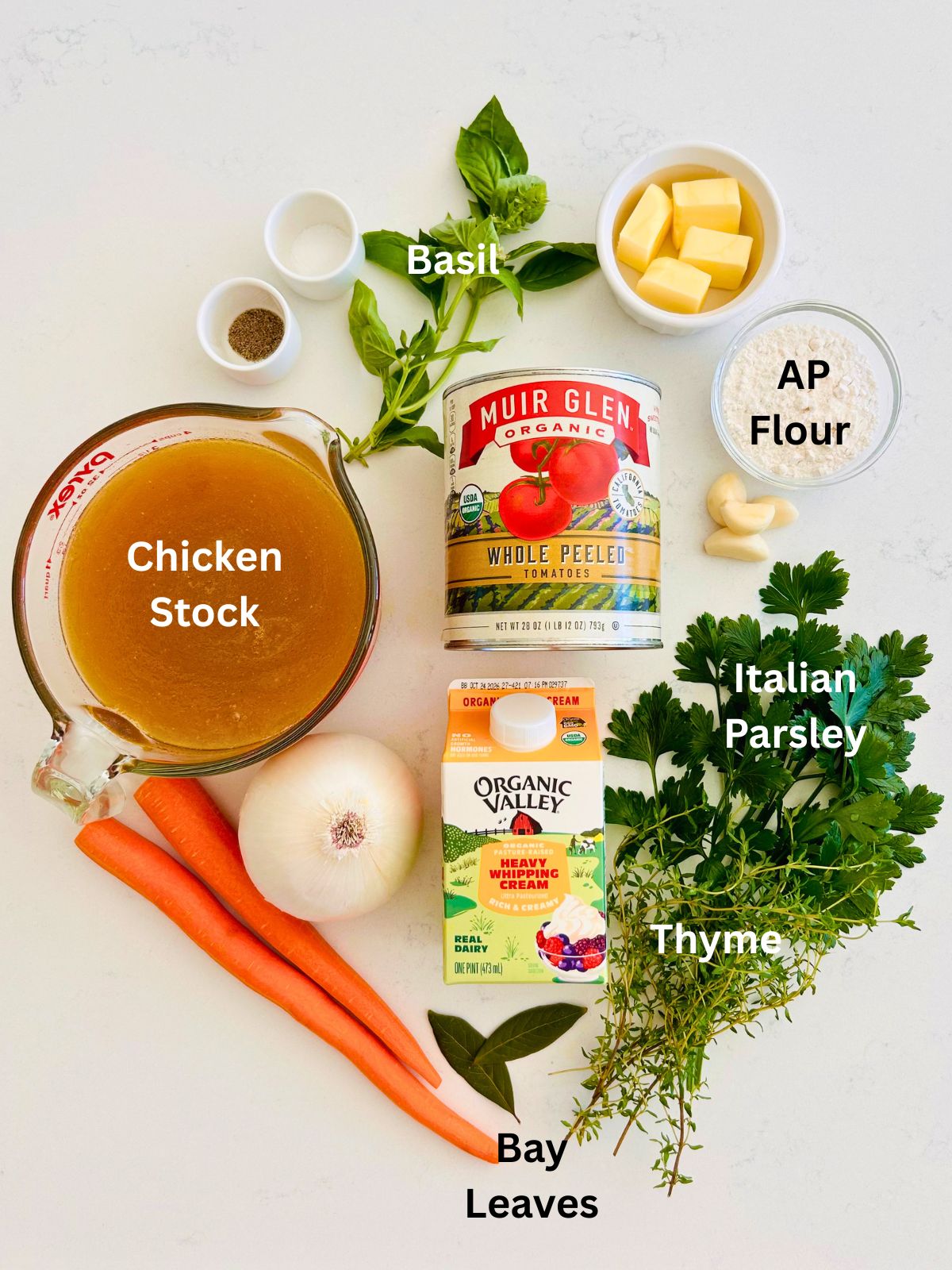
- Unsalted Butter: This is the base for sautéing the vegetables and starting the roux. Using unsalted butter lets you control the salt level of the finished soup.
- Yellow or White Onion (8 oz) and Carrots (4 oz): Weighed, not counted. One carrot at one store is not the same as one carrot at another. Weighing ensures you get the right balance of sweetness and aroma every time. Do not rush the sauté and simmering steps.
- Garlic: Real garlic, not the jarred stuff. Thinly sliced so it melts into the base during cooking.
- All-Purpose Flour: This is how we build the roux before adding any liquid. It thickens the soup and gives it body and that lingering mouthfeel you get from a restaurant soup.
- Chicken Stock: Homemade or low-sodium store-bought. If you have homemade brown chicken stock in the freezer, this is a great place to use it. The meaty depth it adds is noticeable.
- Whole Peeled Canned Tomatoes: Diced tomatoes and some crushed tomatoes contain bits of skin that survive blending. In a soup this smooth, those bits are a distraction. Whole peeled tomatoes crush cleanly with a wooden spoon. San Marzano tomatoes are a nice addition, but they are not necessary here. You are building flavor through technique. The usual brands work just fine - don't go out of your way looking for San Marzano if they are not at your store.
- Fresh Parsley, Thyme, and Bay Leaves: Tied together with butcher's twine so they lift out cleanly. These herbs steep into the soup for the full simmer and contribute the herbal brightness.
- Heavy Whipping Cream: The fat content in heavy cream is what prevents the soup from curdling when you return it to heat. Do not substitute half-and-half or milk here.
- Diamond Crystal Kosher Salt (½ to 1 teaspoon): A range is given on purpose. Sodium levels in canned tomatoes and store-bought broth vary brand to brand. See the tasting note below in the Tips section for how to dial this in correctly.
- Fresh Basil for Garnish: Restraint matters here. Too much fresh basil is distracting in a soup this smooth. Julienne the basil into thin strips rather than leaving whole leaves on top. Whole leaves in a silky soup work against the texture you just spent 45 minutes building.
See the recipe card below for ingredient measurements.
Variations & Substitutions
- Cream-free: Skip the heavy cream entirely. The roux still gives the soup body and a smooth texture. It won't have the same richness, but it's good.
- Vegetarian: Use vegetable stock in place of chicken broth.
- More tomato flavor: Double the canned tomatoes. This soup as written has a mild, balanced tomato flavor with a lot happening in the background from the herbs and broth. If you want tomato to be the dominant note, use two cans.
- Basil: Sometimes fresh basil is hard to find in the winter. You can substitute sliced green onions or chives, or drizzle 1 teaspoon of my chimichurri with cilantro and parsley on top.
- Spice: Add a pinch of crushed red pepper flakes to the sautéed vegetables for background heat.
- Serving as an appetizer: Ladle into 4-ounce mason jars or shot glasses. No spoons needed, and it looks sharp on a platter when guests are arriving.
Equipment
The right equipment makes a real difference in this recipe, especially for texture.
- 4-quart heavy-bottomed pot: Thick walls prevent hot spots and keep the vegetables from scorching during the sauté.
- 8-inch chef's knife and cutting board
- Wooden spoon: For building the roux and crushing the tomatoes.
- Butcher's twine: For the herb bundle. Makes it easy to lift out cleanly before blending.
- Countertop high-speed blender (preferred for guests): Produces the smoothest result. Only fill halfway, vent the lid, and start slow.
- Immersion blender (preferred for weeknights): Fewer dishes, fast, and works directly in the pot. The soup will not be quite as silky smooth, but for a family dinner it's completely fine.
- Fine-mesh sieve (optional but worth it for guests): Passing the blended soup through a sieve removes any remaining solid bits. This is the step that gets you closest to restaurant texture.
Step-by-Step Instructions
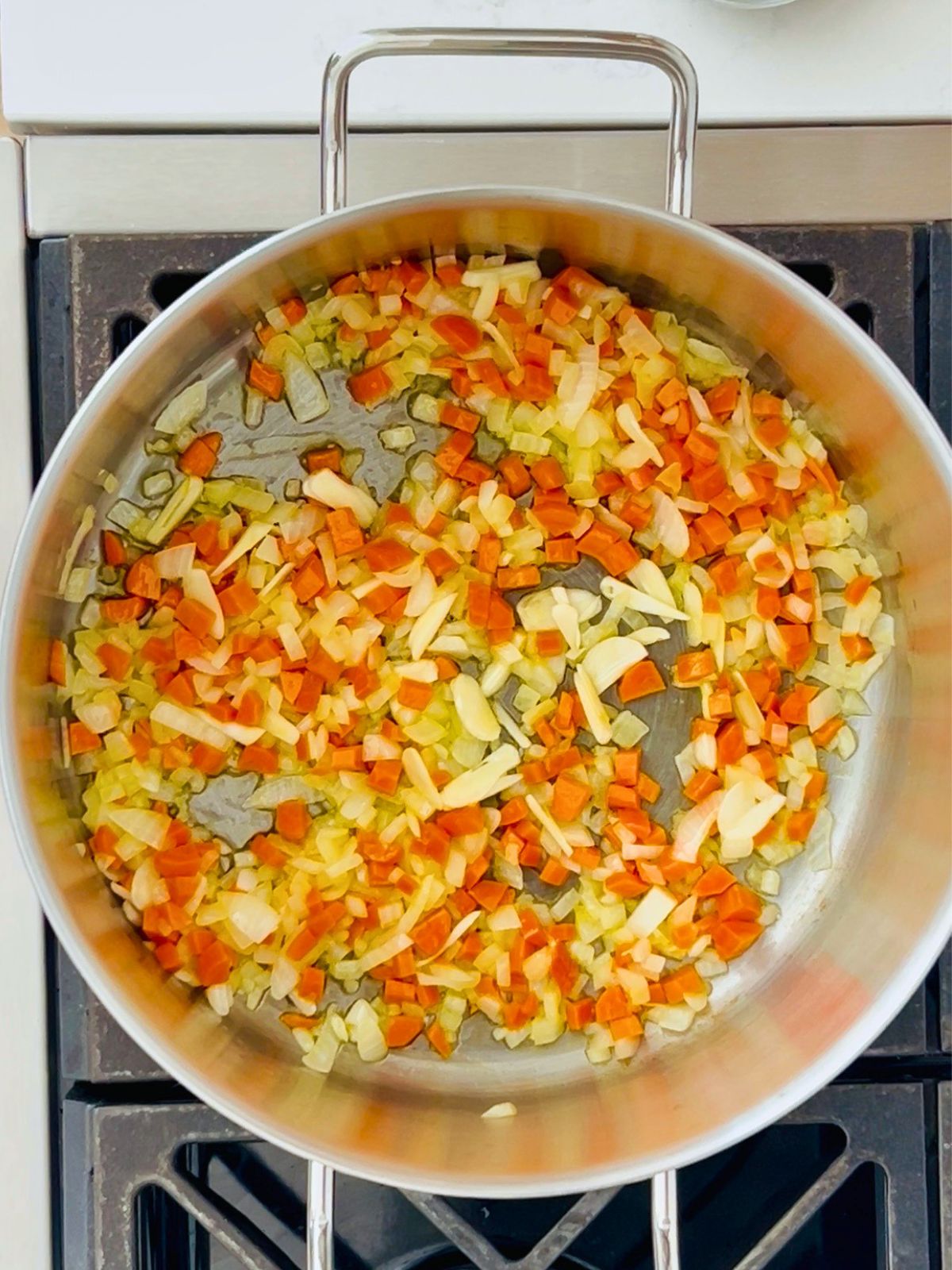
Step 1: In a large pot, heat the butter over medium-high heat. Add the onions and carrots to the melted butter and cook until starting to soften, about 6 to 8 minutes. Do not let them brown. Adjust the burner as needed. Add the garlic and cook while stirring for one minute.
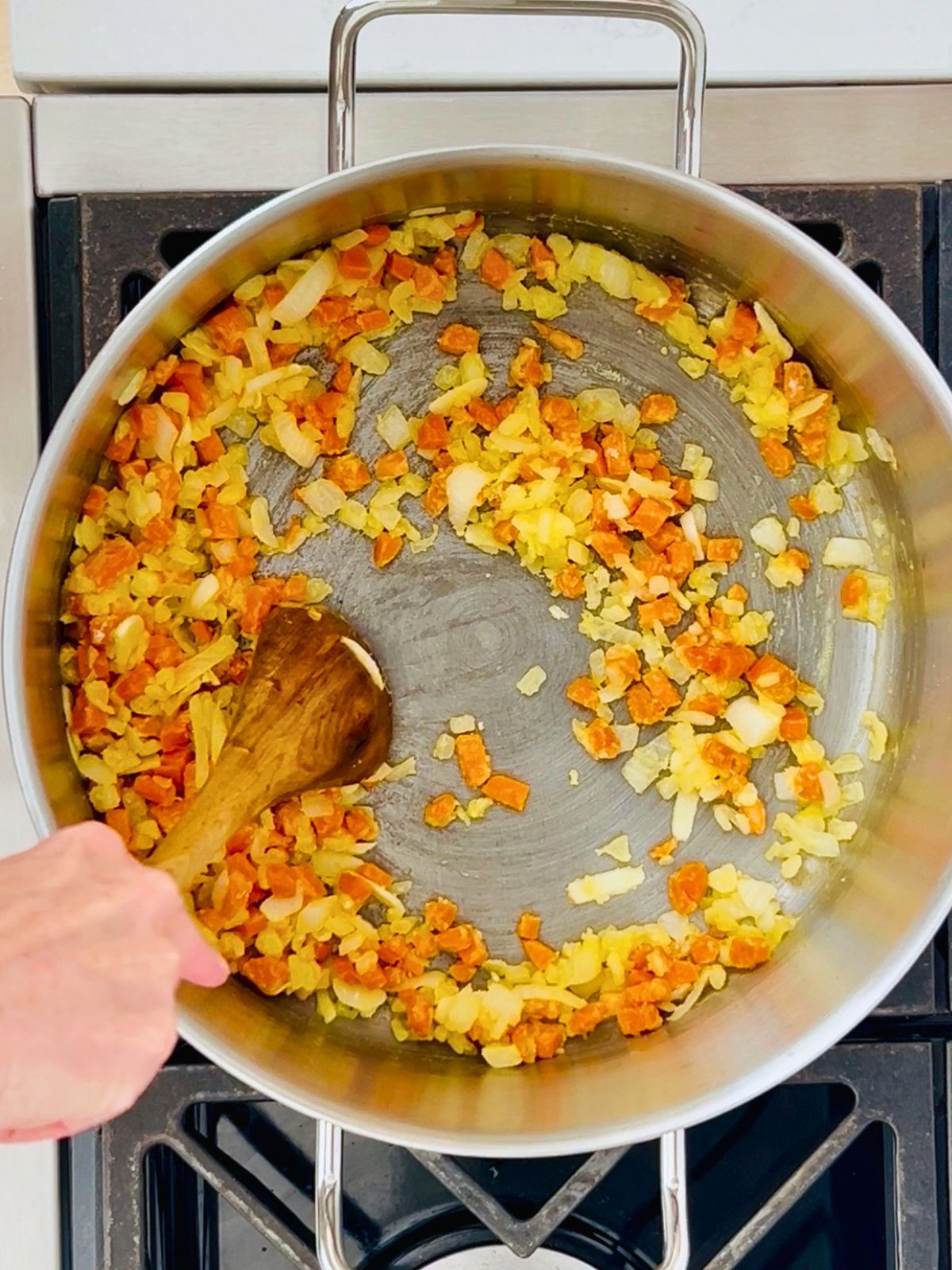
Step 2: Stir in the flour with a wooden spoon, making sure it disperses evenly across the vegetables. Cook for one minute.
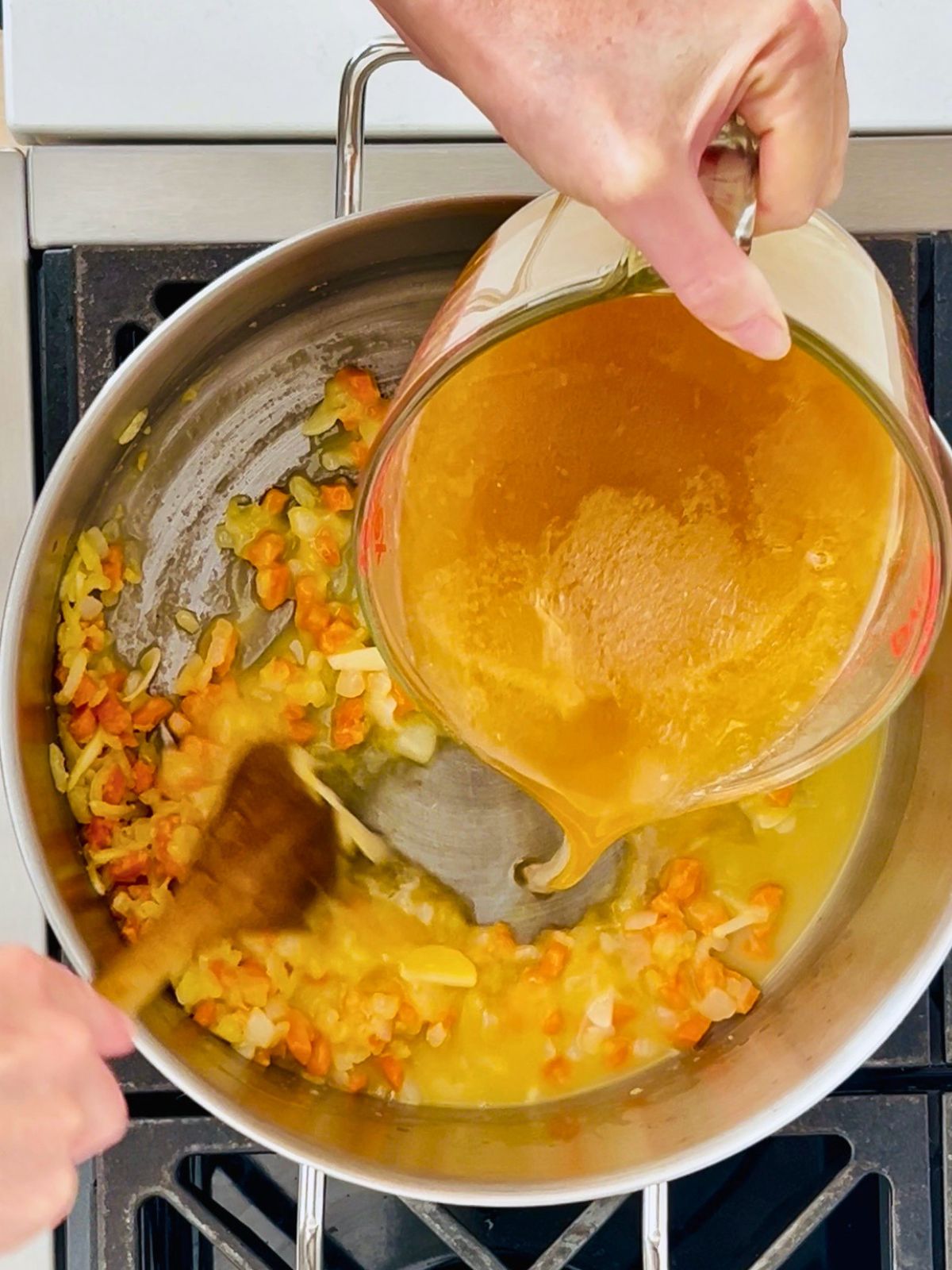
Step 3: Slowly pour in the chicken broth while stirring continuously.
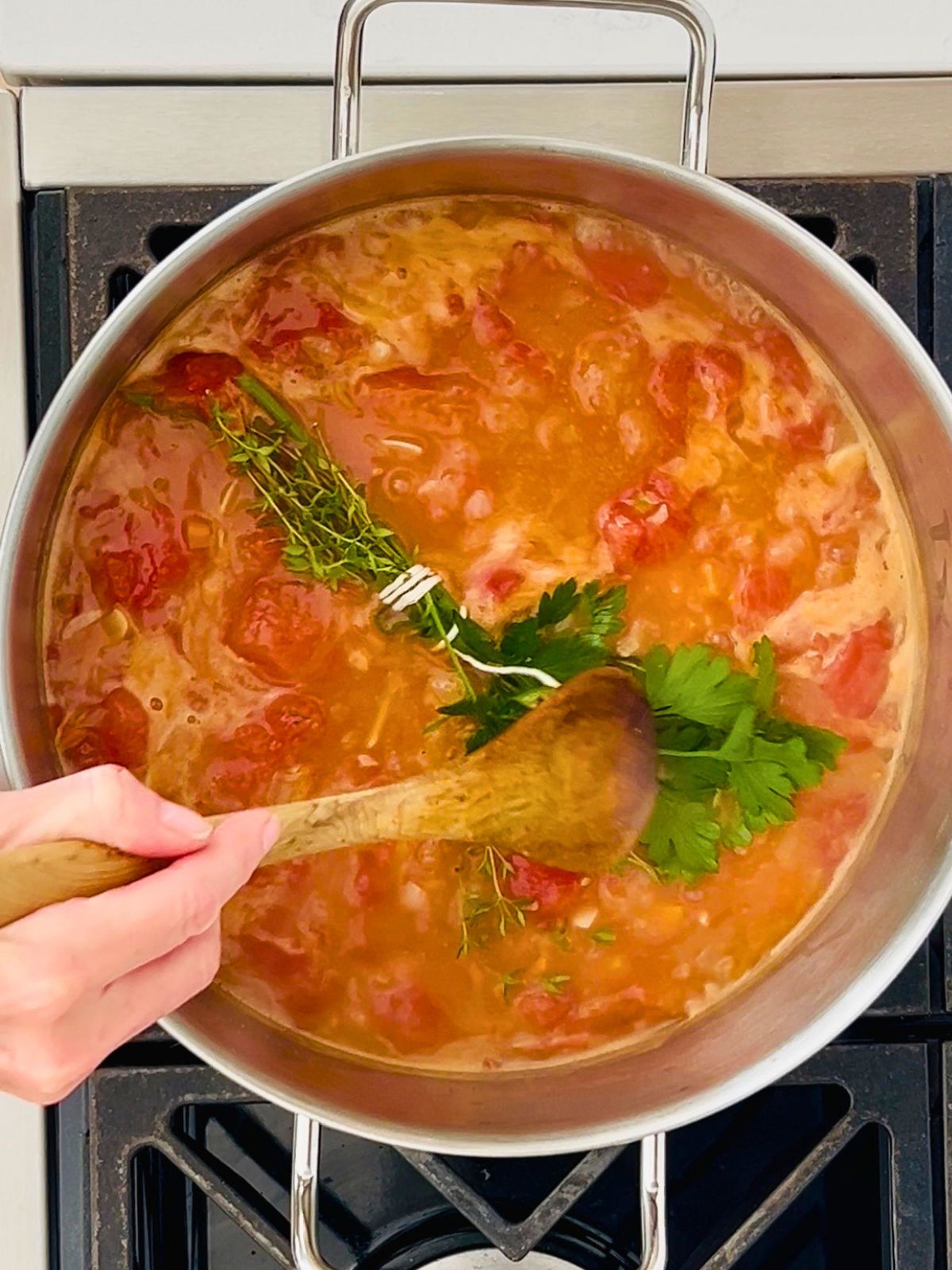
Step 4: Add the tomatoes and their juice, then crush them with the wooden spoon. Tie the parsley, thyme, and bay leaves with butcher's twine and add to the pot.
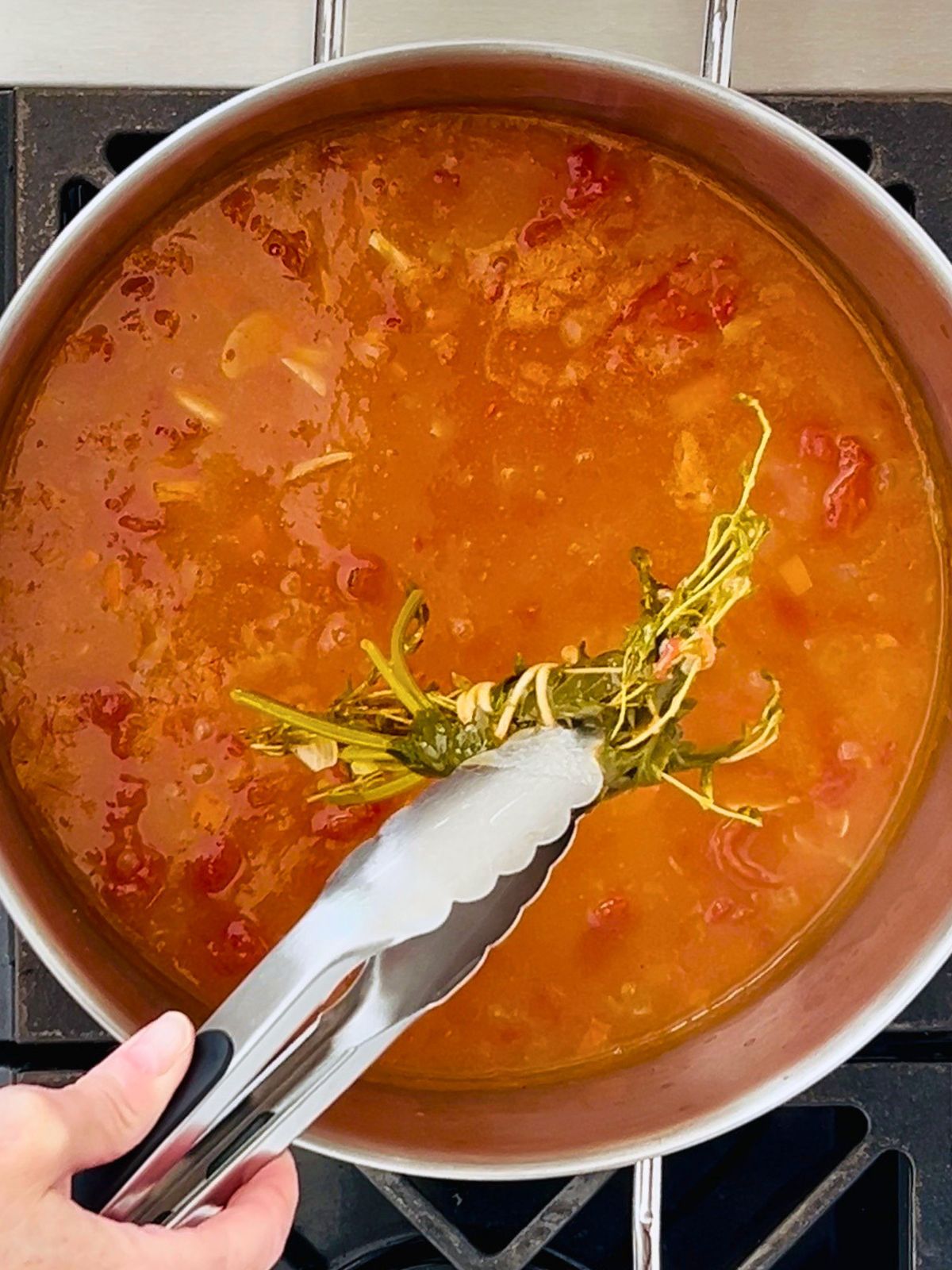
Step 5: Bring the pot to a simmer, then lower the heat. Simmer and stir occasionally for 35 to 40 minutes until the carrots are completely soft. Taste and season with salt and pepper. Remove from heat and discard the herb bundle.
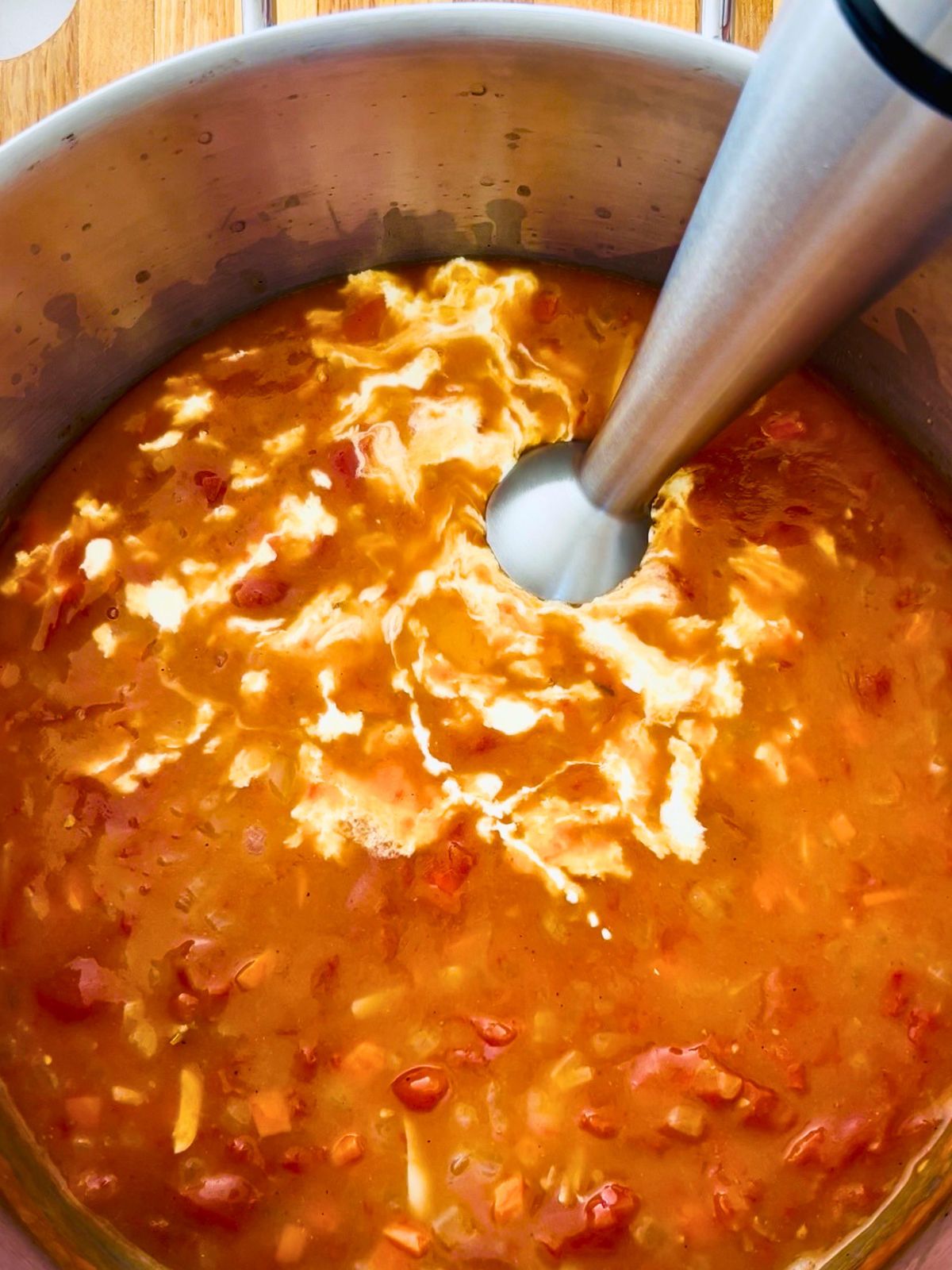
Step 6: Add the heavy cream. Puree with an immersion blender directly in the pot. The result won't be quite as smooth as a blender.
For a countertop blender: Working in batches, pour the soup into the blender pitcher halfway. Vent the lid to let steam escape and blend until smooth.
Return the blended soup to the pot and turn the heat to low.
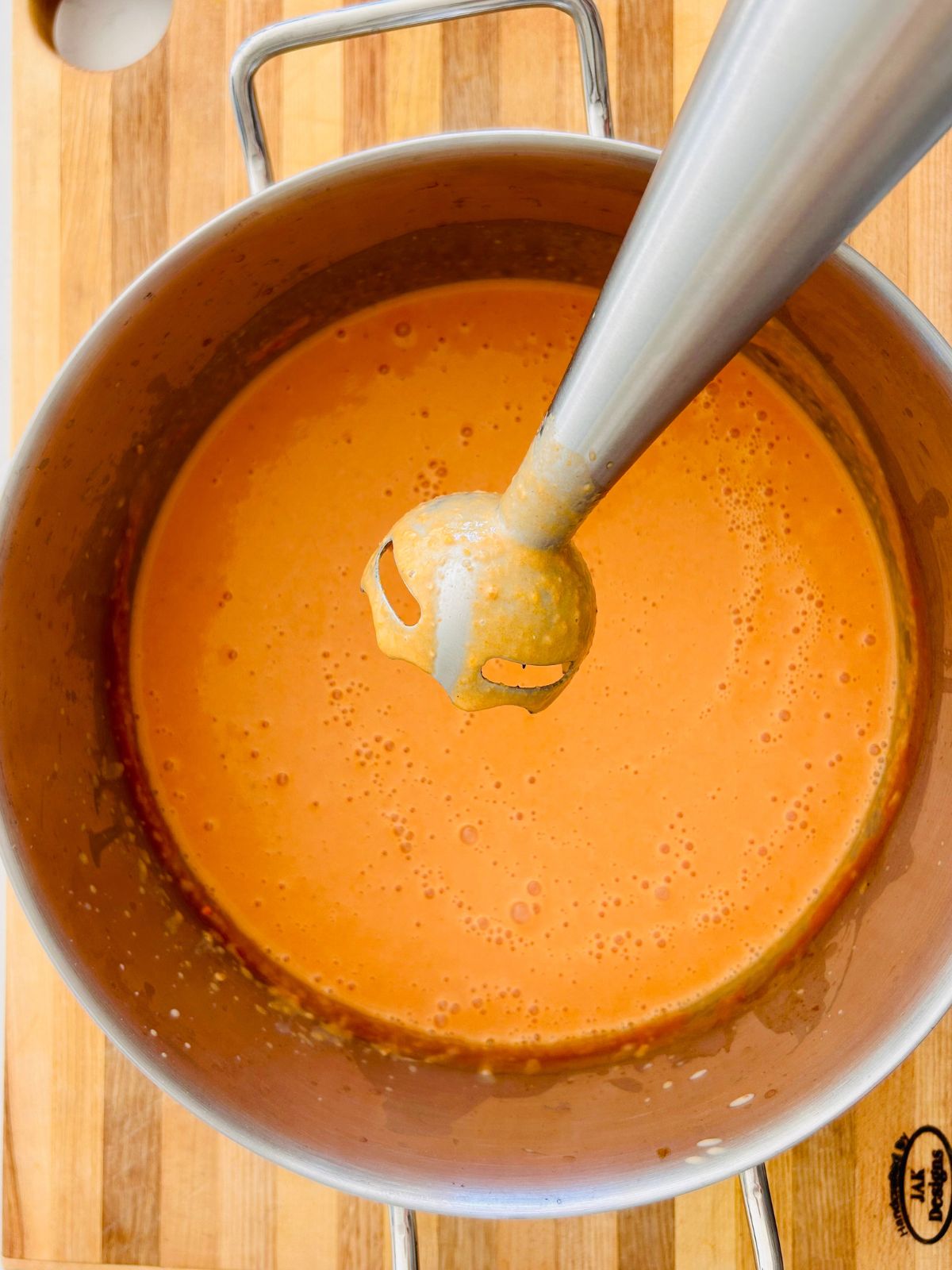
Step 7: Taste again to see if more salt is needed. Serve in warm bowls topped with thinly sliced fresh basil.
Top Tip - How To Fix A Bland Soup
Salt is the most likely culprit. Because sodium levels vary in both canned tomatoes and store-bought broth, the right amount of salt is different every time you make this.
Here's how to taste for it correctly: Spoon a small amount of soup into a spoon, sprinkle in a few salt granules, and taste it. Hold it in your mouth for a moment. Does the flavor improve and open up? If yes, add ¼ teaspoon of kosher salt to the pot and taste again. If it doesn't improve, you're there.
This method works for any soup or sauce recipe where the seasoning tastes flat at the end.
Make Ahead Instructions
This soup is an easy make-ahead option, and the flavor improves after a night in the refrigerator.
Up to 4 days ahead: Make the full recipe, cool completely, and store covered in the refrigerator.
Reheating: Warm over low heat on the stovetop, stirring occasionally. Do not let it boil.
Hosting game plan: Make the soup the day before. Reheat it on the back burner over low heat while guests are arriving. It holds well without attention, which means you are free.
I use the same approach with my golden beet soup when I'm running multiple courses - anything that can be made ahead and held warm gets done days ahead.
Storage Information
Refrigerator: Store covered for up to 4 days. Reheat on the stovetop over low heat, stirring occasionally.
Freezer: This soup freezes well for up to 6 months. Cool completely before transferring to a sealed container or freezer bag. Thaw in the refrigerator for 24 hours before reheating. If the soup looks slightly separated after thawing, stir over low heat, and it will come back together.
FAQ
Yes. I find tomato soup is far from my mind during peak tomato season when it's hot outside, but if you have them, they work.
If you are using fresh or frozen tomatoes, use about 2 pounds of ripe tomatoes as a substitute for the 28-ounce can. Pass the soup through a fine-mesh sieve to remove the tomato skins.
Whole tomatoes freeze well after you remove the tough core. You can pull them out in the middle of winter and use them here.
I do not use dried basil in this soup. I think it tastes medicinal.
Add a small amount of chicken broth or water and stir over low heat until it loosens to your liking.
You can add a second can of peeled tomatoes before simmering. If the soup is made and you want more tomato flavor, either let it reduce further over heat or add tomato paste, 1 tablespoon at a time.





Did you try any of these tips? Leave a comment below to let us know how it turned out! Thanks for visiting!
📖 Recipe

Best Creamy Tomato Soup Recipe
Equipment
- 8-inch chef's knife
- cutting board
- 4-quart heavy-bottomed pot
- butcher's twine (for the herb bundle)
- high-speed countertop blender or immersion blender
- fine-mesh sieve (optional)
Ingredients
- 4 tablespoons unsalted butter
- 8 ounces yellow or white onion, chopped
- 4 ounces carrots, chopped
- 4 garlic cloves, finely sliced
- 5 tablespoons all-purpose flour (1.6oz/45g)
- 32 ounces homemade or low-salt store-bought chicken broth
- 28 ounces canned whole peeled tomatoes
- 5 fresh Italian parsley, stem and leaves (6oz/17g)
- 5 fresh thyme sprigs (.27oz/8g)
- 2 bay leaves
- 6 ounces heavy whipping cream
- ½-1 teaspoon Diamond Crystal kosher salt (1.5 - 3 grams)
- ¼ teaspoon Freshly Ground Black Pepper
- thinly sliced fresh basil leaves (for garnish)
Instructions
- In a large pot, heat the butter over medium-high heat. Add the onions and carrots to the melted butter and cook until starting to soften, about 6-8 minutes. Do not brown the vegetables. Adjust the burner as needed. Add the garlic and cook while stirring for one minute.
- Stir in the flour with a wooden spoon, making sure it's dispersed evenly across the vegetables. Cook for 1 minute. Slowly pour in the chicken broth while stirring continuously. Add the tomatoes and their juice, then crush them with the wooden spoon. Tie the parsley, thyme, and bay leaves with butcher's twine and add to the pot.
- Bring the pot to a simmer, then lower the heat. Simmer and stir occasionally for 35-40 minutes until the carrots are completely soft. Taste and season with salt and pepper. Remove from heat and discard the herb bundle.
- Add the heavy cream. Puree with an immersion blender directly in the pot. The result won't be quite as smooth as a blender.For a countertop blender: Working in batches, pour the soup into the blender pitcher halfway. Vent the lid to let steam escape and blend until smooth.Return the blended soup to the pot and turn the heat to low.
- Taste again to see if more salt is needed. Serve in warm bowls topped with thinly sliced basil leaves.
Notes
Nutrition
The provided nutritional information is an estimate per serving. Accuracy is not guaranteed.

Comments
No Comments